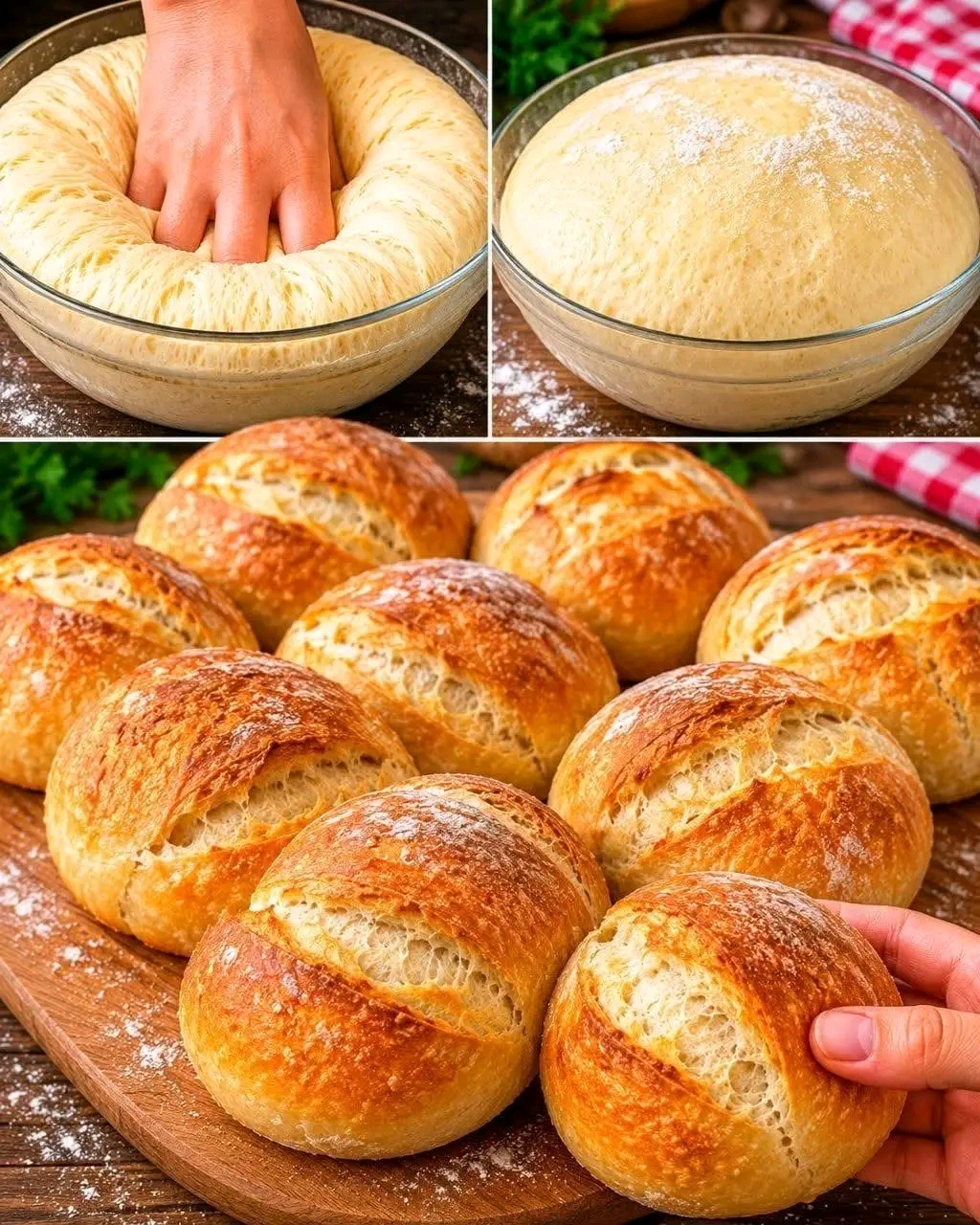
Overnight East German Bread Rolls (DDR ÜbernachtbrötchenCrispy Outside, Soft Inside
### Introduction
There is nothing quite like waking up to the smell of freshly baked bread rolls! These traditional-style DDR overnight rolls are a wonderful choice for anyone who loves golden, crispy crusts and soft, airy centers. The dough is prepared the evening before, allowed to rise slowly overnight, and baked fresh the next morning.
This method makes breakfast easier and gives the dough time to develop flavor. Whether served with butter, jam, cheese, or your favorite savory toppings, these homemade rolls bring the comforting taste of traditional German baking straight to your kitchen.
Preparation time: 20 minutes Overnight resting time: 8–12 hours Baking time: 20–25 minutes Total time: Approximately 9–13 hours Yield: 8–10 bread rolls
### Origin
The term DDR refers to the Deutsche Demokratische Republik, or German Democratic Republic, which existed from 1949 to 1990. Bread and bread rolls were important everyday foods in East German households, and home baking remained a familiar tradition.
Overnight rolls are not exclusive to East Germany, but the technique fits beautifully into traditional home baking: prepare the dough in the evening, let it ferment slowly, and bake the rolls in the morning. Recipes vary from family to family, with differences in flour, yeast quantity, resting time, and shaping.
This version is inspired by classic German breakfast rolls, using simple pantry ingredients and an overnight fermentation for a flavorful result.
### Cultural Significance
Bread has a special place in German food culture. Fresh rolls, commonly called Brötchen, are a breakfast favorite and are often enjoyed with coffee, tea, cheese, cold cuts, honey, or homemade jam.
In many German households, Sunday breakfast is an occasion to serve fresh bakery rolls or homemade bread. Overnight recipes make this tradition easier because most of the preparation happens the previous evening.
These rolls also reflect the practical nature of home baking: inexpensive ingredients, simple techniques, and a satisfying result to share with family.
### Ingredients Quantity

For 8–10 rolls
* 500 g bread flour or German Type 550 flour
* 320 ml cool water
* 5 g instant dry yeast
* 10 g salt
* 1 tsp sugar (optional)
* 1 tsp vegetable oil (optional, for a softer crumb)
* A little flour for dusting
For the best overnight result: Use cool water and refrigerate the dough if your kitchen is warm. A long rise at room temperature can cause the dough to overproof, particularly in warm conditions.
### Optional Additions
* Whole-wheat flour: Replace 100 g of the white flour with whole-wheat flour for a heartier flavor.
* Rye flour: Replace up to 50–75 g of the bread flour for a more traditional, earthy taste.
* Sunflower or pumpkin seeds: Sprinkle them on top before baking.
* Sesame or poppy seeds: Add a classic bakery-style finish.
* Malted flour: A small amount can deepen the flavor and color if available.
* Sourdough starter: For a sourdough variation, the yeast and water quantities will need to be adjusted to account for the starter.
### Tips for Success
* Measure accurately. Weighing flour and water gives more consistent results than measuring by volume.
* Keep the dough slightly sticky. A moderately hydrated dough helps create a light interior. Avoid adding too much extra flour.
* Use cool water. This slows fermentation and helps the dough develop gradually overnight.
* Watch the dough, not just the clock. Refrigerators and room temperatures vary, so fermentation time may need adjustment.
* Shape gently. Form tight, smooth rolls without pressing out all the gas.
* Allow a final proof. After shaping, let the rolls rest until slightly puffy. This may take 30–60 minutes, depending on temperature.
* Create steam in the oven. Steam during the initial baking stage helps the crust expand and become crisp.
* Cool before cutting. Allow the rolls to rest for at least 10 minutes so the crumb can finish setting.
### Instructions

Step 1: Mix the ingredients
Combine the flour, yeast, and optional sugar in a large bowl. Add the cool water and mix until a rough dough forms. Add the salt and mix until evenly incorporated.

Step 2: Knead the dough
Knead for about 8–10 minutes by hand, or 5–7 minutes with a stand mixer, until the dough becomes smoother and elastic. It may remain slightly tacky.

Step 3: Let the dough rest overnight
Place the dough in a lightly oiled bowl and cover it well. Refrigerate for 8–12 hours. If your kitchen is cool, a room-temperature overnight rise may work, but use less yeast and monitor the dough carefully.

Step 4: Divide and shape
In the morning, turn the dough onto a lightly floured surface. Divide into 8–10 equal portions and shape each into a smooth roll. Place them on a baking tray lined with parchment paper.

Step 5: Complete the final proof
Cover the rolls and let them rest for approximately 30–60 minutes, until visibly puffy. If the dough is still very cold, it may need additional time.

Step 6: Preheat and score
Preheat the oven to 230°C (445°F). Place an empty metal tray on a lower rack if you plan to create steam. Make a shallow lengthwise slash across each roll with a sharp blade.

Step 7: Bake until golden
Put the rolls in the oven. Carefully pour a small amount of hot water into the preheated metal tray to create steam, keeping your face and hands away from the escaping steam. Bake for 10 minutes, then carefully remove the steam tray if safe and continue baking for another 10–15 minutes, until deeply golden.

Step 8: Cool and serve
Transfer the rolls to a wire rack and let them cool for at least 10 minutes. Enjoy warm with your favorite breakfast toppings.
### Description
These overnight rolls have a crisp, golden crust and a soft, pleasantly chewy interior. Their flavor is mild and slightly wheaty, making them an ideal match for both sweet and savory toppings.
The overnight fermentation makes the preparation convenient and gives the dough time to develop flavor without requiring you to knead it first thing in the morning. A little steam in the oven helps create the distinctive crunchy crust associated with fresh German bakery rolls.
### Nutritional Information
The following values are estimates per roll, assuming the recipe makes 10 rolls and does not include optional oil or toppings.
| Nutrient | Approximate amount |
| ————- | —————— |
| Calories | 175–190 kcal |
| Protein | 5–6 g |
| Carbohydrates | 35–38 g |
| Fat | 0.5–1.5 g |
| Fiber | 1–2 g |
| Sugars | Less than 1 g |
Values depend on the flour used and the final number of rolls. Whole-wheat flour can increase the fiber content, while seeds add healthy fats, calories, and some protein.
### Conclusion
These DDR-inspired overnight bread rolls are a wonderful way to enjoy fresh homemade Brötchen without doing all the work in the morning. With flour, water, yeast, and salt, you can create a delicious batch with a golden crust and a tender center.
The overnight method is especially useful for family breakfasts, weekend brunches, or whenever you want the comfort of freshly baked bread with minimal morning preparation.
### Recommendation
Serve these rolls fresh from the oven with butter, cheese, boiled eggs, sliced tomatoes, or homemade fruit preserves. They are also excellent alongside soups and salads.
For the crispiest crust, eat them on the day they are baked. If you have leftovers, store them in a paper bag or bread box once completely cool. Refresh them in a 180°C (350°F) oven for 5–8 minutes to restore some of their crispness.
For a reliable overnight schedule, mix the dough in the evening, refrigerate it overnight, and shape and bake the rolls the following morning.
### Embracing Healthful Indulgence
Homemade bread lets you control the ingredients and avoid unnecessary additives. These rolls contain a simple combination of flour, water, yeast, and salt, making them a versatile accompaniment to balanced meals.
For a more fiber-rich version, replace part of the white flour with whole-wheat flour. Pair a roll with eggs, hummus, or another protein-rich topping, and add fresh vegetables for a more balanced breakfast.
If you prefer to avoid white flour, remember that a full substitution with whole-grain or alternative flours may require changes to the hydration and technique. Enjoy these rolls as part of a varied eating pattern, and savor the pleasure of baking and sharing fresh bread at home.