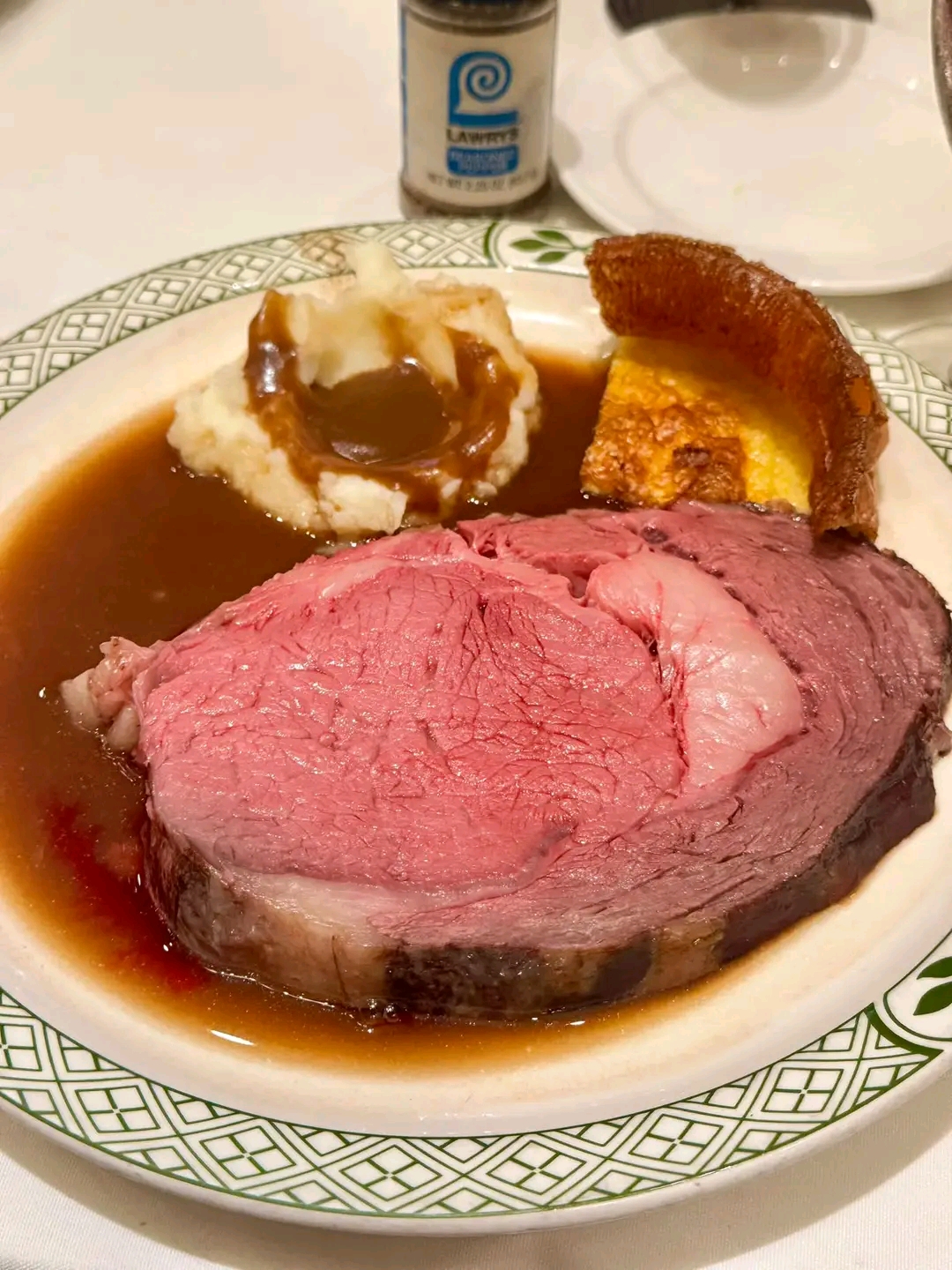
Lawry’s-Style Prime Rib 200g Perfectly Cooked Medium Rare
### Introduction
Few dishes are as elegant and satisfying as a perfectly prepared prime rib. A 200g serving of medium-rare prime rib at Lawry’s is a wonderful example of classic steakhouse dining, featuring tender, juicy beef with a beautifully seasoned exterior and a warm, rosy-red center.
Prime rib is prized for its rich beef flavor, natural marbling, and melt-in-your-mouth tenderness. When slowly roasted and carefully carved, it becomes a luxurious meal that is perfect for special occasions, celebrations, or an unforgettable dinner.
This recipe recreates the experience of enjoying Lawry’s famous prime rib at home, complete with traditional seasoning, rich au jus, and classic steakhouse accompaniments.
* Preparation Time: 20 minutes
* Cooking Time: Approximately 2–3 hours for a whole roast, depending on size
* Resting Time: 20–30 minutes
* Serving Size: 200g cooked prime rib
* Difficulty: Intermediate
### Origin
Prime rib has deep roots in traditional British and American roast-beef cooking. In Britain, large joints of beef roasted slowly became a centerpiece of Sunday dinners and festive celebrations.
The tradition became especially popular in the United States, where prime rib developed into a signature steakhouse dish.
Lawry’s The Prime Rib was established in Beverly Hills, California, in 1938 by Lawrence L. Frank and Walter Van de Kamp. The restaurant became famous for its slow-roasted prime rib, distinctive seasoning, tableside carving, and elegant presentation.
Its approach helped make prime rib an iconic American fine-dining experience.
### Cultural Significance
Prime rib represents celebration, hospitality, and traditional steakhouse dining. It is commonly served during Christmas dinners, Thanksgiving gatherings, anniversaries, birthdays, and other special occasions.
Lawry’s is particularly known for its theatrical tableside service, where servers carve portions of beautifully roasted beef directly from a silver serving cart.
The dish is more than simply a piece of beef. It represents the pleasure of sharing a memorable meal, enjoying traditional cooking techniques, and appreciating the quality of carefully prepared ingredients.
### Ingredients Quantity
For one generous 200g cooked serving, with additional ingredients for roasting and serving.

250–280g raw prime rib
A well-marbled ribeye roast portion, allowing for moisture loss during cooking to yield approximately 200g cooked beef.

½ teaspoon kosher salt
Enhances the natural beef flavor.

¼ teaspoon black pepper
Adds gentle warmth and seasoning.

¼ teaspoon garlic powder and ¼ teaspoon onion powder
Add savory depth to the crust.

1 teaspoon fresh rosemary and thyme
Provide an aromatic herbal flavor.

1 teaspoon olive oil and 1 teaspoon butter
Help with browning and add richness.

¼–½ cup beef au jus
A classic accompaniment for serving.
### Optional Additions
For a more luxurious steakhouse experience, consider:
* Creamy horseradish sauce: Adds a sharp, delicious contrast to the rich beef.
* Yorkshire pudding: A traditional roast-beef accompaniment.
* Garlic butter: A small spoonful over the hot meat adds richness.
* Roasted garlic: Provides a mellow, sweet flavor.
* Sautéed mushrooms: Pair beautifully with prime rib.
* Creamed spinach: A classic steakhouse side dish.
* Roasted asparagus: Adds freshness and color.
* Mashed potatoes: Perfect for soaking up the delicious au jus.
### Tips for Success
* Choose quality beef: Look for well-marbled prime rib with fine streaks of fat throughout the meat.
* Bring the beef toward room temperature: Let it sit out briefly before roasting, following safe food-handling practices. Avoid leaving raw beef at room temperature for extended periods.
* Season generously: Salt and pepper help develop a flavorful exterior.
* Use a meat thermometer: This is the most reliable way to achieve medium rare.
* Cook gently: A lower roasting temperature helps produce more even doneness.
* Rest before carving: Resting allows the juices to redistribute throughout the meat.
* Slice against the grain: This helps make every bite tender.
* Prepare the au jus: Use the flavorful roasting drippings to make a delicious sauce.
### Instructions

Step 1: Prepare the beef
Remove the prime rib from refrigeration shortly before cooking. Pat it dry with paper towels and season with salt, pepper, garlic powder, onion powder, rosemary, and thyme.

Step 2: Prepare for roasting
Rub the beef with olive oil and softened butter. Place it fat-side up on a roasting rack inside a roasting pan.

Step 3: Roast slowly
For a whole roast, preheat the oven to 250°F (120°C). Roast until the center reaches approximately 120–125°F (49–52°C), monitoring with a thermometer. Cooking time depends on the roast’s size and shape.

Step 4: Rest the roast
Remove the roast and allow it to rest for 20–30 minutes. For a crispier exterior, finish with a brief high-temperature sear, taking care not to overcook the center.

Step 5: Carve the portion
Slice approximately 200g of cooked prime rib against the grain. The center should be beautifully rosy and juicy.

Step 6: Prepare the au jus
Pour the roasting drippings into a saucepan, add beef stock, and simmer briefly. Strain if desired and adjust the seasoning.

Step 7: Serve
Arrange the 200g portion on a warm plate. Spoon a little au jus over or alongside the beef and serve with your favorite steakhouse sides.
Important food-safety note: The traditional medium-rare temperature is below the USDA whole-cut beef recommendation of 145°F (63°C) followed by a 3-minute rest. A roast cooked to medium rare is therefore a preference that carries additional food-safety risk, particularly for vulnerable individuals.
### Description
Lawry’s-style prime rib is tender, juicy, richly flavored, and beautifully presented. Its exterior develops a delicious seasoned crust, while the center remains rosy pink and succulent.
The natural marbling melts during cooking, creating a buttery texture and deep beef flavor. Served with warm au jus, every slice delivers the classic steakhouse experience.
A 200g serving is a satisfying portion for anyone who appreciates premium-quality beef and traditional roast cooking.
### Nutritional Information
Estimated nutritional values for 200g cooked prime rib without sides or au jus:
| Nutrient | Approximate amount |
| ————- | —————— |
| Calories | 450–550 kcal |
| Protein | 45–52 g |
| Total fat | 28–38 g |
| Saturated fat | 11–15 g |
| Carbohydrates | 0–1 g |
| Sugar | 0 g |
| Fiber | 0 g |
| Sodium | 400–650 mg |
Values depend on the beef’s marbling, trimming, seasoning, and cooking method. Au jus and side dishes will add additional calories and sodium.
### Conclusion
Prime rib is one of the most celebrated dishes in traditional steakhouse dining. Its tender texture, rich flavor, and beautifully roasted exterior make it an unforgettable meal.
Inspired by the classic Lawry’s experience, this homemade version brings together quality beef, simple seasonings, careful roasting, and delicious au jus.
Whether served for a special celebration or a luxurious weekend dinner, a perfectly prepared 200g portion makes every meal feel special.
### Recommendation
For the ultimate steakhouse-style dinner, serve your medium-rare prime rib with:
* Creamy mashed potatoes.
* Freshly prepared beef au jus.
* Creamed spinach.
* Roasted seasonal vegetables.
* A small portion of horseradish sauce.
Serve everything on warm plates to keep the beef at its best.
My recommendation is to prioritize the quality of the beef and use a reliable meat thermometer rather than relying on cooking time alone.
### Embracing Healthful Indulgence
Prime rib can fit into a balanced eating pattern because it provides high-quality protein, iron, zinc, and vitamin B12.
For a more balanced plate, enjoy your 200g serving alongside plenty of colorful vegetables and a moderate portion of potatoes.
A few simple adjustments can make the meal lighter:
* Trim excess visible fat if desired.
* Use homemade, lower-sodium au jus.
* Choose steamed or roasted vegetables.
* Avoid adding excessive butter or heavy sauces.
* Enjoy a moderate portion and savor each bite.
Healthful eating does not mean giving up the pleasure of a beautifully prepared meal. It means appreciating quality ingredients, choosing satisfying portions, and enjoying special foods as part of an overall balanced lifestyle.