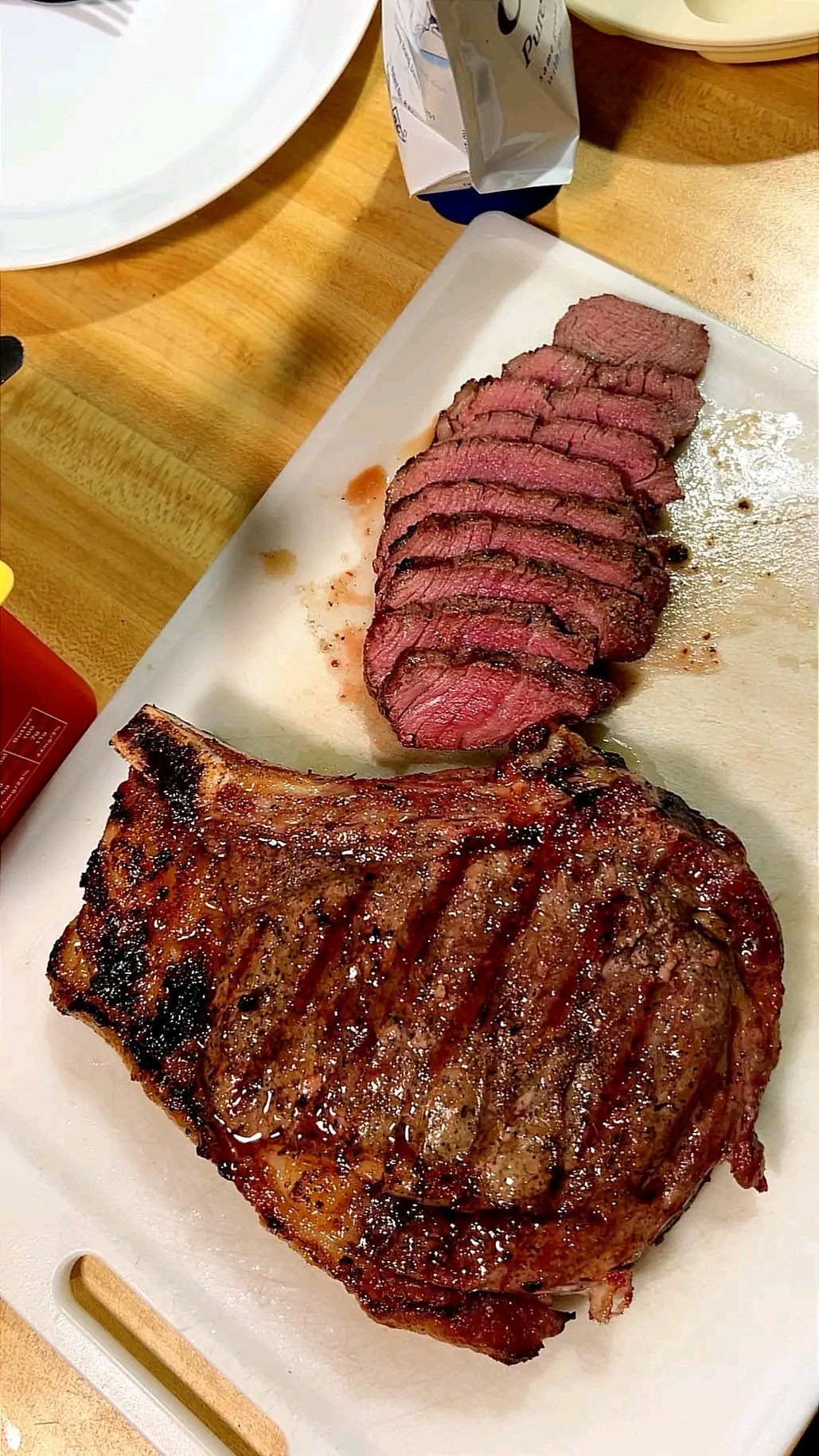
Home-Raised Tenderloin & Bone-In Ribeye – Perfectly Grilled Steakhouse Dinner
### Introduction
Nothing compares to the incredible flavor and tenderness of home-raised beef. A beautiful tenderloin paired with a juicy bone-in ribeye creates the ultimate steak lover’s meal. These two premium cuts offer different but equally delicious experiences: tenderloin is exceptionally soft and delicate, while bone-in ribeye is rich, juicy, and packed with natural marbling.
Whether cooked over an open flame, on a charcoal grill, or in a cast-iron skillet, home-raised beef deserves simple seasoning and careful preparation to let its natural flavor shine.
This recipe celebrates quality beef, traditional cooking, and the pleasure of sharing a wonderful homemade steak dinner.
* Preparation Time: 15 minutes
* Cooking Time: 10–20 minutes, depending on thickness and desired doneness
* Resting Time: 5–10 minutes
* Servings: 2
* Difficulty: Easy to intermediate
### Origin
Beef tenderloin and ribeye have long been treasured cuts in traditional European and American cooking.
Tenderloin comes from the short loin area of the animal, beneath the backbone. Because this muscle performs relatively little work, its meat is exceptionally tender.
Ribeye comes from the rib section and is famous for its marbling. When cooked, the intramuscular fat melts and creates a rich, juicy flavor.
The bone-in ribeye, sometimes called a cowboy steak or tomahawk steak depending on its presentation, has become a favorite in American steakhouses.
Home-raised beef adds another dimension to this tradition, connecting modern steak cooking with the agricultural heritage of raising animals and enjoying locally produced food.
### Cultural Significance
Raising cattle and preparing fresh beef have long been part of rural food traditions around the world.
For many families, home-raised beef represents hard work, self-sufficiency, and the satisfaction of knowing where their food comes from.
Steaks are also associated with celebrations, family gatherings, summer barbecues, and special occasions. A tenderloin and bone-in ribeye served together create an impressive meal that brings people around the table.
The combination celebrates two different textures and flavors while highlighting the importance of good ingredients and simple cooking.
### Ingredients Quantity
Serves 2 generously.

1 beef tenderloin steak (200–250g)
Choose a thick, evenly cut piece for maximum tenderness.

1 bone-in ribeye steak (350–450g)
Look for good marbling and a thick, evenly shaped cut.

1–1½ teaspoons coarse salt
Adjust according to the size of the steaks.

1 teaspoon freshly cracked black pepper
Adds a wonderful savory flavor.

3 garlic cloves
Lightly crushed for aromatic flavor.

2 sprigs rosemary and 2 sprigs thyme
Complement the natural flavor of the beef.

2 tablespoons butter and 1 tablespoon olive oil
Perfect for skillet cooking and basting.
### Optional Additions
Make your steak dinner even more special with these additions:
* Garlic herb butter: Combine softened butter, minced garlic, parsley, and rosemary.
* Smoked paprika: Adds a subtle smoky flavor.
* Worcestershire sauce: A small splash adds savory depth.
* Mushroom sauce: Serve with sautéed mushrooms.
* Blue cheese: Crumble a little over the hot ribeye.
* Chimichurri: A fresh parsley, garlic, and olive oil sauce adds brightness.
* Grilled onions: Provide natural sweetness.
* Roasted potatoes: A classic steakhouse side dish.
### Tips for Success
* Start with quality beef: Good marbling is especially important for a flavorful ribeye.
* Dry the steaks: Pat the meat with paper towels before seasoning to encourage browning.
* Season properly: Salt and freshly cracked pepper are often all you need.
* Cook according to thickness: A thick bone-in ribeye needs more time than a smaller tenderloin.
* Use a meat thermometer: It provides much better control over doneness than appearance alone.
* Do not overcrowd the grill: Give each steak enough space for proper browning.
* Baste carefully: Butter, garlic, and herbs add wonderful flavor when using a skillet.
* Rest the meat: Allow the steaks to rest before slicing.
* Slice against the grain: This helps preserve tenderness, especially with the tenderloin.
### Instructions

Step 1: Prepare the steaks
Remove the steaks from refrigeration shortly before cooking, following safe food-handling practices. Pat them dry with paper towels and trim any unwanted excess fat.

Step 2: Season generously
Sprinkle both sides with coarse salt and freshly cracked black pepper. Allow the seasoning to sit briefly while you prepare the grill or skillet.

Step 3: Heat the cooking surface
Heat a cast-iron skillet over medium-high to high heat, or prepare a grill with both direct and indirect heat zones. Add the olive oil to the skillet.

Step 4: Sear the ribeye
Place the bone-in ribeye in the hot skillet. Sear each side until a beautiful brown crust develops. Turn occasionally and cook the edges as needed.

Step 5: Cook the tenderloin
Sear the tenderloin on both sides until browned. Because it is generally smaller and leaner, monitor its internal temperature carefully to prevent overcooking.

Step 6: Add garlic butter
Reduce the heat slightly. Add butter, crushed garlic, rosemary, and thyme. Tilt the pan carefully and spoon the melted herb butter over the steaks.

Step 7: Check doneness and rest
Use a food thermometer to check the thickest part of each steak, avoiding the bone. For a medium-rare preference, the traditional target is around 130–135°F (54–57°C) after resting, although the USDA recommends whole beef steaks reach 145°F (63°C) followed by a 3-minute rest for food safety.

Step 8: Serve and enjoy
Arrange the tenderloin and bone-in ribeye on a warm serving platter. Add garlic herb butter, roasted vegetables, or potatoes and serve immediately.
### Description
This home-raised tenderloin and bone-in ribeye combination is a true celebration of beef.
The tenderloin is incredibly soft, lean, and delicate, while the ribeye offers a richer flavor with beautiful marbling and a satisfying bite.
The combination of salt, black pepper, garlic, rosemary, thyme, and butter enhances the natural character of the meat without overpowering it.
Each steak offers something different, making this meal especially enjoyable for anyone who appreciates high-quality beef.
### Nutritional Information
Estimated nutritional values per person, assuming approximately 200g cooked tenderloin and 200g cooked ribeye, without side dishes:
| Nutrient | Approximate amount |
| ————- | —————— |
| Calories | 850–1,050 kcal |
| Protein | 85–100 g |
| Total fat | 55–75 g |
| Saturated fat | 22–30 g |
| Carbohydrates | 1–3 g |
| Sugar | 0–1 g |
| Fiber | 0 g |
Values vary depending on steak size, marbling, trimming, and the amount of butter used.
### Conclusion
Home-raised tenderloin and bone-in ribeye are a wonderful combination of tenderness, richness, and authentic beef flavor.
With simple seasoning, proper cooking temperatures, and a little patience, these beautiful cuts can become an unforgettable homemade steakhouse meal.
Whether grilled over charcoal or prepared in a cast-iron skillet, the natural quality of home-raised beef deserves to be enjoyed and celebrated.
### Recommendation
For the ultimate dinner, serve the tenderloin and bone-in ribeye with:
* Garlic roasted potatoes.
* Grilled asparagus.
* Sautéed mushrooms.
* Fresh garden salad.
* Homemade garlic herb butter.
* A small bowl of chimichurri sauce.
My recommendation is to cook the steaks separately if their thicknesses differ significantly. This allows each cut to reach its ideal doneness without sacrificing tenderness.
### Embracing Healthful Indulgence
Beef provides complete protein and important nutrients, including iron, zinc, vitamin B12, and selenium.
Tenderloin is generally leaner than ribeye, while ribeye contains more intramuscular fat that contributes to its rich flavor.
For a more balanced steak dinner:
* Choose a smaller portion of ribeye and enjoy tenderloin alongside it.
* Trim excess visible fat if desired.
* Use moderate amounts of butter.
* Add plenty of colorful vegetables.
* Choose roasted or steamed sides instead of heavily fried accompaniments.
* Enjoy the meal mindfully and savor the natural flavor of the beef.
The beauty of home-raised beef is the opportunity to appreciate quality food and traditional cooking. A delicious steak dinner can absolutely be part of a balanced lifestyle when enjoyed in appropriate portions.