### Easy Homemade No-Knead Bread (No Eggs, No Butter)
### 1\. Introduction
There is nothing quite like the smell of freshly baked homemade bread filling your kitchen! 🥖 This easy no-knead bread recipe is perfect for anyone who wants delicious, homemade bread without complicated techniques or expensive ingredients.
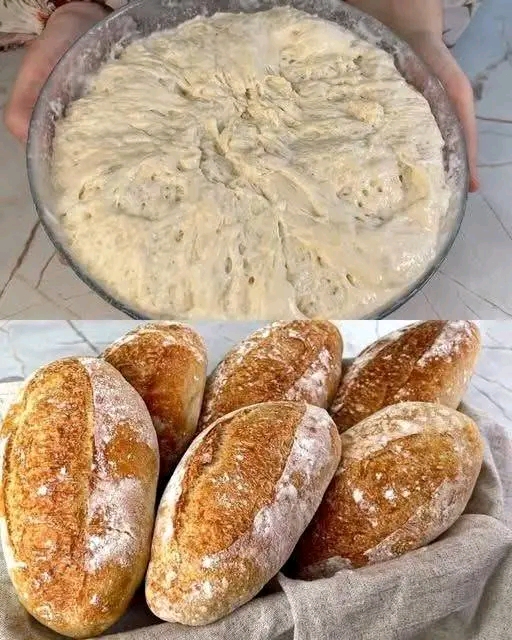
Made without kneading, eggs, or butter, this simple loaf requires only a handful of everyday pantry staples. The outside develops a beautiful golden crust, while the inside stays soft, fluffy, and tender. Best of all, you can prepare it without a stand mixer or special bread-making equipment.
If you want to save money on store-bought bread and enjoy the satisfaction of baking your own, this beginner-friendly recipe is an excellent place to start.
Preparation Time: 10 minutes Rising Time: 1½–2 hours Baking Time: 30–40 minutes Total Time: Approximately 2½–3 hours Servings: 10 slices
### 2\. Origin
Homemade bread has been a staple of human diets for thousands of years. Traditionally, bread-making involved mixing flour, water, salt, and a leavening agent, followed by kneading to develop the dough’s structure.
No-knead bread became especially popular among modern home bakers because it simplifies this traditional process. Instead of relying on extensive kneading, the dough rests while hydration and fermentation help develop its texture and flavor.
This easy version follows the same practical philosophy: simple ingredients, minimal effort, and delicious results straight from your oven.
### 3\. Cultural Significance
Bread holds an important place in food traditions around the world. From French baguettes and Moroccan khobz to Italian country loaves and German farmhouse bread, nearly every culture has its own beloved version.
In many households, homemade bread represents comfort, hospitality, and sharing. Baking bread at home also allows families to control their ingredients, reduce packaging, and save money.
This no-knead recipe celebrates that tradition by making fresh bread accessible to beginners and busy families alike.
### 4\. Ingredients Quantity

Ingredients for one loaf
* 500 g all-purpose flour (approximately 4 cups, depending on how it is measured)
* 350 ml lukewarm water (1½ cups minus 1 tablespoon, approximately)
* 7 g instant dry yeast (about 2¼ teaspoons)
* 10 g salt (about 1¾ teaspoons)
* 1 teaspoon sugar (optional, to help activate the yeast)
* 1 teaspoon olive oil, for greasing the bowl (optional)
These ingredients make a simple, economical loaf without eggs, butter, or milk. The dough should be soft and slightly sticky rather than firm like traditional kneaded bread dough.
### 5\. Optional Additions
You can customize this basic bread recipe to suit your taste.
* Seeds: Add 2 tablespoons of sesame, sunflower, pumpkin, or flax seeds.
* Whole-wheat flour: Replace up to 150 g of the white flour with whole-wheat flour. Add a little extra water if needed.
* Herbs: Mix in 1–2 teaspoons of dried oregano, rosemary, or thyme.
* Garlic bread flavor: Add 1–2 finely minced garlic cloves.
* Olives: Fold in approximately 50 g of chopped, well-drained olives.
* Crispier crust: Bake the loaf in a preheated Dutch oven or add steam during the initial baking stage.
* Sugar-free option: Leave out the optional teaspoon of sugar. The yeast can still ferment using sugars naturally available from the flour.
### 6\. Tips for Success
* Use lukewarm water: Water that is too hot can damage the yeast. Aim for approximately 35–38°C (95–100°F).
* Measure accurately: Too much flour can make the bread dry and dense. Weighing your ingredients gives the most reliable results.
* Don’t knead the dough: Stir until the flour is fully hydrated and no dry patches remain.
* Allow enough rising time: The dough should become noticeably larger and airy. Cooler kitchens may require additional time.
* Avoid adding too much flour: A slightly sticky dough is normal and helps create a softer interior.
* Preheat the oven: A properly heated oven helps the bread rise and develop a good crust.
* Check that it is baked through: The loaf should be golden and sound hollow when tapped underneath. An internal temperature of approximately 93–96°C (200–205°F) is a useful guide.
* Let it cool: Wait at least 30 minutes before slicing to prevent a gummy texture.
### 7\. Instructions

Step 1: Mix the ingredients
In a large bowl, combine the flour, yeast, salt, and optional sugar. Pour in the lukewarm water and stir with a wooden spoon until a rough, sticky dough forms. No kneading is necessary.

Step 2: Let the dough rise
Cover the bowl with a clean kitchen towel or plastic wrap. Leave it in a warm place for 1½–2 hours, or until the dough has expanded noticeably and looks bubbly.

Step 3: Shape the loaf
Lightly flour your hands and work surface. Gently fold the dough over itself a few times, then shape it into a round or oval loaf. Avoid pressing out all the air. Place it on parchment paper or in a lightly greased loaf pan.

Step 4: Rest while the oven heats
Cover the shaped dough and let it rest for 20–30 minutes. Meanwhile, preheat your oven to 220°C (425°F).

Step 5: Bake the bread
Bake for 30–40 minutes, until the crust is deep golden brown and the loaf is cooked through. If the top browns too quickly, loosely cover it with foil near the end.

Step 6: Cool and serve
Transfer the bread to a wire rack and allow it to cool for at least 30 minutes before slicing. Enjoy it fresh with your favorite savory toppings or alongside soup.
### 8\. Description
This easy homemade bread has a golden, lightly crisp crust and a soft, airy interior. Its mild flavor makes it versatile enough for breakfast toast, lunch sandwiches, or dinner accompaniments.
Because the recipe uses no eggs or butter, the ingredients remain simple and inexpensive. The texture will be more rustic than enriched breads such as brioche, but the loaf is wonderfully satisfying when served fresh from the oven.
### 9\. Nutritional Information
Estimated nutrition per slice, assuming 10 slices per loaf:
| Nutrient | Approximate amount |
| ————- | —————— |
| Calories | 185 kcal |
| Carbohydrates | 38 g |
| Protein | 5.5 g |
| Fat | 0.5 g |
| Fiber | 1.5 g |
| Sugar | Less than 1 g |
| Sodium | 390 mg |
Values are estimates and vary with the flour brand, slice size, and amount of salt used. These figures do not include optional additions or toppings.
Note: This is a traditional wheat-flour bread, so it is not gluten-free or low-carbohydrate. For a more fiber-rich loaf, you can replace some of the white flour with whole-wheat flour.
### 10\. Conclusion
Making bread at home does not have to be expensive or complicated. With a bowl, a spoon, a few basic ingredients, and a little patience, you can prepare a delicious loaf without kneading, eggs, or butter.
This recipe is ideal for beginners, families on a budget, and anyone who enjoys the comfort of freshly baked bread. Once you master the basic version, you can experiment with seeds, herbs, whole grains, and other flavors.
### 11\. Recommendation
Serve your homemade bread warm alongside vegetable soup, lentil stew, salads, or roasted vegetables. It is also delicious toasted for breakfast or used to make sandwiches.
For the best flavor and texture, eat it on the day it is baked. Store leftovers in a bread bag or airtight container at room temperature for about 2–3 days. For longer storage, slice and freeze the bread for up to 3 months, then toast or thaw slices as needed.
### 12\. Embracing Healthful Indulgence
Homemade bread can be part of a balanced eating pattern. Preparing it yourself gives you control over the ingredients and allows you to adjust the salt, incorporate whole grains, or add seeds for extra fiber and healthy fats.
To make this loaf more nourishing, try replacing a portion of the all-purpose flour with whole-wheat flour and serving each slice with vegetables, hummus, or another protein-rich accompaniment.
Remember that bread made with ordinary wheat flour still contains carbohydrates, even when it has no added sugar, eggs, or butter. Enjoy it in portions that suit your needs and savor the simple pleasure of homemade food.
The result: an affordable, beginner-friendly loaf with a crisp crust, soft center, and no complicated kneading required. 🥖