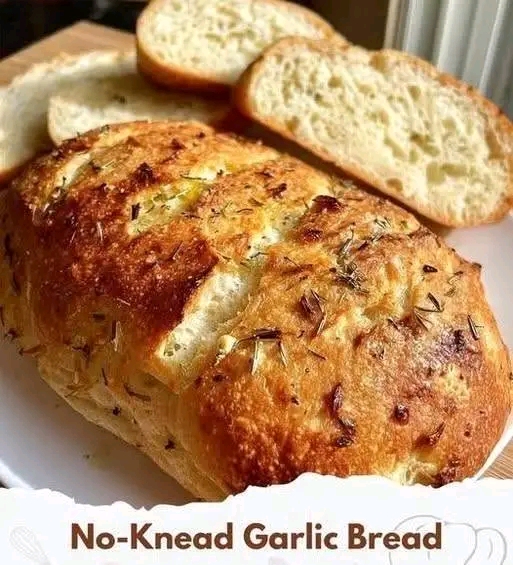
### Diabetic-Friendly No-Knead Garlic Bread Easy, Flavorful Homemade Bread
### Introduction
There is something comforting about the smell of freshly baked garlic bread filling the kitchen. This no-knead garlic bread is inspired by traditional family recipes passed down from grandmothers, combining simple ingredients, a soft interior, and a delicious garlic aroma without the need for lengthy kneading.
Designed as a lower-sugar option for people who are mindful of their blood glucose, this recipe uses wholesome ingredients and flavorful seasonings to create a satisfying homemade bread. It is easy to prepare, making it suitable for beginners and busy home cooks alike.
Although this version is diabetes-conscious, bread still contains carbohydrates that can raise blood glucose. Choosing suitable flour, controlling portion sizes, and pairing the bread with protein and vegetables can help make it part of a balanced meal.
### Origin
Garlic bread has roots in traditional European cooking, particularly Italian cuisine, where toasted bread rubbed with garlic and drizzled with olive oil has been enjoyed for generations. This simple preparation is closely related to bruschetta, a traditional Italian dish made with grilled bread and flavorful toppings.
The buttery, garlic-rich bread commonly served in restaurants became especially popular in Italian-American cooking. Over time, countless home cooks created their own versions using fresh garlic, herbs, butter, and different types of bread.
No-knead bread is another practical baking tradition. Instead of extensive kneading, the dough is mixed and left to rest so that hydration and fermentation help develop its structure. Combining this technique with garlic seasoning creates an easy homemade variation inspired by traditional family cooking.
This diabetes-conscious version is an adaptation rather than a verified historical recipe from a specific grandmother.
### Cultural Significance
Homemade bread often represents hospitality, family, and the comfort of sharing a meal. Grandmothers frequently pass down practical cooking methods that make everyday food delicious without requiring expensive ingredients or complicated equipment.
Garlic bread has become a familiar accompaniment to soups, salads, roasted vegetables, and hearty main courses. Its appealing aroma and savory flavor make it a popular choice for family dinners.
A no-knead version continues this tradition by making bread baking more accessible. The diabetes-conscious adaptation adds another consideration: preparing familiar foods in ways that better fit individual nutritional needs while preserving their enjoyment.
The heart of this recipe is simple: good flavor, practical preparation, and the pleasure of sharing homemade food with loved ones.
### Ingredients Quantity
Preparation: 15 minutes · Rising: 1–2 hours · Baking: 30–35 minutes · Makes: 1 loaf, about 10 slices
### For the bread
* 300 g whole-wheat flour
* 100 g bread flour
* 7 g instant dry yeast
* 300–320 ml lukewarm water
* 1 tablespoon olive oil
* 1 teaspoon salt
* 1 teaspoon dried oregano
* ½ teaspoon garlic powder
### For the garlic topping
* 3–4 fresh garlic cloves, finely minced
* 2 tablespoons olive oil or softened unsalted butter
* 2 tablespoons chopped fresh parsley
* ½ teaspoon dried Italian herbs
* A pinch of black pepper
* A small pinch of salt, if needed
Optional: 1 tablespoon ground flaxseed or chia seeds for extra fiber.
This recipe contains no added sugar, but it is not carbohydrate-free. Whole-wheat flour still contributes carbohydrates, and the amount per slice depends on the final loaf size.
### Optional Additions
You can adapt this bread to suit your preferred flavors.
* Fresh rosemary: Adds an earthy, aromatic flavor.
* Chili flakes: Bring a gentle heat that complements the garlic.
* Ground flaxseed: Adds fiber and a subtle nutty flavor.
* Sunflower seeds: Provide crunch and additional nutrients.
* Roasted garlic: Creates a milder, sweeter garlic flavor.
* Nutritional yeast: Adds a savory, cheese-like flavor without dairy.
* Fresh thyme: Gives the bread a fragrant herbal note.
* Sesame seeds: Add texture and a lightly toasted flavor.
For a dairy-free version, use olive oil instead of butter. If managing diabetes, remember that adding seeds may improve fiber content, but it does not eliminate the carbohydrates in the flour.
### Tips for Success
* Measure the water carefully. Whole-wheat flour absorbs more water than white flour, so start with 300 ml and add more gradually if needed.
* Do not knead the dough. Stir until all the flour is moistened and a sticky dough forms.
* Allow sufficient rising time. Let the dough rise in a warm, draft-free place until visibly expanded.
* Use fresh garlic for the topping. It provides a stronger, fresher flavor than garlic powder alone.
* Avoid excessive flour. Adding too much flour can make the loaf dense and dry.
* Bake until fully cooked. The crust should be golden brown, and the center should no longer be doughy.
* Add fresh herbs after baking if desired. This preserves their color and fresh aroma.
* Watch portion sizes. Even bread made without added sugar can raise blood glucose because flour contains digestible carbohydrates.
* Pair it thoughtfully. Serve the bread with protein, healthy fats, and non-starchy vegetables for a more balanced meal.
### Instructions
### Step 1: Mix the dry ingredients
In a large mixing bowl, combine the whole-wheat flour, bread flour, instant yeast, salt, oregano, and garlic powder. Stir until evenly distributed.
### Step 2: Add the water and olive oil
Pour in 300 ml of lukewarm water and the tablespoon of olive oil. Mix with a wooden spoon until a sticky, rough dough forms.
If the dough appears unusually dry, add the remaining water a little at a time. Do not knead.
### Step 3: Let the dough rise
Cover the bowl with a clean kitchen towel or reusable cover. Leave it in a warm place for approximately 1–2 hours, or until the dough has visibly expanded.
The exact time will depend on room temperature and yeast activity.
### Step 4: Prepare the baking pan
Lightly grease a loaf pan or line it with baking parchment. Transfer the dough into the pan using a spatula or lightly oiled hands.
Smooth the surface gently. Let the dough rest for another 15–20 minutes while the oven heats.
### Step 5: Preheat the oven
Preheat the oven to 200°C (400°F). Place the rack in the middle position.
### Step 6: Bake the bread
Bake for approximately 30–35 minutes, or until the loaf is golden and cooked through. If the top browns too quickly, loosely cover it with foil.
Remove the loaf from the oven and allow it to cool slightly before adding the garlic topping.
### Step 7: Prepare the garlic mixture
Mix the minced garlic, olive oil or softened butter, parsley, Italian herbs, black pepper, and optional salt in a small bowl.
For a milder garlic flavor, briefly warm the mixture in a small pan over low heat. Do not let the garlic burn.
### Step 8: Add the garlic topping
Brush the garlic mixture over the warm loaf. Allow it to rest for 5–10 minutes so the flavor can settle into the crust.
For a crispier finish, slice the bread and toast the slices briefly in the oven after brushing them with the garlic mixture.
### Step 9: Slice and serve
Allow the loaf to cool enough to slice cleanly. Serve warm alongside soup, salad, grilled chicken, fish, or roasted vegetables.
### Description
This no-knead garlic bread has a rustic crust, a hearty interior, and a delicious blend of garlic, olive oil, and aromatic herbs. Whole-wheat flour provides a more substantial texture and generally more fiber than refined white flour.
The dough requires little hands-on effort, making this a practical recipe for anyone who wants homemade bread without the physical work of traditional kneading.
The garlic topping adds plenty of flavor without requiring added sugar. Enjoy it freshly baked, toasted the following day, or alongside a simple homemade meal.
### Nutritional Information
The following figures are estimates per slice, assuming the loaf makes 10 equal slices and the full quantity of olive oil is used.
| Nutrient | Approximate amount |
| ————- | —————— |
| Calories | 180–220 kcal |
| Protein | 5–7 g |
| Carbohydrates | 28–34 g |
| Fiber | 3–5 g |
| Total sugars | 1–2 g |
| Fat | 5–7 g |
Actual values will vary depending on the flour, amount of oil absorbed, and slice size.
Important for diabetes: “No added sugar” does not mean “blood-glucose neutral.” Flour supplies carbohydrates, which can increase blood glucose. Individual responses differ, so portion size and personal glucose readings are useful guides. If you follow a prescribed carbohydrate target, count each slice toward that target.
### Conclusion
This diabetic-conscious no-knead garlic bread offers a practical way to enjoy homemade bread with a fragrant garlic topping and minimal preparation. Its whole-wheat base, simple ingredients, and lack of added sugar make it a useful alternative to sweeter or heavily refined bread recipes.
Inspired by the comfort of family cooking, it brings together convenience and traditional flavor. Whether served with soup, a fresh salad, or a hearty dinner, it can be adapted to your preferences without complicated techniques.
The most important thing to remember is that diabetes-friendly cooking is about the overall ingredients, carbohydrate portions, and meal balance—not simply removing sugar.
### Recommendation
For a satisfying meal, serve one appropriately sized slice with grilled chicken, fish, eggs, or beans and a generous portion of vegetables.
If you prefer a stronger garlic flavor, add a little extra fresh garlic to the topping. For a crispier texture, toast the slices briefly before serving.
You can prepare the loaf ahead of time and store it in an airtight container once completely cooled. For longer storage, slice and freeze it, then reheat individual slices when needed.
If you are aiming for lower carbohydrate intake, consider making smaller slices or trying a separately tested bread recipe based on almond flour and seeds. Such recipes have a different texture and require different proportions of liquid and binding ingredients.
### Embracing Healthful Indulgence
Enjoying bread while managing diabetes is possible, and you do not necessarily have to give up foods you love. The key is making informed choices that suit your nutritional needs.
Here are a few practical ways to make this recipe fit into a balanced eating pattern:
* Choose whole grains: Whole-wheat flour generally provides more fiber than refined white flour.
* Avoid added sugar: This recipe does not require sugar for flavor, although yeast activity and rising time can vary with different dough conditions.
* Use olive oil in moderation: It provides unsaturated fats and keeps the garlic topping flavorful.
* Add fiber thoughtfully: Ground flaxseed or chia seeds can contribute fiber, but they do not remove the carbohydrates from the flour.
* Balance your plate: Combine bread with protein and non-starchy vegetables rather than eating several slices on their own.
* Pay attention to your own response: If you monitor blood glucose, your readings can help you understand how a particular portion affects you.
This recipe is a flavorful, no-added-sugar option—not a guarantee of low blood glucose. With sensible portions and balanced accompaniments, homemade garlic bread can remain an enjoyable part of a varied diet.