#
Grandma’s Traditional Christmas Fruitcake A Heartwarming Family Recipe
### Introduction
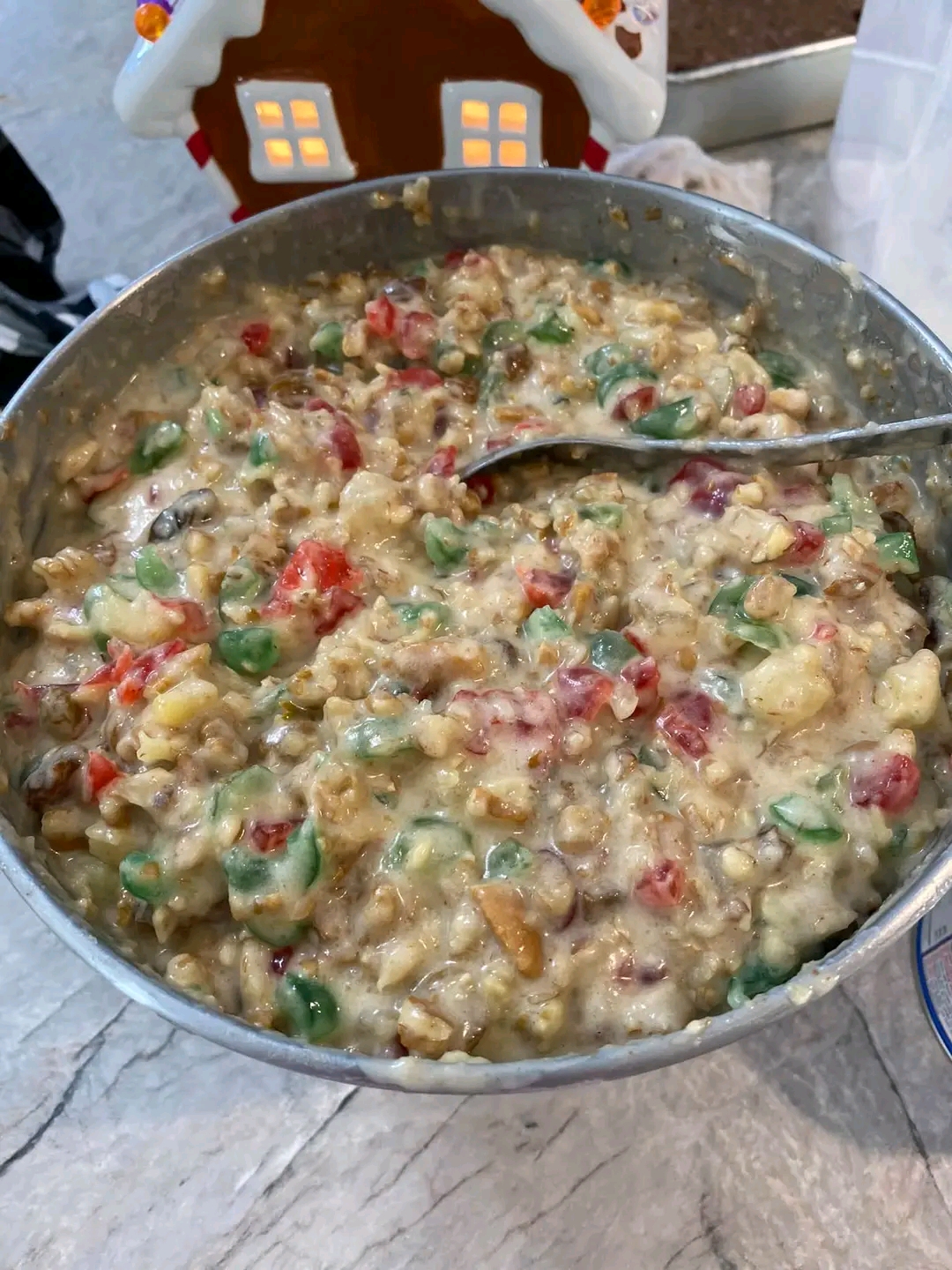
There is something truly special about a homemade Christmas fruitcake, especially when it is baked with love and inspired by a treasured family tradition. This traditional fruitcake is packed with colorful candied fruit, crunchy pecans, and rich flavors that make every slice feel like a celebration. It is more than just a holiday dessert; it is a delicious way to keep family memories alive.
Inspired by a grandmother’s cherished Christmas recipe, this fruitcake brings warmth, nostalgia, and homemade goodness to the holiday season. Baking it for a beloved father makes the tradition even more meaningful. Every ingredient has a purpose, and every slice carries a little piece of family history.
This version includes generous amounts of pecans and candied fruit, creating a moist, dense, flavorful cake that is perfect for Christmas gatherings, gifting, or enjoying with a cup of coffee. A splash of rum is optional, and you can leave out the candied citrus if you prefer a milder, sweeter flavor.
### Origin
Fruitcake has a long history that stretches back to ancient civilizations, when dried fruits and nuts were combined with grains and sweeteners to create nourishing foods. Over time, these combinations evolved into richer baked desserts enjoyed throughout Europe and eventually became popular in North America.
In the American South, fruitcake developed into a beloved holiday tradition. Families often prepared their own versions using pecans, raisins, candied cherries, pineapple, and other preserved fruits. Recipes varied from household to household, with some families adding spices or spirits and others relying on the sweetness of the fruit and the richness of the cake.
Homemade Christmas fruitcakes are particularly meaningful because many recipes are passed from one generation to the next. This grandmother-inspired version celebrates that tradition with plenty of pecans and candied fruit, while allowing each family to adapt the ingredients to its own tastes.
### Cultural Significance
Christmas fruitcake is more than a dessert in many families. It represents generosity, remembrance, and the joy of preparing something special for loved ones.
Grandmothers often held a treasured place in holiday baking traditions, passing down recipes that became part of family celebrations year after year. Baking the same fruitcake for a parent or grandparent can preserve those memories and create a meaningful connection between generations.
Homemade fruitcakes are also popular gifts during the holiday season because they can be prepared ahead of time, wrapped carefully, and shared with friends and relatives. The abundance of fruit and nuts makes them feel festive and special.
This particular family tradition reminds us that the most valuable ingredient is not always something measured in a cup or spoon. It is the love and care that go into making a recipe for someone important.
### Ingredients Quantity
Preparation time: 30–40 minutes Baking time: 75–100 minutes, depending on pan size Cooling time: 2 hours Yield: 1 large loaf or tube cake, approximately 12–16 servings
### Ingredients
* 250 g all-purpose flour (about 2 cups)
* 170 g unsalted butter, softened (¾ cup)
* 180 g granulated sugar (about ¾–⅞ cup)
* 4 large eggs
* 250 g candied fruit mix (about 1½ cups)
* 150 g candied cherries, chopped (about 1 cup)
* 200 g pecan halves or pieces (about 2 cups)
* 150 g raisins or currants (about 1 cup)
* 1 teaspoon baking powder
* 1 teaspoon vanilla extract
* ½ teaspoon ground cinnamon
* ¼ teaspoon ground nutmeg
* ¼ teaspoon salt
* 2–4 tablespoons milk or orange juice, if needed
* 2 tablespoons rum, optional
* 1 tablespoon orange zest, optional
### For preparing the pan
* A little butter or baking spray
* Baking parchment, if needed
Note: This is a complete, grandmother-inspired fruitcake recipe based on the ingredients described, not a verified transcription of the original family recipe. Traditional fruitcake recipes vary considerably, so the exact original quantities may be different.
### Optional Additions
One of the wonderful things about fruitcake is how easily it can be personalized.
* Candied pineapple: Adds sweetness and a tropical flavor.
* Dried cranberries: Bring a pleasant tartness that balances the sweet fruit.
* Chopped walnuts: Can replace some of the pecans for a different nutty flavor.
* Chopped dates: Add natural sweetness and a soft, chewy texture.
* Lemon or orange zest: Gives the cake a fresh citrus aroma.
* Ground cloves or allspice: Adds a warm, traditional Christmas spice flavor.
* Rum or brandy: Provides a deeper, more complex flavor. It is entirely optional.
* Apple juice or orange juice: Can replace the rum for a nonalcoholic version.
* A light glaze: A thin coating of apricot jam or simple icing makes the cake look festive.
For a version closer to the grandmother’s described recipe, leave out the rum and candied citrus. Focus instead on pecans, candied cherries, other candied fruits, and raisins.
### Tips for Success
* Use generous amounts of fruit and nuts. They are the stars of this cake, giving it its traditional dense texture and rich flavor.
* Coat the fruit lightly with flour. Tossing the candied fruit, raisins, and chopped pecans with a small amount of the measured flour helps distribute them throughout the batter.
* Bring ingredients to room temperature. Softened butter and room-temperature eggs combine more evenly.
* Avoid overmixing. Once the flour is added, mix just until incorporated to prevent a tough cake.
* Choose the right baking pan. A loaf pan or tube pan works well. Fill it no more than about two-thirds full, and bake any extra batter separately.
* Bake at a moderate temperature. Fruitcake is dense and contains plenty of sugar and fruit, so moderate heat helps it cook through without burning.
* Check the center carefully. A skewer inserted into the cake should come out without wet batter. A few moist crumbs are fine.
* Cool before slicing. The cake becomes firmer as it cools, making it easier to cut cleanly.
* Plan ahead for the holidays. Fruitcake can be baked ahead of time and stored properly, allowing the flavors to develop.
* Remember that family recipes are flexible. Adjust the combination of fruit and nuts to suit your family’s tastes.
### Instructions
### Step 1: Prepare the oven and pan
Preheat the oven to 150°C (300°F). Grease a large loaf pan or tube pan and line it with baking parchment if appropriate.
A lower oven temperature helps the dense cake bake evenly while protecting the fruit and nuts from excessive browning.
### Step 2: Prepare the fruit and pecans
Chop the candied fruit and cherries into small pieces. Roughly chop the pecans, leaving some larger pieces for texture.
Place the candied fruit, cherries, raisins, and pecans in a bowl. Toss them with 2–3 tablespoons of the measured flour until lightly coated.
### Step 3: Cream the butter and sugar
In a large mixing bowl, beat the softened butter and sugar until pale and fluffy, approximately 3–5 minutes.
This step helps create a more even cake texture, despite the generous amount of fruit and nuts.
### Step 4: Add the eggs and flavorings
Add the eggs one at a time, beating well after each addition. Mix in the vanilla extract and, if desired, the rum and orange zest.
If the mixture looks slightly separated, do not worry; adding the dry ingredients gradually should help bring it together.
### Step 5: Combine the dry ingredients
In a separate bowl, whisk together the remaining flour, baking powder, cinnamon, nutmeg, and salt.
Add the dry ingredients to the butter mixture in two or three additions, mixing gently. If the batter is exceptionally stiff, add a little milk or orange juice until it becomes thick but manageable.
### Step 6: Fold in the fruit and nuts
Using a sturdy spatula, fold the fruit and pecans into the batter until evenly distributed.
The batter should be thick enough to hold the fruit and nuts throughout the cake.
### Step 7: Fill the pan
Spoon the batter into the prepared pan and smooth the top. Tap the pan gently on the counter to release any large air pockets.
### Step 8: Bake the fruitcake
Bake for approximately 75–100 minutes, depending on the pan and the depth of the batter. Begin checking around the 70-minute mark.
If the top browns too quickly, loosely cover it with foil. The cake is ready when a skewer inserted into the center comes out without wet batter. If using a food thermometer, the center should reach approximately 96–99°C (205–210°F) for a fully baked cake.
### Step 9: Cool completely
Remove the cake from the oven and let it rest in the pan for 15–20 minutes. Carefully transfer it to a wire rack and allow it to cool completely before slicing.
### Step 10: Serve and share
Cut the fruitcake into thin slices and serve it with coffee, tea, or warm apple cider. For a festive presentation, arrange the slices on a serving plate and garnish with a few pecan halves.
If making the cake as a Christmas gift, wrap it only after it has cooled completely.
### Description
This traditional Christmas fruitcake is rich, dense, and filled with colorful candied fruit, chewy raisins, and crunchy pecans. Each slice offers a wonderful mixture of sweetness, nutty flavor, and warm holiday spices.
The butter-based cake provides a tender foundation for the generous amount of fruit and nuts, while vanilla and cinnamon create a comforting aroma. Optional rum adds depth, but the cake is equally enjoyable without it.
It is the kind of dessert that belongs on a holiday table, beside a cup of coffee, or wrapped carefully for someone you love. Its greatest charm is its homemade character and the family memories it represents.
### Nutritional Information
The following figures are estimates per serving, assuming 16 servings from the complete recipe.
| Nutrient | Approximate amount |
| ————- | —————— |
| Calories | 300–360 kcal |
| Protein | 4–6 g |
| Carbohydrates | 40–48 g |
| Total sugars | 25–32 g |
| Fat | 14–18 g |
| Fiber | 2–3 g |
Actual nutritional values will vary depending on the brands of candied fruit, the amount of pecans, and the size of each slice.
Pecans contribute unsaturated fats, fiber, and minerals. The candied fruit and sugar provide most of the cake’s sweetness and carbohydrates, so smaller slices are a practical way to enjoy this rich holiday treat.
### Conclusion
Grandma’s traditional Christmas fruitcake is a beautiful reminder that the best holiday recipes are often the ones connected to family, memories, and love.
With its abundance of pecans, candied fruit, raisins, and warm spices, this homemade cake offers a festive flavor that feels both nostalgic and comforting. Whether you bake it for your father, share it with relatives, or introduce it to a new generation, it can become a meaningful part of your own Christmas traditions.
The recipe can be adapted to suit your family’s preferences, whether that means leaving out the rum, skipping candied citrus, or adding extra pecans. What matters most is preserving the spirit of the original tradition and enjoying the process of making something special.
### Recommendation
For the best flavor, bake this fruitcake a day or two before serving, then store it in an airtight container in a cool place if your kitchen conditions are suitable. Because the recipe contains moist ingredients and eggs, refrigerate it when in doubt, especially in warm conditions.
Serve thin slices with freshly brewed coffee, black tea, or a warm holiday drink. A little cream cheese on the side can also complement the sweetness, although the cake is delicious on its own.
If you want to recreate your grandmother’s exact recipe, the original ingredient list and quantities will be important. Some traditional fruitcakes use much more fruit and nuts, while others rely on a higher proportion of cake batter.
### Embracing Healthful Indulgence
Holiday baking is about enjoyment, tradition, and sharing—not perfection. A slice of homemade fruitcake can be part of a balanced approach to eating, especially when enjoyed mindfully and in a portion that feels satisfying.
Pecans provide beneficial unsaturated fats, while raisins and other dried fruits contribute some fiber. However, candied fruit and added sugar make this a dessert best enjoyed as an occasional treat.
If you would like to make small adjustments without losing the spirit of the recipe, consider these ideas:
* Reduce the added sugar slightly: The candied fruit already contributes sweetness, so a modest reduction may work well.
* Choose a generous but balanced fruit mixture: Use a combination of pecans, raisins, and less-sweet dried fruit alongside the candied fruit.
* Serve smaller slices: Fruitcake is rich and flavorful, so a thin slice can be satisfying.
* Skip the rum if preferred: Orange juice or apple juice can provide additional flavor without alcohol.
* Experiment thoughtfully with flour alternatives: Almond flour or oat flour may be useful in a separate variation, but they change the structure and moisture of the cake and should not simply replace all-purpose flour in equal quantities without testing.
Above all, remember that the true value of this Christmas fruitcake lies in the memories it creates. Baking it for someone you love, just as a grandmother once did, is a wonderful way to celebrate family, heritage, and the simple pleasure of homemade food.