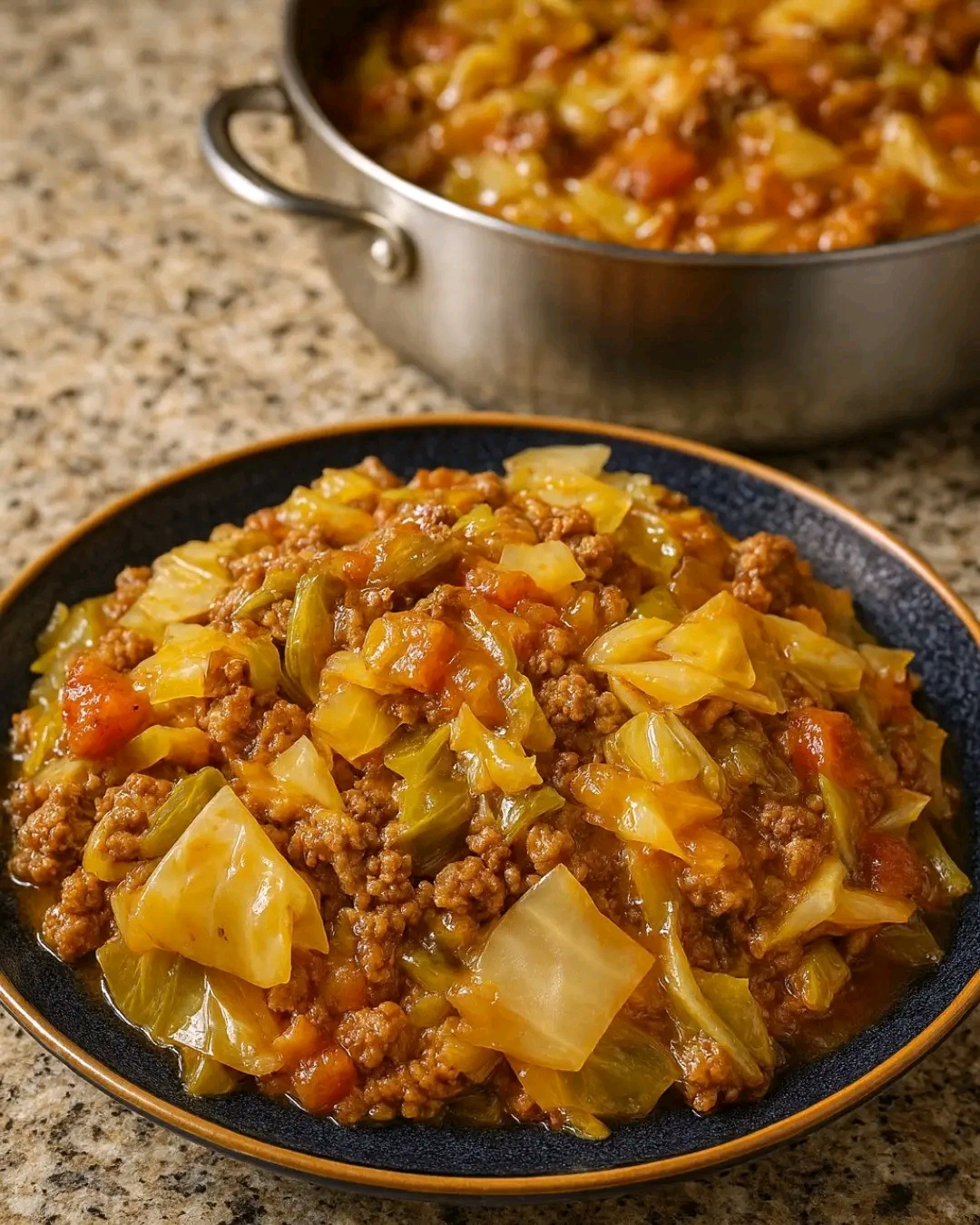
### Schmorkohl wie bei Oma – Traditional German Braised Cabbage
### Introduction
Schmorkohl wie bei Oma is a comforting, old-fashioned German family dish made with tender white cabbage, savory ground meat, onions, and a rich, flavorful sauce. Slowly braised until everything is soft and delicious, this traditional meal brings the warmth of home cooking straight to your table.
Simple, affordable, and wonderfully satisfying, Schmorkohl is the kind of recipe that generations have enjoyed around the family table. Whether served with boiled potatoes, mashed potatoes, or a slice of rustic bread, it is a hearty meal that tastes even better when shared with loved ones.
### Origin
Schmorkohl comes from the German tradition of braising vegetables slowly to bring out their natural sweetness and flavor. Cabbage has long been an important ingredient in German kitchens because it is inexpensive, widely available, nutritious, and easy to store.
Different regions and families have their own versions. Some prepare Schmorkohl with ground beef or pork, while others use bacon, caraway seeds, or a simple broth-based sauce. The phrase “wie bei Oma” means “just like Grandma used to make,” reflecting the nostalgic, homemade character of this beloved dish.
### Cultural Significance
In German households, cabbage dishes represent practical, comforting home cooking. Recipes like Schmorkohl were often prepared with everyday ingredients that could feed an entire family without costing much.
Grandmothers frequently adapted the recipe according to what was available in the kitchen, making each family’s version a little different. The aroma of cabbage, onions, and slowly cooked meat evokes memories of family dinners, traditional Sunday meals, and recipes passed down through generations.
Today, Schmorkohl remains a wonderful example of how simple ingredients can become a delicious and memorable meal.
### Ingredients Quantity
Servings: 4–6 Preparation Time: 20 minutes Cooking Time: 40–50 minutes Total Time: Approximately 1 hour to 1 hour 10 minutes
* 1 medium head white cabbage, approximately 1–1.2 kg (2.2–2.6 lb)
* 500 g (1.1 lb) ground beef or a mixture of ground beef and pork
* 2 medium onions, finely chopped
* 2 tablespoons vegetable oil
* 2 tablespoons tomato paste
* 500 ml (2 cups) beef or vegetable broth
* 2 medium carrots, sliced (optional but delicious)
* 2 cloves garlic, minced
* 1 teaspoon sweet paprika
* ½ teaspoon ground black pepper
* 1 teaspoon salt, or to taste
* ½ teaspoon caraway seeds, optional
* 1 bay leaf
* 1 teaspoon dried marjoram, optional
* 1 tablespoon all-purpose flour or cornstarch mixed with cold water, optional for thickening
* 2 tablespoons chopped fresh parsley, for garnish
### Optional Additions
You can easily adapt this traditional recipe to your family’s preferences.
* Smoky bacon: Add 100 g diced bacon for a deeper, savory flavor.
* Potatoes: Add 400–500 g diced potatoes to make the dish a complete one-pot meal.
* Caraway seeds: Use these for a traditional German flavor and a distinctive aroma.
* A splash of vinegar: Add 1–2 teaspoons near the end of cooking to balance the cabbage’s sweetness.
* Cream: Stir in 2–3 tablespoons of cream for a richer sauce, if desired.
* Mushrooms: Add sliced mushrooms for extra texture and an earthy taste.
* Chili flakes: Add a pinch for a gentle kick of heat.
### Tips for Success
* Choose fresh cabbage. Look for a firm, heavy head with crisp leaves.
* Brown the meat properly. Allow the ground meat to develop a little color before adding the vegetables. This creates a richer flavor.
* Don’t overcrowd the pan. If your cabbage does not fit at first, add it in batches as it wilts.
* Let it braise slowly. Gentle simmering allows the cabbage to soften and absorb the savory broth.
* Season gradually. Taste toward the end and adjust the salt, pepper, paprika, and acidity.
* Avoid adding too much liquid. Cabbage releases moisture as it cooks, so the finished dish should be moist and tender rather than watery.
* Make it ahead. Schmorkohl often tastes even better the next day after the flavors have had time to develop.
### Instructions
Step 1: Prepare the cabbage
Remove any damaged outer leaves from the cabbage. Cut it into quarters, remove the hard core, and slice the cabbage into thin strips. Peel and chop the onions, mince the garlic, and slice the carrots if using.
Step 2: Brown the meat
Heat the vegetable oil in a large, heavy-bottomed pot or Dutch oven over medium-high heat. Add the ground meat and cook for 6–8 minutes, breaking it apart with a wooden spoon until browned. Drain excess fat if necessary.
Step 3: Add the onions and garlic
Add the chopped onions to the pot and cook for 3–4 minutes until softened. Stir in the garlic and cook for another 30 seconds.
Step 4: Build the flavor
Add the tomato paste, sweet paprika, black pepper, marjoram, and caraway seeds if using. Stir for about one minute to release their aromas.
Step 5: Add the cabbage
Add the sliced cabbage and carrots. Stir everything together. If the pot seems full, add the cabbage in several batches, allowing each batch to wilt before adding more.
Step 6: Add the broth
Pour in the broth and add the bay leaf. Stir well, cover the pot, and reduce the heat to medium-low.
Step 7: Braise until tender
Simmer gently for 30–40 minutes, stirring occasionally, until the cabbage is tender and the flavors have blended. Add a little extra broth if the pot becomes too dry.
Step 8: Adjust the sauce
Remove the bay leaf. Taste and adjust the seasoning. If you prefer a thicker sauce, stir in a small amount of cornstarch mixed with cold water and simmer for 1–2 minutes until thickened.
Step 9: Serve
Sprinkle with freshly chopped parsley and serve hot with boiled potatoes, mashed potatoes, or crusty bread.
### Description
Schmorkohl is tender, savory, and full of old-fashioned homemade flavor. The cabbage becomes soft and slightly sweet as it braises, while the browned meat, onions, paprika, and broth create a rich and comforting sauce.
Every spoonful combines the natural sweetness of cabbage with hearty meat and aromatic seasonings. It is a simple dish without fancy ingredients, yet it delivers the satisfying taste of a traditional German family meal.
### Nutritional Information
Estimated nutrition per serving, assuming 6 servings and using lean ground beef:
* Calories: 280–350 kcal
* Protein: 20–25 g
* Carbohydrates: 15–20 g
* Fat: 14–20 g
* Fiber: 4–6 g
* Sugar: 7–10 g
* Sodium: Varies according to the broth and added salt
These values are estimates and will vary depending on the meat, oil, broth, serving size, and optional ingredients. Adding potatoes, cream, or bacon will change the nutritional values.
### Conclusion
Schmorkohl wie bei Oma is more than just a cabbage dish; it is a reminder that the most comforting meals are often made from the simplest ingredients. With tender cabbage, flavorful ground meat, and a delicious braising sauce, this traditional German recipe is perfect for busy weeknights, chilly evenings, and family gatherings.
It is budget-friendly, easy to prepare, and ideal for making ahead. Once you try it, this classic may become a regular favorite in your own kitchen.
### Recommendation
For the most traditional experience, serve Schmorkohl with buttery boiled potatoes or creamy mashed potatoes and a sprinkle of fresh parsley. A crisp cucumber salad or tangy pickled vegetables make excellent accompaniments because their freshness balances the rich, savory flavors.
For meal preparation, divide the cooled dish into individual airtight containers and refrigerate for up to 3–4 days. Reheat thoroughly on the stove or in the microwave, adding a splash of broth if needed. You can also freeze portions for convenient future meals.
My recommendation: Make a generous pot and let it rest for a little while before serving. The flavors become even more harmonious, creating that wonderful homemade taste people remember from Grandma’s kitchen.
### Embracing Healthful Indulgence
Traditional comfort food can fit beautifully into a balanced lifestyle. Cabbage provides fiber and useful nutrients, while the ground meat contributes protein and helps make the meal satisfying.
For a lighter version, choose lean ground beef or turkey, use a moderate amount of oil, and prepare the dish with low-sodium broth. Increase the cabbage and add extra carrots or mushrooms to boost the vegetable content without making the recipe complicated.
You can also serve Schmorkohl on its own or alongside a modest portion of potatoes, depending on your appetite and preferences. For a gluten-free version, omit the flour and thicken the sauce with cornstarch if necessary.
The beauty of Schmorkohl lies in its balance of simplicity, nourishment, and comfort. It proves that a traditional family recipe can be both deeply satisfying and adaptable to modern eating habits. Enjoy every warm, flavorful bite!