Natural Remedies for Hand Age Spots Separate Fact from Fiction
Our hands are constantly exposed to the elements, making them one of the very first places to show visible signs of aging. Over time, it is incredibly common to notice small, flat, dark areas developing on the skin, frequently referred to as age spots, sun spots, or liver spots. Because professional dermatological treatments can be costly and invasive, many people actively seek out natural, at-home alternatives to restore a more youthful appearance to their hands.
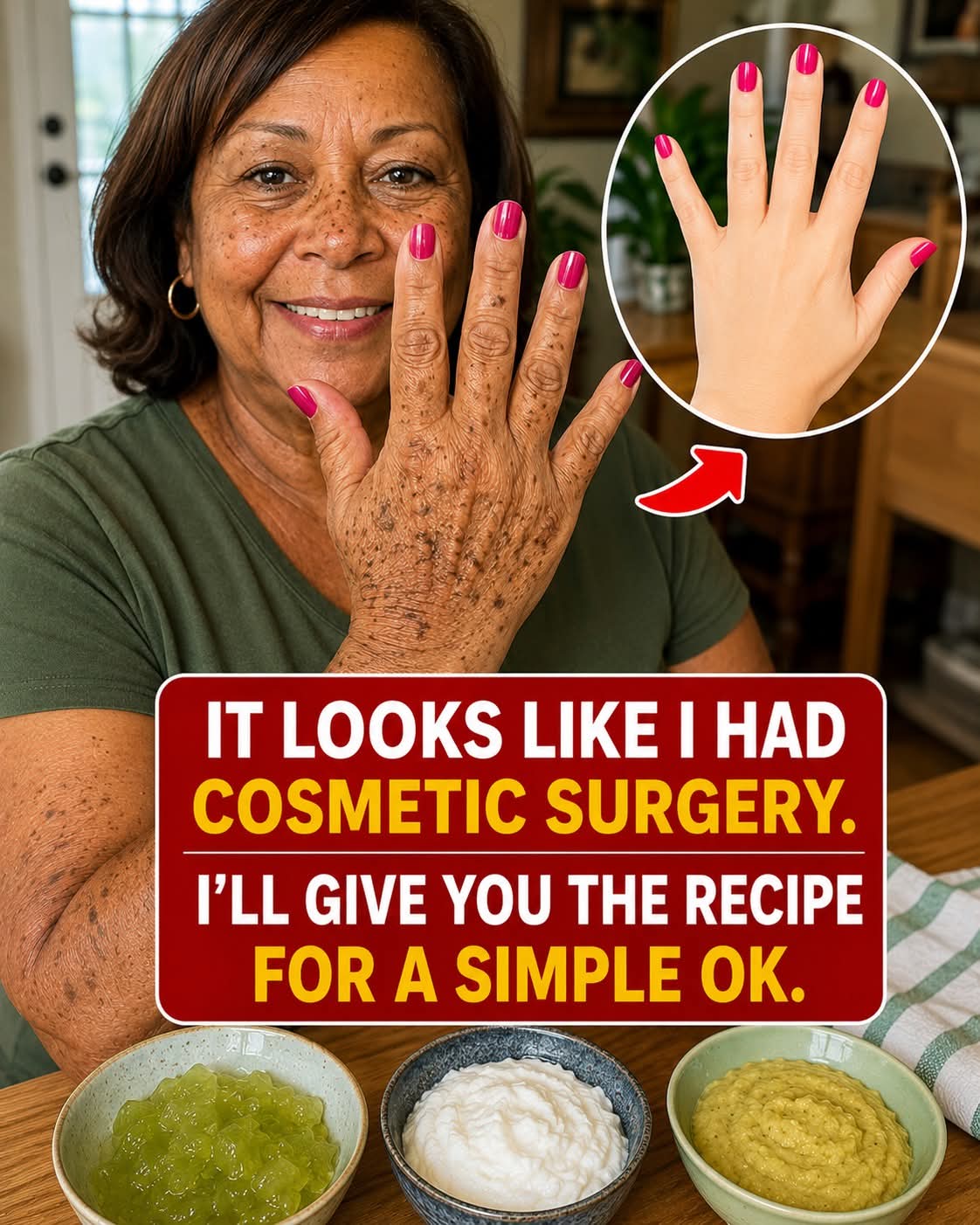
Viral internet graphics, such as 1000005721.jpg, claim that simple DIY kitchen recipes can yield dramatic transformations, dramatically stating, “It looks like I had cosmetic surgery.” The image showcases a stark, flawless contrast between age-spotted skin and perfectly smooth, clear hands, alongside bowls of everyday household ingredients. However, as tempting as these quick-fix claims are, it is vital to balance enthusiasm with scientific reality. While certain botanical and natural ingredients can absolutely support skin health and mildly brighten the complexion, they cannot completely erase deeply rooted hyperpigmentation like surgical or clinical lasers do. This article will explore the actual science behind hand age spots, evaluate the effectiveness of popular natural ingredients, and provide safe, realistic ways to care for your hands at home.
Understanding the Cause of Hand Age Spots
To properly address hyperpigmentation, we first need to understand exactly what is happening beneath the surface of the skin. Age spots are not actually caused by aging itself, but rather by years of cumulative exposure to ultraviolet (UV) light from the sun.
The Role of Melanin
When UV rays hit your skin, they stimulate specialized cells called melanocytes to produce melanin, the pigment that gives skin its color. Melanin acts as a natural defense mechanism, absorbing harmful radiation to protect your skin cells from damage. However, after decades of sun exposure, particularly on highly vulnerable areas like the backs of our hands, melanocytes can become overactive. Instead of distributing pigment evenly, they begin to produce localized clumps of high-concentration melanin, which eventually manifest on the surface as flat, brown, or black spots.
Why Hands Are Vulnerable
We routinely apply sunscreen to our faces, but we often completely forget to protect our hands. Combined with constant handwashing—which strips away protective oils and topically applied sun protection—the skin on our hands faces a disproportionate amount of environmental stress. Additionally, the skin on the back of the hand is naturally quite thin, meaning that sun damage and the breakdown of structural collagen show through much more prominently than on other areas of the body.
Evaluating Popular Natural Skin Brighteners
The bowls of natural mixtures displayed in 1000005721.jpg represent a broader trend of utilizing whole foods for topical skincare. Many kitchen staples contain natural acids, enzymes, and antioxidants that can subtly improve skin texture and tone. Let’s look at the science behind some of the most common DIY ingredients used for hyperpigmentation.
1. Fresh Aloe Vera Gel
The translucent green mixture in 1000005721.jpg strongly resembles fresh aloe vera, which is famous for its soothing and regenerative properties. Aloe vera contains a natural compound called aloin, which has been shown in some scientific studies to possess mild melanin-inhibiting properties. When applied regularly, aloe vera helps hydrate parched skin, reduces localized inflammation, and can gently encourage cellular turnover, leading to a brighter appearance over time.
2. Yogurt and Sour Cream
The white, creamy paste shown in the center bowl of 1000005721.jpg is characteristic of dairy-based masks like plain yogurt, kefir, or sour cream. These ingredients are naturally rich in lactic acid, a gentle Alpha Hydroxy Acid (AHA). Lactic acid works by dissolving the microscopic bonds that hold dead, pigmented skin cells to the surface. By lightly exfoliating this top layer, dairy masks can smooth out rough texture and help fade superficial surface discoloration over weeks of consistent use.
3. Oatmeal, Honey, and Botanical Pastes
Thick, textured yellow or beige pastes, similar to the third bowl in 1000005721.jpg, are often made by blending ground oatmeal, raw honey, or mashed fruits like papaya and banana. Oatmeal acts as an anti-inflammatory protectant that calms irritated skin, while raw honey serves as a natural humectant to lock in deep moisture. Fruits like papaya contain papain, a natural enzyme that breaks down dead skin cells, offering an enzymatic alternative to chemical exfoliation.
A Realistic DIY Hand-Brightening Treatment
If you want to try a safe, natural home routine to pamper your hands and improve overall brightness, combining gentle exfoliation with deep hydration is the best approach. Here is a realistic, balanced recipe you can easily prepare at home.
Ingredients Checklist
- 2 tablespoons of plain, unsweetened Greek yogurt (for gentle lactic acid exfoliation)
- 1 tablespoon of fresh aloe vera gel (for hydration and soothing properties)
- 1 teaspoon of raw honey (for moisture retention)
- 1 tablespoon of finely ground colloidal oatmeal (to calm the skin barrier)
Step-by-Step Application Guide
In a small bowl, mix the Greek yogurt, aloe vera gel, raw honey, and ground oatmeal together until it forms a smooth, cohesive paste. Cleanse your hands thoroughly with warm water and a mild soap, then pat them dry. Apply a thick, even layer of the paste over the entire back of your hands, focusing primarily on areas with visible sun spots. Allow the mask to sit undisturbed for 15 to 20 minutes, giving the natural acids and hydrating compounds ample time to penetrate the surface layers of the skin. Rinse thoroughly with cool water, gently massaging in circular motions to allow the oatmeal to lift away dead skin cells, then immediately follow up with a rich hand cream to lock in the moisture. Repeat this process 2 to 3 times a week for optimal skin-softening results.
Managing Expectations: Natural Remedies vs. Cosmetic Surgery
While internet advertisements and sensationalized graphics might imply that home remedies can completely replace a trip to a plastic surgeon or dermatologist, managing your expectations is crucial for your wallet and your safety.
The Limits of Topical Kitchen Ingredients
The primary reason a kitchen recipe cannot deliver the instant, absolute clearing implied by dramatic before-and-after graphics is depth. True age spots reside deep within the epidermal layers where melanin has clumped together over years. Gentle kitchen ingredients like yogurt or aloe vera only interact with the very top layer of dead skin (the stratum corneum). They can beautifully soften the hands, plump up fine lines through intense hydration, and provide a healthy glow, but they cannot reach deep enough to dismantle established melanin clusters.
When to See a Professional
If your goal is the complete removal of dark spots, clinical interventions are the only proven method to achieve those results. Dermatologists utilize targeted treatments that safely penetrate deep into the skin layers:
- Laser Therapy: Emits targeted light energy that shatters the melanin clusters without damaging the surrounding surface skin.
- Chemical Peels: Uses medical-grade acids (like trichloroacetic acid) to deeply exfoliate and peel away hyperpigmented layers.
- Cryotherapy: Involves freezing the individual spots with liquid nitrogen, causing the darkened skin to naturally slough off as it heals.
Prevention: The Ultimate Key to Youthful Hands
The absolute best way to treat age spots is to stop them from forming in the first place. No matter how many remedies or clinical treatments you use, the spots will quickly return if the skin remains unprotected from the sun.
Daily Broad-Spectrum Sunscreen
Make it an unbreakable habit to apply a broad-spectrum sunscreen with an SPF of 30 or higher to the backs of your hands every single morning, year-round. Keep a travel-sized bottle of sunscreen in your car or purse, and reapply it consistently throughout the day, especially after washing your hands or driving, as UV rays easily penetrate through car windows.
Intensive Evening Hydration
Because the skin on our hands dries out quickly, prioritizing barrier repair every night is essential. Before going to sleep, apply a generous layer of a thick, ceramide-rich hand cream or pure shea butter. For an extra boost, you can look for over-the-counter hand creams formulated with targeted cosmetic ingredients like niacinamide (Vitamin B3) or Vitamin C, which are scientifically proven to safely fade hyperpigmentation over time.
Embracing Healthy, Well-Cared-For Skin
At-home botanical masks are a fantastic, therapeutic way to pamper yourself, deeply hydrate your skin, and maintain soft, smooth hands. While they won’t miraculously mimic the instant results of advanced cosmetic surgery as viral images suggest, consistent care and diligent sun protection will radically improve your skin’s health, prevent future damage, and keep your hands looking radiant and youthful for years to come.