The Ultimate Guide to Purslane The Nutritious Weed with Incredible Health Benefits
For generations, backyard gardeners have viewed the low-growing, sprawling plant with fleshy leaves as a stubborn nuisance. It pops up aggressively through sidewalk cracks, invades meticulously manicured garden beds, and thrives in the poorest soil conditions. However, this resilient plant is not an ordinary weed at all. It is purslane (Portulaca oleracea), an ancient, highly nutritious succulent that has been revered for thousands of years in traditional medicine and culinary practices across the Mediterranean, Asia, and Europe. Today, modern science is finally catching up to ancient wisdom, revealing that this humble plant is actually a nutritional powerhouse.
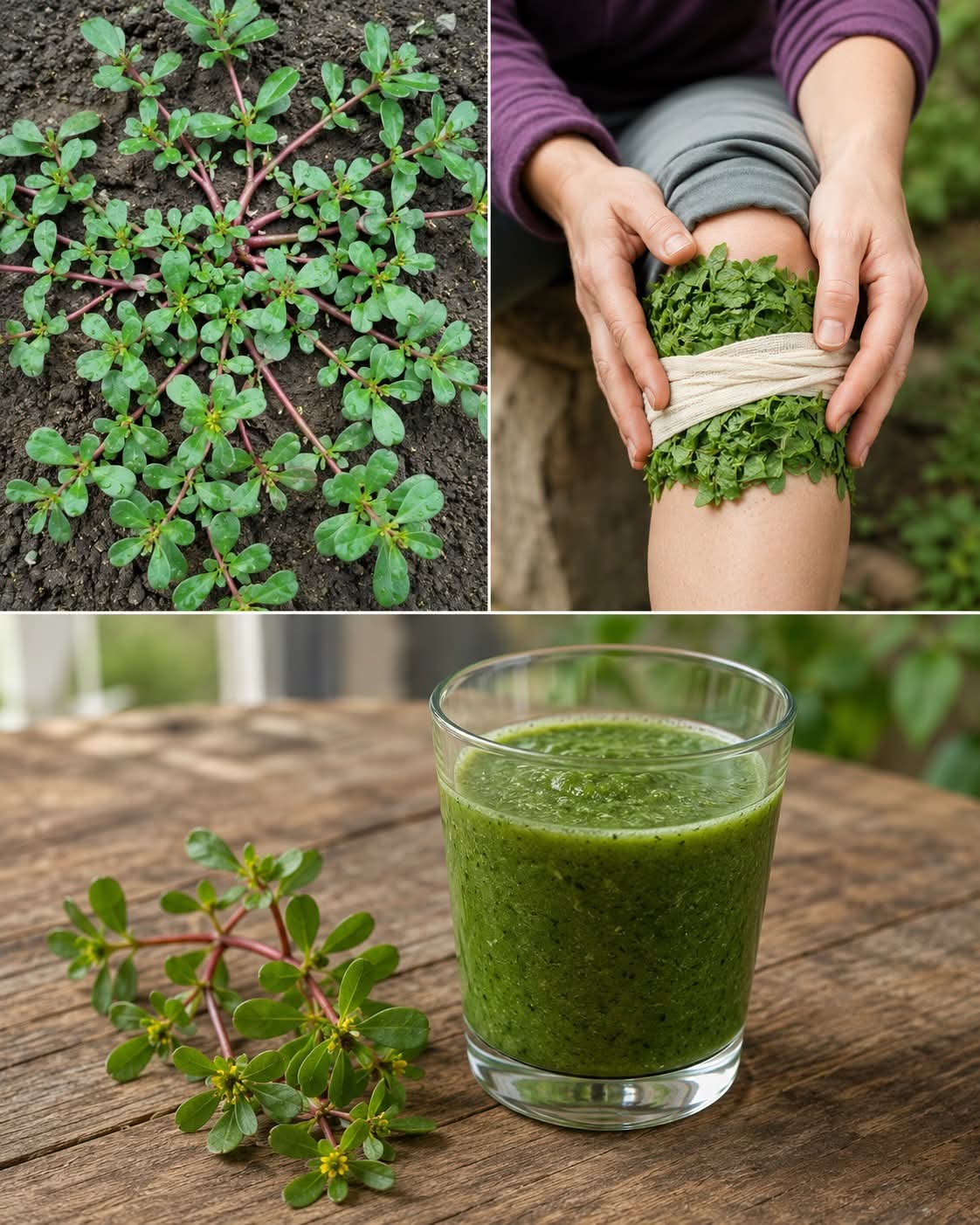
The visual reference 1000005723.jpg highlights the versatile nature of this plant, showcasing its distinct prostrate growth pattern in the soil, its therapeutic topical application as a crushed herbal compress bound to a knee, and its seamless integration into a vibrant, health-boosting green smoothie. Far from being a backyard pest, purslane is a nutritional goldmine packed with rare fatty acids, powerful antioxidants, and essential minerals. Whether you want to soothe aching joints, boost your cardiovascular health, or diversify your daily nutrient intake, learning how to identify, safely harvest, and utilize this incredible succulent can elevate your holistic wellness routine. This comprehensive guide will explore everything you need to know about this remarkable botanical treasure.
Botanical Identification: Spotting Real Purslane Safely
Before venturing out to harvest any wild plant, accurate identification is absolutely paramount. Because purslane grows wild in abundance, learning its precise physical characteristics ensures a safe and rewarding foraging experience.
Distinguishing Physical Features
As clearly illustrated in the top-left panel of 1000005723.jpg, purslane exhibits a highly recognizable structural growth pattern. The plant features smooth, thick, round stems that typically sport a distinct reddish-purple or reddish-pink hue. These succulent stems radiate outward from a central taproot, hugging the ground flatly to form a dense, circular mat. The leaves are smooth, fleshy, and paddle-shaped, resembling tiny, teardrop-shaped wedges. They are clusters at the stem joints and ends, holding a deep, vibrant green color. During warm, sunny days, purslane produces small, five-petaled yellow flowers that open exclusively in the bright morning sunshine.
Beware the Poisonous Lookalike: Spurge
When foraging for wild purslane, you must be careful not to mistake it for a common lookalike called hairy spurge (Euphorbia humistrata). Spurge frequently grows in the exact same sunny, disturbed soil conditions as purslane, but it is highly toxic. To tell them apart, look closely at the stems and sap. Spurge stems are much thinner, distinctly hairy, and tough rather than thick and succulent. Most importantly, if you snap a stem of poisonous spurge, it will instantly exude a milky white, irritating sap. Real purslane stems are entirely hairless and yield a clear, watery, gelatinous fluid when broken open. Never consume a plant unless you are completely certain of its identity.
The Incredible Nutritional Profile of Purslane
What makes purslane stand completely apart from almost every other leafy green on earth is its extraordinary macro- and micronutrient density. It is quite literally an elite superfood hidden in plain sight.
The Richest Plant Source of Omega-3 Fatty Acids
Most people associate heart-healthy omega-3 fatty acids exclusively with fatty fish like salmon or flax seeds. However, purslane holds the crown for the highest recorded level of alpha-linolenic acid (ALA)—an essential omega-3 fatty acid—among all cultivated leafy green plants. Consuming foods rich in ALA supports optimal cardiovascular function, helps maintain healthy cholesterol levels, and plays a fundamental role in reducing systemic inflammation throughout the body.
A Matrix of Master Antioxidants
Purslane is loaded with a powerful spectrum of cell-protecting antioxidants. It contains exceptionally high concentrations of Vitamin A (from beta-carotene), Vitamin C, and Vitamin E (alpha-tocopherol). This potent trio works synergistically to neutralize free radicals, support healthy skin, bolster immune defenses, and protect cellular integrity from environmental oxidative stress. Additionally, the reddish hue in its stems comes from betalains, the same potent antioxidant pigments found in beets, which offer robust cellular protection.
Essential Minerals for Vitality
In addition to vitamins and healthy fats, this succulent efficiently absorbs vital minerals from the earth. It serves as an excellent dietary source of potassium, which regulates blood pressure and fluid balance, as well as magnesium, a mineral critical for nerve transmission, muscle relaxation, and structural bone health. It also contains notable amounts of bioavailable calcium and iron.
Therapeutic External Uses: The Purslane Poultice
Beyond its internal nutritional benefits, purslane has a rich history of topical application in folklore medicine to address localized physical ailments, a practice visually demonstrated in the top-right panel of 1000005723.jpg.
Soothing Joint and Skin Inflammation
Because of its high omega-3 content and rich concentration of mucilage (a soothing, slippery plant fluid), crushed purslane functions beautifully as a natural anti-inflammatory compress or poultice. When applied directly to the skin, it delivers an instant, localized cooling sensation. Traditional practitioners have long used fresh purslane compresses to soothe swollen joints, ease minor muscular aches, calm localized sunburns, and accelerate the healing of insect bites and mild skin irritations.
How to Prepare a Home Herb Compress
To replicate the traditional topical application shown in 1000005723.jpg, start by thoroughly washing a generous handful of fresh, cleanly foraged purslane stems and leaves to remove all traces of soil. Using a mortar and pestle, or a small food processor, gently crush and bruise the raw plant material until it releases its internal fluids and forms a thick, pulpy, bright-green mash. Pack the crushed herb directly over the affected joint or irritated skin area. Secure the plant material in place by wrapping it snugly with a clean cotton bandage, muslin cloth, or gauze wrap. Allow the compress to sit undisturbed for 30 to 45 minutes to let the soothing botanical juices fully interact with the skin before removing and rinsing with cool water.
Integrating Purslane Into Your Kitchen: A Green Smoothie Recipe
From a culinary standpoint, purslane is absolutely delicious. It possesses a crisp, crunchy texture and a delightfully bright, refreshing flavor profile that balances mild tartness with a subtle, peppery undertone, often compared to green apple, watercress, or spinach. As seen in the bottom panel of 1000005723.jpg, blending this vibrant succulent into a morning green smoothie is one of the easiest, most efficient ways to enjoy its expansive health benefits.
Ingredients Checklist
- 1 cup of fresh purslane leaves and tender upper stems (washed thoroughly)
- 1 cup of unsweetened almond milk, coconut water, or regular water
- 1 ripe banana (preferably frozen, to provide a creamy, thick texture)
- 0.5 cups of frozen mango or pineapple chunks (for tropical sweetness)
- 0.5 a fresh English cucumber, sliced (for clean hydration)
- 1 tablespoon of fresh lemon juice (to brighten the peppery flavors)
- 1 teaspoon of raw honey or maple syrup (optional, for sweetness)
Step-by-Step Preparation
Begin by plucking the plump leaves and tender, pliable green portions of the stems from your harvested purslane, discarding any thick, woody base stems. Rinse them multiple times in a bowl of cold water to ensure all grit and garden soil are removed. Place the fresh purslane, sliced cucumber, frozen banana, and mango chunks directly into a high-speed blender. Pour in your liquid base along with the fresh lemon juice and your choice of natural sweetener. Secure the lid tightly and blend on high speed for 60 to 90 seconds until the mixture is completely emulsified, silky smooth, and holds a uniform, vibrant green color matching the glass featured in 1000005723.jpg. Pour into a chilled glass and consume immediately to maximize the absorption of live enzymes, vitamins, and essential fatty acids.
Important Safety and Culinary Pro-Tips
While purslane is an outstanding wellness asset, consuming wild greens responsibly requires incorporating a few safety guidelines into your routine.
Oxalates and Cooking Adjustments
Like spinach, Swiss chard, and beet greens, purslane contains a noteworthy amount of oxalic acid (oxalates). For healthy individuals, eating normal dietary amounts poses no issue whatsoever. However, if you are prone to forming calcium-oxalate kidney stones, you should manage your raw intake. To significantly reduce the oxalate content while keeping the nutritional benefits intact, simply blanch the purslane in boiling water for one minute before draining and using it in your recipes, or stick to consuming it in moderate culinary quantities.
Safe Foraging Environments
Because purslane grows low to the ground and frequently thrives in urban spaces, never harvest plants growing adjacent to busy roadsides, old painted structures, or industrial zones, as purslane is a hyper-accumulator that can absorb heavy metals from vehicle exhaust and contaminated soil. Avoid foraging from commercial lawns or public parks that may have been heavily sprayed with chemical pesticides, herbicides, or synthetic fertilizers. Always target pristine garden environments, wild organic fields, or consider growing your own from seed in a dedicated container.
Embracing a Forgotten Superfood
Reclaiming purslane is a beautiful step toward a more sustainable, holistic approach to nutrition. By shifting our perspective and viewing this resilient succulent as a valuable gift from nature rather than a frustrating weed, we unlock an abundant, free source of essential omega-3 fatty acids, protective antioxidants, and soothing therapeutic remedies.
The multi-paneled imagery of 1000005723.jpg perfectly illustrates the versatility of this incredible plant: it is hardy in the earth, deeply comforting when applied externally to the body, and thoroughly nourishing when blended into a vibrant dietary drink. Next time you notice this bright, thick-stemmed plant spreading across your garden soil, do not throw it away. Harvest it cleanly, respect its potent properties, and welcome one of nature’s most extraordinary forgotten superfoods directly into your daily wellness routine.