Why Does This Happen to Pound Cake? A Beginner’s Baking Guide
### Introduction
Pound cake is a classic homemade dessert loved for its buttery flavor, tender crumb, and rich texture. However, baking the perfect pound cake can be challenging, especially when you are new to the baking community. Problems such as a cracked top, a sunken center, a dense texture, or a gummy streak can happen even when you follow a recipe carefully.
The good news is that most pound cake problems have a simple explanation. Understanding how ingredients, mixing, and oven temperature work together can help you achieve a beautiful, evenly baked cake.
### Origin
Traditional pound cake originated in Europe, with early recipes calling for one pound each of butter, sugar, eggs, and flour. This simple formula made the cake easy to remember and prepare without complicated measurements.
Over time, bakers developed many variations, adding vanilla, citrus zest, baking powder, and other ingredients to create softer textures and different flavors.
### Cultural Significance
Pound cake is a beloved treat in many households, often served at family gatherings, holidays, afternoon tea, and celebrations. Its simple ingredients and comforting flavor make it a popular recipe for beginners and experienced bakers alike.
Sharing baking questions and troubleshooting tips also helps new bakers learn from the experiences of others in the baking community.
### Ingredients Quantity
Here is a basic pound cake recipe to practice with:
* 1 cup (227 g) unsalted butter, softened
* 1 cup (200 g) granulated sugar
* 4 large eggs, at room temperature
* 2 cups (250 g) all-purpose flour
* 1 teaspoon baking powder
* 2 teaspoons vanilla extract
* ¼ teaspoon salt
* 2–4 tablespoons milk, if needed for consistency
Preparation time: 20 minutes Baking time: 55–75 minutes Oven temperature: 325°F (165°C) Yield: 8–10 servings
### Optional Additions
* Lemon or orange zest for a fresh citrus flavor.
* Almond extract for a delicate nutty aroma.
* A light vanilla glaze for extra sweetness.
* A handful of chocolate chips for a richer variation.
### Tips for Success
The most important step is identifying what happened to your cake. Here are some common causes:
* A large crack down the middle: Often normal in pound cakes. The outside sets before the center finishes rising, causing the top to split.
* A sunken center: The cake may be underbaked, contain too much leavening, or have had the oven door opened too early.
* A dense or heavy texture: Butter and sugar may not have been creamed sufficiently, or the batter may have been overmixed after adding flour.
* A gummy streak near the bottom: This can result from underbaking, poorly emulsified batter, or ingredients that were too cold.
* A dry cake: It may have baked too long or contained too much flour.
* A greasy or wet-looking layer: The butter and eggs may not have combined properly, or the cake may not have baked long enough.
For best results, measure flour by weight when possible, use room-temperature ingredients, and avoid opening the oven during the early stages of baking.
### Instructions
* Preheat the oven to 325°F (165°C). Grease and flour a loaf pan or bundt pan.
* Beat the softened butter and sugar for about 3–5 minutes, until pale and fluffy.
* Add the eggs one at a time, beating well after each addition.
* Mix in the vanilla extract.
* In a separate bowl, whisk together the flour, baking powder, and salt.
* Add the dry ingredients gradually, mixing on low speed just until combined. Add a little milk only if the batter is unusually stiff.
* Transfer the batter to the prepared pan and smooth the top.
* Bake until the cake is golden and a toothpick inserted into the center comes out clean or with a few moist crumbs.
* Allow the cake to cool in the pan for 10–15 minutes before turning it onto a rack.
* Let it cool completely before slicing.
### Description
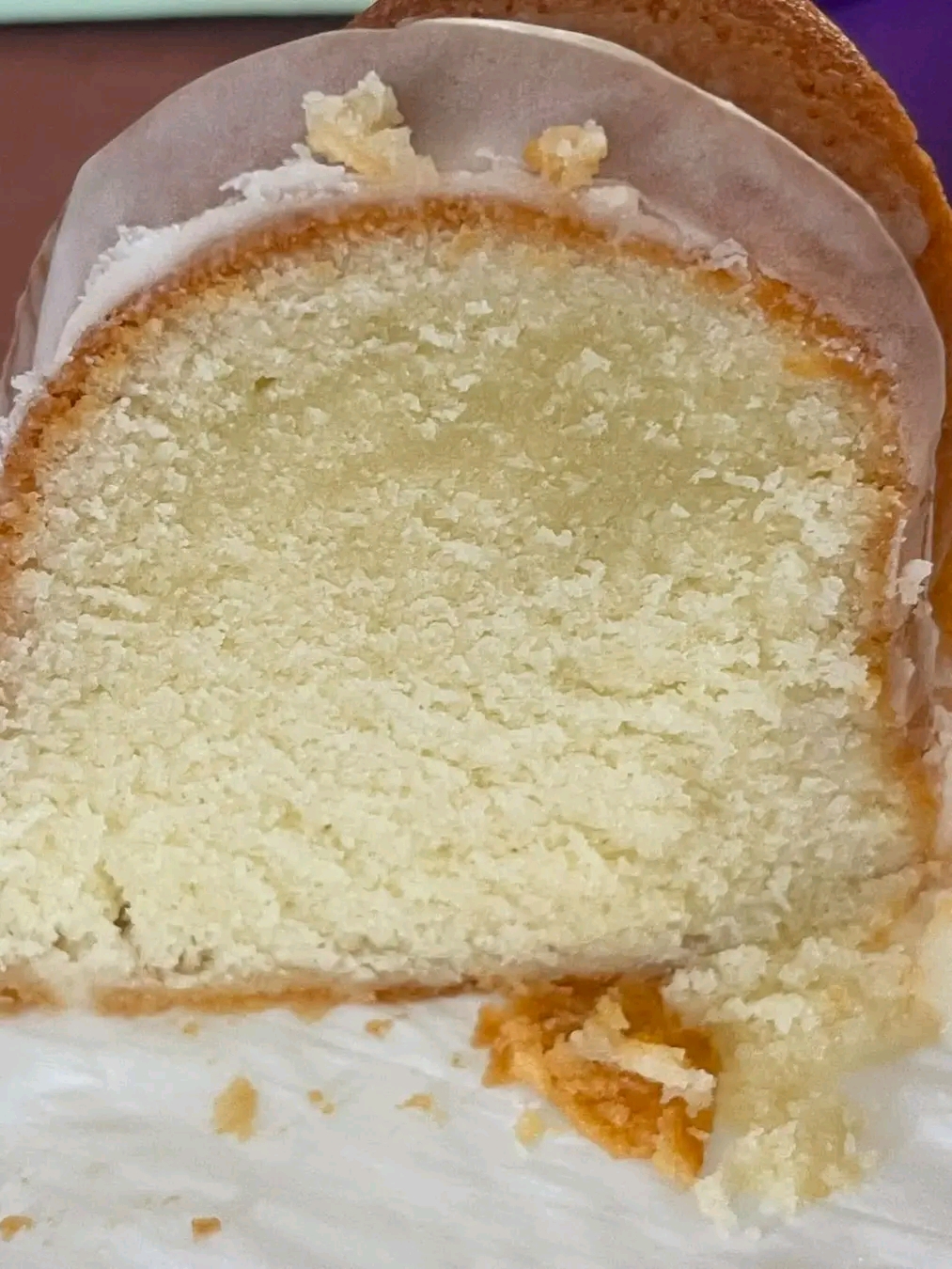
A well-baked pound cake should have a golden crust, a tender and even crumb, and a rich buttery aroma. A crack along the top is generally nothing to worry about; it is a characteristic feature of many traditional pound cakes.
The ideal texture depends on the recipe, but the cake should not have a raw center, wet streaks, or a collapsed middle.
### Nutritional Information
Approximate nutrition per serving, assuming 10 servings:
* Calories: 300–340
* Carbohydrates: 35–40 g
* Fat: 15–18 g
* Protein: 4–5 g
* Sugar: 19–23 g
Values vary depending on the ingredients, pan size, and serving size.
### Conclusion
Baking problems are a normal part of learning, and even experienced bakers occasionally encounter unexpected results. A cracked pound cake may be perfectly fine, while a sunken center or gummy layer may point to a problem with baking time, temperature, or mixing technique.
The key is to examine the cake’s appearance and texture before changing the recipe.
### Recommendation
Since you’re new to baking, don’t change several ingredients at once. Start by checking your oven temperature, measuring ingredients accurately, and ensuring the cake is fully baked before removing it from the oven.
One important question: What exactly happened to your pound cake? Was it cracked on top, sunken in the middle, gummy at the bottom, or did it develop another unusual texture?
If you share a picture of the cake, I can help you narrow down the likely cause.
### Embracing Healthful Indulgence
Homemade pound cake can be enjoyed as part of a balanced lifestyle. Try smaller slices, serve them with fresh berries, or experiment with reducing the sugar slightly while keeping the butter and egg proportions appropriate for the recipe. Remember that baking is both a science and an art, and every attempt is an opportunity to learn something new.