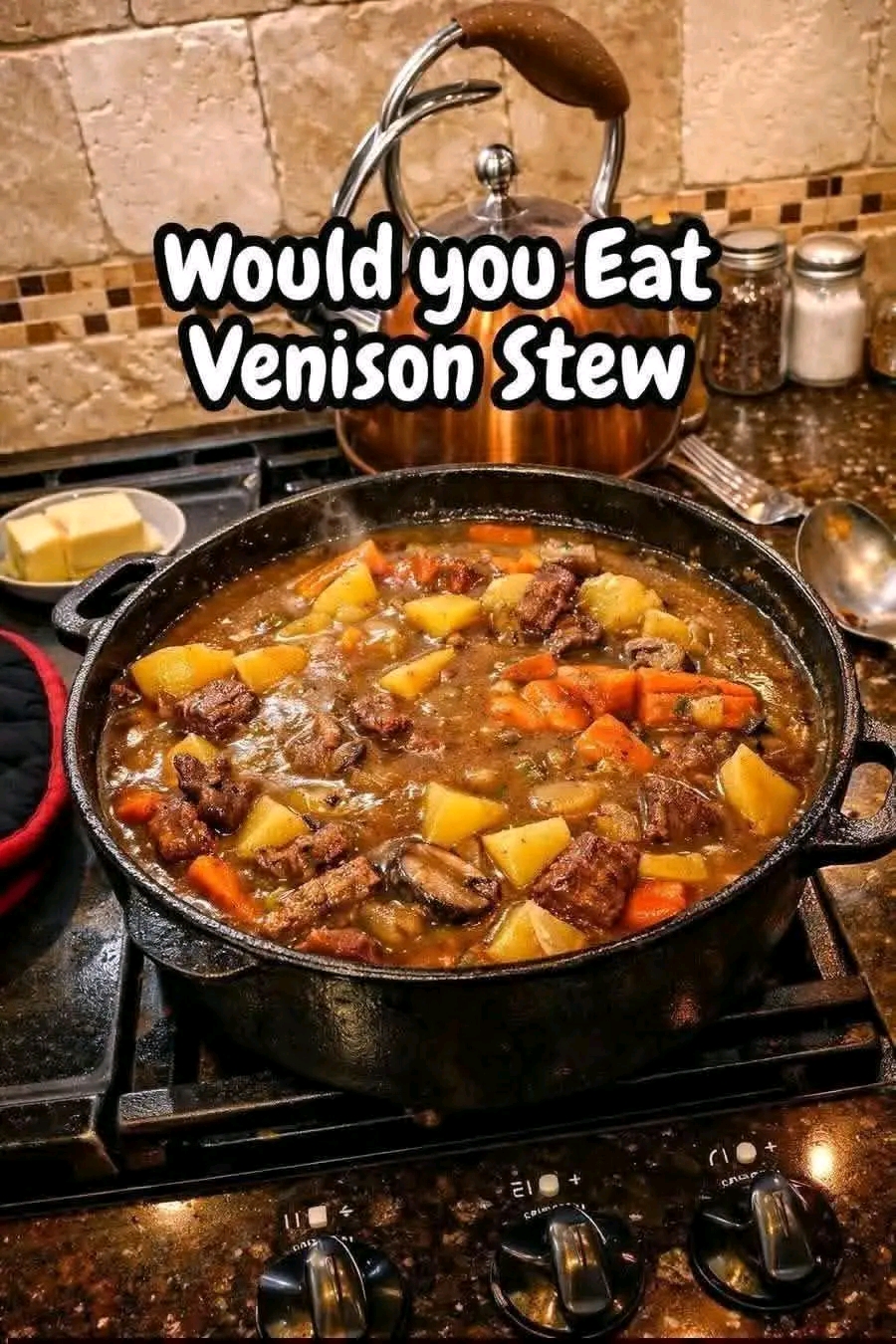
Venison Stew A Hearty, Rustic, Slow-Cooked Comfort Meal
### 1\. Introduction
Venison Stew is a rich, hearty, and comforting dish made with tender cubes of venison simmered slowly in a flavorful broth with vegetables and aromatic herbs. Known for its deep, earthy flavor and satisfying texture, this traditional-style stew is perfect for chilly evenings, family dinners, and anyone who enjoys rustic home cooking.
Venison is naturally lean and offers a distinctive flavor that pairs beautifully with onions, carrots, potatoes, garlic, and herbs. Slow cooking helps soften the meat and allows the ingredients to blend into a delicious, savory gravy.
This recipe transforms simple ingredients into a warming meal that can be served with crusty bread, mashed potatoes, or steamed vegetables.
### 2\. Origin
Venison has been enjoyed for centuries in many parts of Europe, North America, and other regions where deer hunting and wild game cooking are traditional practices. Before modern livestock farming became widespread, wild game was an important source of food for many communities.
Stewing was a practical way to prepare tougher cuts of venison. Long, gentle cooking helped tenderize the meat while combining it with seasonal vegetables, broth, and herbs.
Over time, venison stew became a familiar dish in country kitchens, hunting communities, and households that appreciate traditional game recipes. Modern versions vary by region, with some incorporating red wine, mushrooms, root vegetables, or locally available seasonings.
### 3\. Cultural Significance
Venison stew represents rustic cooking, resourcefulness, and the tradition of making nourishing meals from simple ingredients. In many rural communities, wild game dishes are associated with hunting seasons, family gatherings, and recipes passed down through generations.
The slow preparation encourages a relaxed approach to cooking, allowing the flavors to develop while the meat becomes tender. The dish is often served in generous bowls and shared around the family table.
Today, venison stew remains popular among game-meat enthusiasts and home cooks seeking an alternative to beef stew. Its combination of savory broth, tender meat, and hearty vegetables makes it a timeless comfort food.
### 4\. Ingredients Quantity
Preparation time: 20 minutes Cooking time: 2–2½ hours Total time: Approximately 2 hours 45 minutes Servings: 6
### Ingredients
* 2 pounds (900 g) venison, cut into 1-inch cubes
* 3 tablespoons all-purpose flour
* 2 tablespoons olive oil
* 1 large onion, chopped
* 3 carrots, peeled and sliced
* 2 celery stalks, chopped
* 3 medium potatoes, peeled and cubed
* 3 cloves garlic, minced
* 4 cups (950 ml) beef or venison broth
* 1 tablespoon tomato paste
* 1 teaspoon dried thyme
* 1 teaspoon dried rosemary
* 2 bay leaves
* ½ teaspoon black pepper
* 1 teaspoon salt, or to taste
* 1 tablespoon Worcestershire sauce
* ½ cup (120 ml) dry red wine, optional
* 1 cup sliced mushrooms, optional
* 2 tablespoons chopped fresh parsley
Note: The supplied ingredient list specifies only venison and flour. The remaining ingredients and quantities above complete a suggested version of the stew rather than reproduce a verified original recipe.
### 5\. Optional Additions
Customize your venison stew with these delicious ingredients:
* Sweet potatoes: Replace some of the regular potatoes for a naturally sweet flavor.
* Parsnips: Add sliced parsnips for an earthy, slightly sweet taste.
* Mushrooms: Include cremini or button mushrooms for extra savory depth.
* Red wine: Add dry red wine for a richer, more complex broth.
* Smoked paprika: Use ½ teaspoon for a gentle smoky flavor.
* Peas: Stir in frozen peas during the final 10 minutes of cooking.
* Fresh herbs: Add fresh thyme or parsley just before serving.
* Juniper berries: Use one or two lightly crushed berries for a traditional game-meat flavor, if desired.
### 6\. Tips for Success
* Pat the venison dry. Dry meat browns more effectively and develops a deeper flavor.
* Cut evenly sized cubes. Similar-sized pieces cook at a more consistent rate.
* Coat lightly with flour. Toss the venison in the flour and shake off any excess to help thicken the stew.
* Brown in batches. Avoid overcrowding the pot, as too much meat at once can steam instead of brown.
* Cook gently. Maintain a low simmer rather than a rapid boil to help the venison become tender.
* Add vegetables at the right time. If you prefer your potatoes and carrots to retain their shape, add them after the meat has simmered for about an hour.
* Adjust the thickness. If the stew is too thin, simmer it uncovered for a few minutes. If it is too thick, add a little extra broth.
* Allow enough time. Venison cuts vary in tenderness, so the meat may need longer than two hours.
* Taste before serving. Adjust salt, pepper, and herbs after the flavors have developed.
### 7\. Instructions
### Step 1: Prepare the venison
Cut the venison into approximately 1-inch cubes and pat dry with paper towels. Place the flour in a bowl, add the venison, and toss until lightly coated.
### Step 2: Brown the meat
Heat the olive oil in a large Dutch oven or heavy-bottomed pot over medium-high heat. Brown the venison in batches for approximately 3–4 minutes per batch, turning the pieces to develop color on several sides.
Transfer the browned meat to a plate and set aside.
### Step 3: Cook the aromatics
Reduce the heat to medium. Add the chopped onion, carrots, and celery to the same pot. Cook for 5–7 minutes, stirring occasionally, until the vegetables begin to soften.
Add the garlic and tomato paste and cook for another minute.
### Step 4: Deglaze the pot
If using red wine, pour it into the pot and scrape up the browned bits from the bottom. Allow it to simmer for 2–3 minutes.
### Step 5: Add the broth and seasonings
Return the venison to the pot. Pour in the broth and add the thyme, rosemary, bay leaves, Worcestershire sauce, salt, and black pepper.
Stir gently to combine. Bring the liquid to a gentle simmer.
### Step 6: Simmer until tender
Cover the pot partially and cook over low heat for approximately 1½ hours, stirring occasionally.
Add the potatoes and optional mushrooms. Continue simmering for another 30–45 minutes, or until the vegetables are tender and the venison is easy to cut with a fork.
If the meat is still tough, continue cooking gently and check it every 15–20 minutes. Add extra broth if needed.
### Step 7: Adjust the consistency
Remove the bay leaves. If the broth is thinner than you prefer, simmer uncovered for a few minutes until it reaches your desired consistency. Taste and adjust the seasonings.
### Step 8: Garnish and serve
Stir in the chopped parsley and let the stew rest for 5 minutes. Ladle into warm bowls and serve with your favorite side dishes.
### 8\. Description
Venison stew is a satisfying dish featuring tender game meat, soft vegetables, and a rich, savory broth. The venison develops a deep flavor as it slowly simmers, while the flour helps create a thick, comforting gravy.
Carrots contribute natural sweetness, potatoes make the stew hearty, and herbs such as thyme and rosemary complement the distinctive taste of the meat.
Every spoonful offers a warming combination of tender meat, flavorful vegetables, and delicious broth. It is an excellent choice for a family meal, a cozy weekend dinner, or a special occasion featuring wild game.
### 9\. Nutritional Information
The following values are approximate estimates per serving, based on six servings and the suggested ingredients, including potatoes but excluding optional wine and mushrooms.
| Nutrient | Approximate amount |
| ————- | —————— |
| Calories | 350–450 kcal |
| Protein | 35–45 g |
| Total fat | 10–16 g |
| Carbohydrates | 25–35 g |
| Fiber | 4–6 g |
| Sugar | 4–7 g |
Actual nutrition will vary depending on the venison cut, amount of oil, broth, and serving size.
Venison is generally a lean source of protein and provides nutrients such as iron, zinc, and vitamin B12. The vegetables contribute fiber, vitamins, and minerals.
### 10\. Conclusion
Venison stew is a wonderful example of traditional comfort food made with wholesome, flavorful ingredients. The slow simmering process helps transform venison into a tender, satisfying meal, while vegetables and herbs create a rich broth that tastes even better when the flavors have time to develop.
Although it takes a little patience, most of the cooking time is hands-off. This makes it an excellent recipe for relaxed weekends, colder days, and occasions when you want to serve something hearty and memorable.
### 11\. Recommendation
For a complete meal, serve venison stew with a fresh green salad, roasted vegetables, or a slice of crusty bread. For a lower-carbohydrate option, reduce or omit the potatoes and add extra mushrooms, celery, or other non-starchy vegetables.
The stew can be prepared a day ahead because the flavors often deepen after refrigeration. Store leftovers in an airtight container in the refrigerator for 3–4 days, and reheat thoroughly until steaming hot.
For freezing, cool the stew promptly and store it in freezer-safe containers for approximately 2–3 months for best quality. Thaw it in the refrigerator before reheating.
### 12\. Embracing Healthful Indulgence
Enjoying a hearty stew can fit comfortably into a balanced eating pattern. Venison provides protein, while carrots, celery, and other vegetables add color, flavor, and useful nutrients.
To make this dish lighter, choose a lean cut of venison, measure the cooking oil carefully, and increase the proportion of vegetables. You can also thicken the broth with a smaller amount of flour or use a little mashed potato instead.
If you avoid white flour, replace the all-purpose flour with a suitable gluten-free flour blend, or omit the flour and thicken the stew by mashing some of the cooked potatoes into the broth. For a lower-carbohydrate version, leave out the potatoes and use extra mushrooms, celery, and other low-carbohydrate vegetables.
The best part of homemade cooking is being able to adapt traditional recipes to your needs while preserving the flavors you love. This venison stew offers warmth, nourishment, and rustic comfort in every bowl.