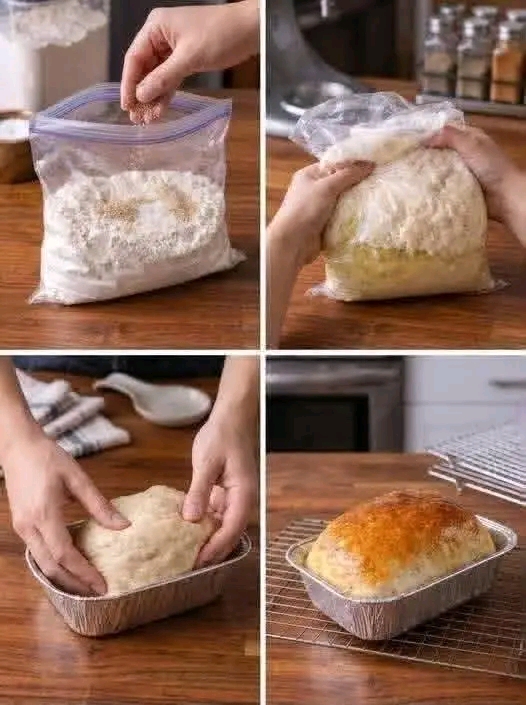
### Bread in a Bag No Mess, No Mixer
### 1\. Introduction
Making homemade bread is easy, fun, and rewarding with this simple Bread in a Bag recipe. Designed for beginners, this method lets you mix the ingredients in a food-safe bag without needing a stand mixer or creating a mountain of dirty dishes.
The result is a soft, fluffy loaf with a tender interior, a lightly golden crust, and a delicious homemade flavor. With a few basic ingredients and straightforward steps, you can enjoy freshly baked bread for breakfast, lunch, or dinner.
Whether you’re a first-time baker or an experienced home cook looking for a convenient method, this recipe is a wonderful way to bring fresh bread to your table.
### 2\. Origin
Bread has been a staple food for thousands of years, with traditional recipes relying on flour, water, and fermentation. Over generations, bread-making techniques have evolved to accommodate different ingredients, equipment, and lifestyles.
Bread in a Bag is a modern, simplified approach to this traditional practice. By mixing the ingredients inside a food-safe bag, home bakers can reduce cleanup and make the process more approachable. It is particularly suitable for beginner baking lessons, family cooking activities, and anyone who wants to learn the basics of yeast bread.
### 3\. Cultural Significance
Bread plays an important role in cultures worldwide. It is served with everyday meals, shared during celebrations, and offered as a symbol of hospitality and generosity.
In many families, making bread at home is a cherished tradition passed from one generation to another. Bread in a Bag brings a playful, practical twist to this tradition, making homemade baking accessible to people of different ages and skill levels.
The recipe also encourages family participation. Children can help measure ingredients and gently mix the dough in the bag, while adults handle the oven and other hot equipment.
### 4\. Ingredients Quantity
Preparation: 15 minutes · Rising: 60–90 minutes · Baking: 25–30 minutes
Total time: Approximately 1 hour 45 minutes · Yield: 1 loaf
* 3 cups (375 g) all-purpose flour
* 3 teaspoons granulated sugar
* 1 packet (7 g or 2¼ teaspoons) instant yeast
* 3 tablespoons olive oil
* 1 cup (240 ml) warm water, approximately 100–110°F (38–43°C)
* ½ teaspoon salt for improved flavor
Equipment needed:
* 1 large, sturdy, food-safe resealable bag
* 1 lightly greased loaf pan or lined baking tray
* 1 mixing bowl for rising
* Measuring cups or a kitchen scale
### 5\. Optional Additions
Personalize your loaf with these delicious additions:
* Garlic and herbs: Add 1 teaspoon garlic powder and 1 teaspoon dried Italian herbs.
* Whole-wheat flour: Replace up to 1 cup of all-purpose flour with whole-wheat flour, adding a little extra water if necessary.
* Seeds: Mix in 2 tablespoons of sunflower, sesame, or pumpkin seeds.
* Cheese: Add ½ cup grated cheddar or Parmesan for a savory loaf.
* Rosemary: Add 1 teaspoon dried rosemary for a fragrant, rustic flavor.
* Honey: Replace the sugar with 1 tablespoon honey for a different flavor and slightly softer crumb.
* Cinnamon and raisins: Add 1 teaspoon cinnamon and ¼ cup raisins for a lightly sweet breakfast loaf.
Additions can change the dough’s moisture and texture, so introduce them gradually.
### 6\. Tips for Success
* Use warm water, not hot water. Water that is too hot can damage the yeast and prevent the dough from rising.
* Measure the flour accurately. Too much flour can make the loaf dry and dense.
* Use a sturdy food-safe bag. Leave enough space for mixing, and check that the seal is secure.
* Add the flour gradually. This helps you achieve a soft dough without making it too sticky or stiff.
* Knead the dough properly. Kneading for approximately 5–8 minutes helps develop the gluten needed for a fluffy texture.
* Allow enough rising time. The dough should roughly double in size during the first rise.
* Avoid adding too much flour. A slightly tacky dough generally produces softer bread.
* Check for doneness. The loaf should be golden brown and sound hollow when tapped. An internal temperature around 190–200°F (88–93°C) is a useful guide.
* Cool before slicing. Let the bread rest for at least 20–30 minutes so the crumb can set properly.
### 7\. Instructions
Step 1: Prepare the ingredients.
Measure all ingredients and make sure the water is warm but not hot. Preheat the oven to 375°F (190°C) before baking.
Step 2: Mix the dry ingredients.
Place approximately 2 cups of flour, the sugar, instant yeast, and salt into a large food-safe resealable bag. Seal the bag and shake gently to combine.
Step 3: Add the wet ingredients.
Pour in the warm water and olive oil. Seal the bag securely, leaving enough room for the ingredients to move, and gently squeeze the bag to combine everything.
Step 4: Add the remaining flour.
Gradually add the remaining flour, squeezing and folding the bag until a rough dough forms. If the mixture is dry, add water a teaspoon at a time. If it is excessively sticky, add a small amount of flour.
Step 5: Knead the dough.
Remove the dough from the bag and place it on a lightly floured surface. Knead for 5–8 minutes, until the dough becomes smooth and elastic.
Step 6: Let the dough rise.
Place the dough in a lightly oiled bowl, cover it, and leave it in a warm place for 45–60 minutes, or until approximately doubled in size.
Step 7: Shape the loaf.
Gently press the dough to release large air pockets. Shape it into a loaf and place it in a greased loaf pan or form a round loaf on a lined baking tray.
Step 8: Complete the second rise.
Cover the shaped dough and let it rest for another 20–30 minutes, until noticeably puffy.
Step 9: Bake the bread.
Bake at 375°F (190°C) for approximately 25–30 minutes, until golden brown and cooked through.
Step 10: Cool and serve.
Remove the loaf from the pan and place it on a wire rack. Let it cool for at least 20–30 minutes before slicing. Serve plain, toasted, or with your favorite toppings.
### 8\. Description
Bread in a Bag is a simple homemade loaf with a soft, fluffy interior and a lightly crisp, golden crust. Olive oil adds a subtle richness, while yeast gives the bread its characteristic texture and aroma.
Its mild flavor makes it ideal for sandwiches, toast, and serving alongside soups or stews. You can also customize it with herbs, cheese, or seeds to create a loaf that suits your preferences.
The best part is the easy preparation. Mixing the ingredients in a bag keeps the initial mess to a minimum, making this a practical and enjoyable recipe for everyday baking.
### 9\. Nutritional Information
Approximate nutritional values per slice, assuming the loaf is divided into 12 slices:
| Nutrient | Amount |
| ————- | ————- |
| Calories | 170–190 kcal |
| Carbohydrates | 28–31 g |
| Protein | 4–5 g |
| Total fat | 4–5 g |
| Saturated fat | Less than 1 g |
| Fiber | 1–2 g |
| Sugar | 1–2 g |
| Sodium | 100–200 mg |
Values are estimates and will vary with the ingredients used, especially the amount of salt and the size of each slice.
### 10\. Conclusion
Bread in a Bag is an excellent recipe for anyone who wants to enjoy freshly baked bread without complicated equipment or extensive cleanup. Its straightforward method, familiar ingredients, and delicious results make it a great starting point for new bakers.
From weekday sandwiches to weekend family meals, this homemade loaf is versatile, satisfying, and easy to customize. Once you try it, you may find yourself baking it regularly.
### 11\. Recommendation
Serve the bread slightly warm with olive oil, mashed avocado, or your favorite spread. It is also delicious toasted for breakfast or served alongside a bowl of homemade soup.
For convenient storage, keep the completely cooled loaf in an airtight container at room temperature for up to 3 days. For longer storage, slice the bread and freeze it in a sealed freezer-safe bag for up to 3 months.
For a more nutritious variation, replace some of the all-purpose flour with whole-wheat flour and add seeds for extra texture and fiber.
### 12\. Embracing Healthful Indulgence
Homemade bread can fit into a balanced eating pattern, and baking it yourself allows you to control the ingredients. Olive oil provides unsaturated fats, while whole-wheat flour can increase the fiber content.
If you prefer to reduce added sugar, you can experiment with using less sugar or omitting it. Yeast can ferment sugars released from the flour’s starch, although the dough’s rising speed and crust browning may change.
For a more satisfying meal, pair a slice of bread with eggs, vegetables, beans, or another protein-rich food. Choosing whole grains and enjoying reasonable portions can also help make meals more balanced.
Keep in mind that this recipe contains wheat flour and gluten, so it is not suitable for a gluten-free diet without substantial reformulation.
The beauty of Bread in a Bag is its simplicity: a few everyday ingredients, a little patience, and the pleasure of homemade bread fresh from your own oven.