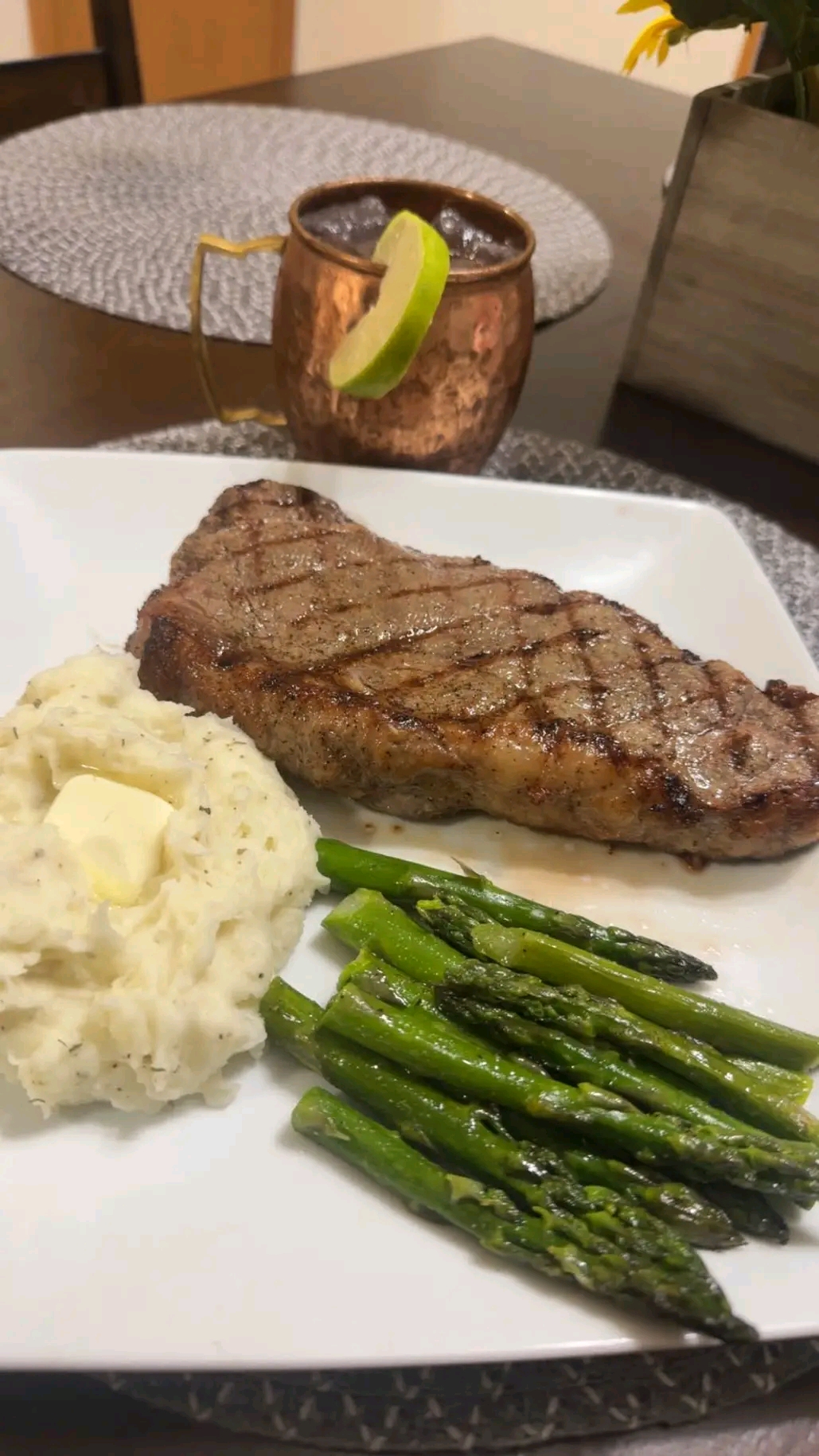
New York Strip Steak Perfectly Seared and Medium Rare
### Introduction
Few meals are as satisfying as a beautifully cooked New York strip steak! With its rich beefy flavor, tender texture, and golden-brown crust, this steakhouse favorite is perfect for anyone who appreciates a delicious cut of beef. 😋
Cooking a New York strip to medium rare gives you a warm, red-pink center while preserving the steak’s natural juiciness. With just a few simple ingredients, a hot skillet, and the right technique, you can enjoy a restaurant-quality steak in the comfort of your own kitchen.
### Origin
The New York strip steak comes from the short loin of the cow, a section known for producing tender, flavorful cuts. It is closely related to the Kansas City strip steak, with differences in trimming and whether the bone is left attached.
The name became associated with American steakhouses, particularly New York City’s long-standing steakhouse tradition. Today, the New York strip is popular worldwide for its balance of tenderness, marbling, and robust beef flavor.
### Cultural Significance
In American food culture, a New York strip steak represents the classic steakhouse experience. It is a favorite for celebrations, date nights, backyard grilling, and special family dinners.
Its versatility also makes it a home-cooking favorite. A cast-iron skillet, a little butter, fresh garlic, and aromatic herbs can transform this simple cut into a memorable meal without complicated preparation.
### Ingredients Quantity
Preparation time: 10 minutes · Cooking time: 8–12 minutes · Resting time: 5 minutes · Servings: 1–2
* 1 New York strip steak, approximately 300–350 g (10–12 oz), about 2.5–3.5 cm thick
* 1 teaspoon olive oil or another high-heat cooking oil
* ½ teaspoon kosher salt, or to taste
* ½ teaspoon freshly ground black pepper
* 1 tablespoon butter
* 2 cloves garlic, lightly crushed
* 2 sprigs fresh rosemary or thyme, optional
### Optional Additions
* Sautéed mushrooms: Add earthy flavor and a classic steakhouse touch.
* Caramelized onions: Provide natural sweetness.
* Chimichurri sauce: Adds fresh herbs, garlic, and tanginess.
* Roasted asparagus or broccoli: Makes a colorful, balanced side dish.
* Baked sweet potato: A satisfying alternative to traditional steakhouse potatoes.
* Lemon-herb butter: Offers a bright, aromatic finish.
* Smoked paprika: Adds a subtle smoky note to the seasoning.
### Tips for Success
* Choose a well-marbled steak. Fine streaks of fat help deliver flavor and juiciness.
* Dry the surface thoroughly. Patting the steak dry helps create a beautiful crust.
* Season just before cooking. Salt and freshly ground pepper are often all you need.
* Preheat the skillet. A hot cast-iron or heavy stainless-steel pan promotes even browning.
* Avoid overcrowding the pan. Cook one steak at a time if necessary.
* Use a thermometer. Thickness and pan temperature affect cooking time, so temperature is more reliable than the clock.
* Rest before slicing. Resting for about 5 minutes helps retain juices.
* Slice against the grain. This makes each bite more tender.
### Instructions
1\. Prepare the steak. Remove the steak from the refrigerator while preparing your ingredients. Pat it dry thoroughly with paper towels.
2\. Season. Sprinkle both sides with salt and freshly ground black pepper.
3\. Heat the pan. Place a heavy skillet over medium-high to high heat. Add the olive oil once the pan is hot.
4\. Sear the first side. Place the steak in the skillet and cook undisturbed for approximately 3–4 minutes, until a deep brown crust develops.
5\. Flip the steak. Cook the other side for approximately 3 minutes, adjusting for thickness.
6\. Add garlic butter. Reduce the heat to medium. Add the butter, crushed garlic, and rosemary or thyme. Once the butter melts, carefully spoon it over the steak for about 30–60 seconds.
7\. Check the temperature. For a medium-rare result, use a meat thermometer and account for the temperature increase during resting. For food safety, the USDA recommends that whole beef steaks reach 63°C (145°F), followed by a 3-minute rest. This is more conservative than traditional medium-rare preparation.
8\. Rest the steak. Transfer it to a plate or cutting board and rest for about 5 minutes.
9\. Serve. Slice against the grain if desired and serve with your favorite vegetables or side dish.
### Description
This New York strip steak features a deeply browned exterior, a tender pink center, and rich, savory flavor. Garlic butter and fresh herbs add an aromatic finish without overpowering the beef.
The combination of a crisp crust and juicy interior makes this dish a wonderful choice for a steakhouse-style dinner at home. Serve it whole for a classic presentation or slice it into strips for sharing.
### Nutritional Information
Estimated for one 300–350 g raw steak with oil and butter, assuming one person eats the entire steak. Values vary with trimming and fat content.
| Nutrient | Approximate amount |
| ————- | —————— |
| Calories | 750–1,000 kcal |
| Protein | 60–75 g |
| Carbohydrates | 0–2 g |
| Fat | 50–75 g |
| Fiber | 0 g |
| Sugars | 0 g |
If you share the steak between two people, the steak-related nutritional values per person will be approximately half, before adding side dishes.
### Conclusion
A perfectly seared New York strip steak is proof that a few quality ingredients and good cooking technique can produce an exceptional meal. Its rich flavor, satisfying texture, and versatility make it a timeless favorite.
Whether you’re cooking for a special occasion or treating yourself to a steak night, this recipe makes it easy to enjoy a classic steakhouse dish at home.
### Recommendation
For the best flavor, choose a steak about 3 cm thick, season it simply, and use a thermometer to monitor the center. Pair it with roasted broccoli, asparagus, mushrooms, or a fresh salad for a delicious dinner.
If you love medium-rare steak, remember that it is below the USDA’s recommended safe minimum temperature for whole beef steaks. Consider that guidance when deciding how you want your steak cooked.
### Embracing Healthful Indulgence
Steak can provide valuable nutrients, including protein, iron, zinc, and vitamin B12. You can enjoy it as part of a balanced diet by choosing a suitable portion, limiting excess butter, and serving it with plenty of vegetables.
For a lighter version, use a teaspoon of olive oil, add fresh herbs for flavor, and skip heavy sauces. The steak will still be delicious, satisfying, and worthy of a special dinner.
And honestly, a beautifully seared New York strip with garlic, herbs, and a juicy center sounds like a wonderful treat!