Cracks Inside a Watermelon Dangerous Chemical Poisoning or a Natural Phenomenon?
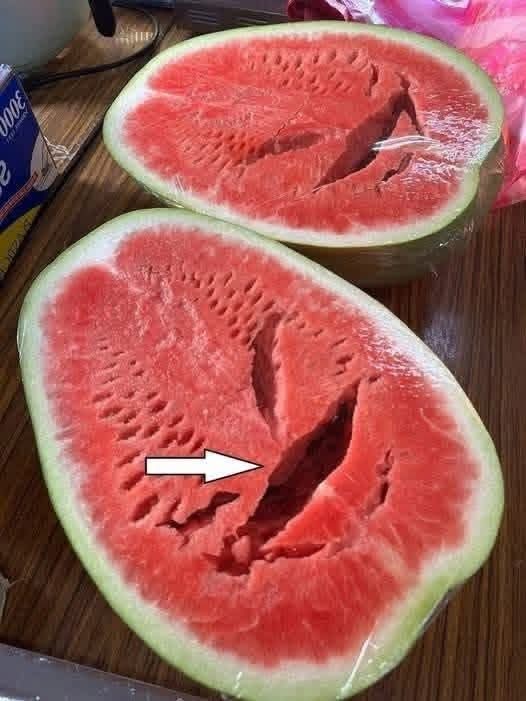
Few things match the refreshing anticipation of slicing into a large, heavy watermelon on a warm afternoon. However, encountering a jagged, deep crevice right through the center of the pink flesh—as depicted in 1000005574.jpg—can trigger immediate confusion and worry. In the digital age, sensationalized headlines often accompany pictures like this, warning consumers to “Stop eating it immediately!” and falsely attributing internal cracks to dangerous synthetic chemicals, artificial growth hormones, or toxic water expansion.
These viral health warnings usually cause unnecessary panic. While the hollow gaps indicated by the white arrow in 1000005574.jpg might look strange, they are actually the result of a completely natural, well-documented botanical condition known to agricultural scientists as hollow heart.
Far from being toxic, chemically altered, or poisonous, watermelons displaying this internal structure are completely safe to consume. In fact, they frequently offer an even sweeter flavor profile than their perfectly solid counterparts. This comprehensive guide will explain the actual agricultural science behind internal watermelon cracks, dismantle common online myths, and provide practical tips for selecting the best melons at your local market.
The Science of “Hollow Heart”: What Actually Causes Internal Cracks?
To understand the gap shown in 1000005574.jpg, we have to look at the early growth cycle of the watermelon plant. Hollow heart is an agricultural phenomenon that has been studied by plant biologists and commercial farmers for decades. It is not caused by a disease, a virus, or a synthetic chemical application.
1. Inadequate or Poor Pollination
The primary underlying cause of hollow heart is inadequate pollination during the plant’s early flowering stage. For a watermelon to form perfectly dense, continuous internal flesh, honeybees and other native pollinators must visit the female watermelon flower multiple times, thoroughly distributing pollen across all segments of the embryonic fruit. If the weather is unusually cold, rainy, or excessively windy during the brief pollination window, bee activity drops significantly. This results in incomplete pollination, meaning the plant lacks the necessary natural growth signals to completely develop the internal tissues supporting the seeds.
2. Environmental Stress and Rapid Swelling
Following a period of poor pollination, specific environmental and weather patterns can cause the existing tissue to split apart internally. If a watermelon crop experiences a prolonged dry spell followed by sudden, heavy rainfall or over-irrigation, the plant rapidly absorbs an immense volume of water. The outer rind of the watermelon grows and expands at a accelerated pace, while the poorly pollinated, less structurally stable internal flesh cannot keep up with the rapid growth. The internal tissue is literally pulled outward toward the expanding rind, creating a physical tear or fissure down the natural seed lines of the fruit, exactly like the crack highlighted in 1000005574.jpg.
3. Temperature Fluctuations
Unstable temperature swings early in the spring growing season also contribute to hollow heart. Cool nights combined with intensely hot days create physiological stress within the fast-growing vine, reducing the elasticity of the cell walls within the core of the developing fruit and making them more susceptible to splitting when the melon undergoes a growth spurt.
Debunking the Myths: Chemical Hormones and Toxicity
When photos like 1000005574.jpg circulate on social media, they are often accompanied by fear-inducing claims that blame the cracks on a plant growth regulator called Forchlorfenuron (CPPU).
The Truth About Growth Regulators
Forchlorfenuron is a synthetic cytokinin approved in some countries to increase fruit size and promote cell division in specific crops like kiwi fruit or table grapes. In highly publicized agricultural incidents overseas years ago, overused or poorly timed applications of this chemical under heavy rain conditions caused thin-skinned watermelons to burst open in fields.
However, this is completely separate from the clean internal splitting seen in 1000005574.jpg. Standard hollow heart occurs naturally in home gardens and organic farms around the world without a single drop of chemical intervention. Furthermore, modern commercial watermelon varieties—especially triploid, seedless watermelons—are genetically more prone to hollow heart due to their unique pollination requirements, independent of any synthetic hormone use.
Is It Safe to Eat?
Yes, absolutely. A watermelon with hollow heart is completely safe, non-toxic, and edible. The space inside the melon is simply an empty pocket of air, not a sign of chemical contamination or bacterial decay. The structural integrity of the nutrients remains intact, meaning you can slice up the melon and enjoy it without any risk to your health.
Why “Hollow Heart” Watermelons Often Taste Sweeter
While an internal crack might disqualify a watermelon from winning a visual beauty contest, it actually carries a hidden culinary bonus. Watermelons afflicted with hollow heart are often noticeably sweeter than standard melons.
The Concentration of Sugars
During the ripening process, a watermelon moves its internally manufactured sugars directly into the center core of the fruit, which is naturally the sweetest section of the melon. When a crack forms, the plant continues to pump sugars and moisture into that central zone.
Because there is an empty cavity, the sugary plant juices can pool along the internal edges of the split and dry slightly, concentrating the natural fructose. If you eat the dense flesh immediately surrounding the crevice shown in 1000005574.jpg, you will often find it has a crisp, intensely sweet, almost candied texture that is highly prized by experienced farmers who know how to identify them.
How to Recognize Sign of Spoilage: When You Actually Should Discard a Watermelon
While natural cracking is completely harmless, watermelons can certainly spoil, and eating bad fruit can lead to foodborne illness. It is important to know the difference between a safe, sweet hollow heart melon and a genuinely spoiled fruit that belongs in the compost bin.
1. Slimy or Mushy Texture
The flesh of a healthy hollow heart watermelon should remain firm, crisp, and vibrant red or deep pink, as seen in 1000005574.jpg. If you cut open a watermelon and find that the flesh is slimy, exceptionally mushy, or completely disintegrating into a wet soup, it is a clear sign that the cellular structure has broken down due to over-ripeness or bacterial contamination.
2. Souring or Fermented Aroma
When you slice into a fresh watermelon, it should emit a clean, sweet, and distinctly refreshing fragrance. If you are greeted by a sharp, sour, vinegary, or alcoholic odor, the sugars inside the melon have begun to ferment. Fermentation occurs when wild yeasts or bacteria breach the outer rind, making the fruit unsafe to consume.
3. Internal White or Black Mold
Inspect the empty cavity of a cracked watermelon. In a safe hollow heart melon, the interior walls of the crack are clean and pink. If you observe fuzzy white, grey, or black mold filaments growing inside the crevice, the air pocket has been contaminated by ambient fungi. Discard the entire watermelon immediately.
4. Foaming or Oozing Rind
Before you even cut a watermelon open, check its exterior. If you notice a white, frothy foam or a sticky liquid actively oozing out of the rind, the interior of the melon is undergoing an intense anaerobic fermentation process, creating internal gas pressure that forces its way out. Never buy or cut open a foaming melon.
Tips for Selecting the Perfect Watermelon Every Time
Because you cannot see inside a watermelon at the grocery store to check for hollow heart or density, you have to rely on external indicators to judge its quality and ripeness. Use these classic techniques to find a great melon:
- Check the Field Spot: Flip the watermelon over and locate its underbelly. It should feature a distinct, creamy yellow or golden patch known as the field spot. This is where the melon rested on the ground while ripening under the sun. If the spot is white or pale green, the melon was picked too early and will likely be flavorless and unripe.
- The “Thump” Test: Tap the side of the watermelon firmly with your knuckles. A perfectly ripe, juicy watermelon will yield a deep, hollow, resonant sound, indicating it is full of water weight. A dull, thudding sound usually suggests the interior is overripe, dry, or starting to turn mushy.
- Weight Assessment: Pick up a few watermelons of similar size and compare them. Always choose the one that feels the heaviest for its size. High weight indicates a maximum water content, translating to a juicy, crisp texture when sliced.
- Inspect the Webbing: Look for coarse, dark, web-like brown lines scoring the rind. These tan scars are called bee stings or pollination webs. The more webbing a watermelon possesses, the more times bees visited the flower during pollination, signaling an exceptionally sweet and well-matured fruit.
Conclusion
The striking visual warning presented in 1000005574.jpg serves as a great reminder that online sensationalism frequently distorts basic agricultural realities. Encountering a deep crack inside a freshly cut watermelon can certainly be surprising, but looking to plant biology helps clear away the myth of chemical poisoning.
Hollow heart is a harmless, weather-driven structural anomaly caused by inconsistent spring pollination and rapid watering cycles. Far from being dangerous, these uniquely cracked melons are fully safe, incredibly juicy, and naturally sweeter at their core. Keep your kitchen tools clean, look for the classic signs of genuine spoilage like sour odors or slime, and enjoy your sweet summer melons with complete peace of mind.