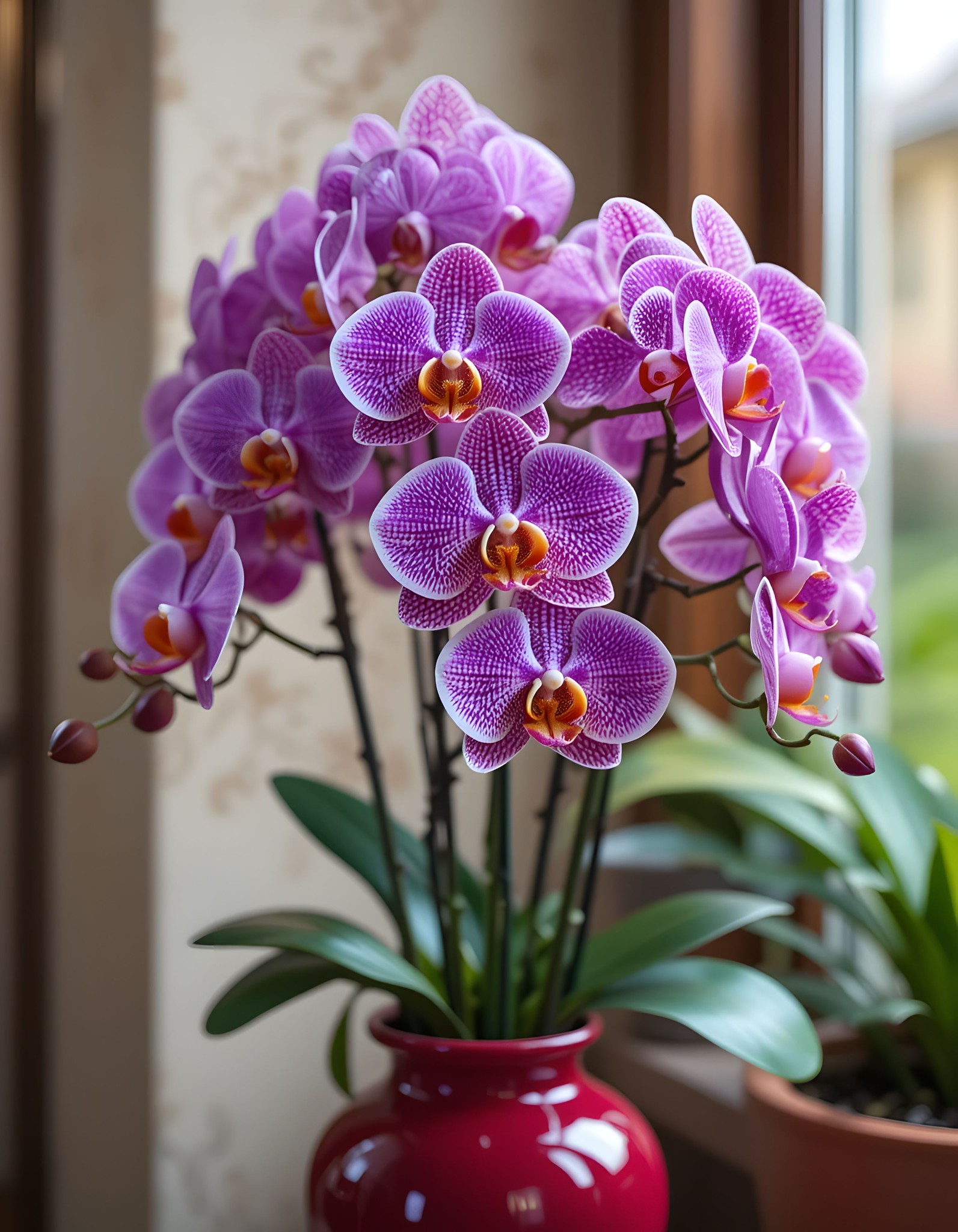
Phalaenopsis orchids, commonly known as moth orchids, are among the most popular types of orchids for both novice and experienced plant enthusiasts due to their ease of care and stunning blooms. Here’s a breakdown of the essential growing conditions to keep your Phalaenopsis orchid healthy and thriving:
1. Light
Bright, Indirect Light: Phalaenopsis orchids thrive in bright, indirect light. They prefer gentle light exposure, as direct sunlight can scorch their delicate leaves, causing them to yellow or develop brown spots.
Ideal Location: An east-facing window is often ideal for these orchids. This provides the soft, early morning sunlight that orchids love without the harsh intensity of midday or afternoon sun.
Avoid Direct Sunlight: If an east-facing window is unavailable, you can also grow them near a north-facing window or a few feet away from a south-facing window with a sheer curtain to diffuse the light.
2. Temperature
Optimal Range: Phalaenopsis orchids prefer a temperature range of 65-80°F (18-27°C). They are quite comfortable at average room temperatures and enjoy warmth.
Avoid Temperature Extremes: It is important to keep the orchid in an area where the temperature does not fall below 60°F (15°C) or rise above 90°F (32°C). Extreme temperatures can lead to stress, reducing flower production or causing damage to the plant.
3. Humidity
Moderate to High Humidity: Phalaenopsis orchids naturally thrive in moderate to high humidity levels (50-70%). The humidity is essential for their growth, particularly during the flowering season.
Increasing Humidity: To raise humidity, you can place your orchid on a humidity tray filled with pebbles and water (making sure the pot doesn’t sit in water), or you can use a humidifier to add moisture to the air.
Grouping Plants: Grouping orchids together can also increase humidity around them, as the moisture from one plant will help the others.
4. Watering
Water When Dry: Water your Phalaenopsis orchid when the potting medium is nearly dry. Overwatering is one of the most common causes of orchid problems, so it’s essential to let the top layer of the potting mix dry out before re-watering.
Good Drainage: Make sure your orchid pot has good drainage to prevent water from accumulating at the bottom, which could lead to root rot. Never let the plant sit in standing water.
Watering in Cooler Months: During the cooler months (fall and winter), Phalaenopsis orchids need less frequent watering due to lower evaporation rates. Water less often during this time but still ensure the potting medium doesn’t dry out completely.
5. Potting Medium
Well-Draining Orchid Mix: Phalaenopsis orchids prefer a well-draining potting medium. A mix that includes bark, sphagnum moss, and perlite is commonly used for orchids. This allows the roots to breathe while retaining enough moisture for the plant.
Avoid Regular Potting Soil: Standard potting soil does not provide enough aeration for orchid roots, which can cause them to suffocate. Stick with specialized orchid mixes.
6. Fertilizing
Fertilize During Growing Season: Feed your Phalaenopsis orchid with a balanced orchid fertilizer every 2-4 weeks during the growing season (typically spring and summer). A balanced fertilizer helps promote healthy growth and blooming.
No Fertilizing During Dormancy: During the fall and winter months, the orchid typically enters a dormant period. Avoid fertilizing during this time to prevent overfeeding the plant, as it doesn’t actively grow or need nutrients.
7. Repotting
Every 1-2 Years: Phalaenopsis orchids should be repotted every 1-2 years to ensure that their roots have adequate space to grow. Repotting is also necessary when the potting mix has decomposed or become compacted, reducing its effectiveness.
Repot After Blooming: It’s best to repot after the orchid has finished blooming, typically in late winter or early spring, to avoid disrupting the flower cycle.
Uses of Phalaenopsis Orchids
Phalaenopsis orchids are widely admired not only for their beauty but also for their versatility in various uses. Here are some of the most common applications:
1. Ornamental Indoor lant
Elegant Decor: Phalaenopsis orchids are primarily grown as ornamental indoor plants due to their long-lasting and exquisite blooms. Their elegant flowers, which come in a variety of colors including pink, white, purple, and yellow, make them a favorite for home decor.
Easy Care: Despite their exotic appearance, Phalaenopsis orchids are relatively easy to care for compared to other types of orchids, making them ideal for both beginners and seasoned gardeners.
2. Gifts
Thoughtful and Lasting Gifts: Phalaenopsis orchids make excellent gifts, especially for birthdays, anniversaries, and other special occasions. Their beauty and durability make them a thoughtful present that can be enjoyed for many months.
For All Orchid Enthusiasts: Whether the recipient is an experienced orchid grower or a beginner, Phalaenopsis orchids are an ideal choice, as they are relatively easy to care for and are generally forgiving if proper care is not always followed.
3. Interior Decoration
Adding Elegance: Phalaenopsis orchids are frequently used in interior decoration to brighten up spaces. Their elegant appearance adds a touch of luxury to any room, and they can be placed on desks, tables, shelves, or windowsills to instantly transform the atmosphere.
Versatile Styling: These orchids work well in various styles of decor, from minimalist to traditional, and can even be used to complement modern designs with their striking flower shapes and colors.
4. Event Décor
Wedding and Party Decor: Phalaenopsis orchids, especially the multifloral varieties, are frequently used in event décor, including weddings, parties, and corporate events. They are often used as centerpieces, floral arrangements, or even as part of elaborate installations due to their dramatic, eye-catching blooms.
Symbol of Elegance: Orchids are associated with luxury and refinement, making them a popular choice for upscale events and celebrations.
5. Cut Flowers
Long-Lasting in Arrangements: While Phalaenopsis orchids are primarily enjoyed as potted plants, their blooms can also be used as cut flowers in floral arrangements. Though not as common as other orchids in bouquets, they offer long-lasting beauty, especially when harvested at the peak of their bloom.
Graceful and Elegant: Their large, striking flowers add grace and elegance to any floral display, whether as a standalone feature or mixed with other blooms.
6. Hobby and Collection
Orchid Enthusiast’s Dream: Many orchid enthusiasts enjoy collecting different varieties and hybrids of Phalaenopsis orchids. With a wide range of colors, patterns, and flower sizes available, there’s a variety for every taste.
Growing as a Hobby: For plant lovers, growing Phalaenopsis orchids can be a rewarding and engaging hobby. With the right care, these orchids can flourish for years, and their flowers can be a constant source of enjoyment and pride.
Conclusion
Phalaenopsis orchids are an outstanding choice for anyone looking to add beauty and elegance to their indoor spaces. With their relatively easy care requirements and long-lasting, stunning blooms, they are perfect for homes, offices, and events. Whether you’re growing them as ornamental plants, gifting them, or incorporating them into your interior décor, Phalaenopsis orchids will always bring an aura of sophistication and grace to any environment. 🌸
More Articles You Might Like
-

Southern Fried Green Tomatoes
Southern Fried Green Tomatoe Crispy, golden, tangy, and wonderfully comforting, fried green tomatoes are a classic Southern-inspired side dish or appetizer. Thick slices of firm green tomatoes are seasoned, coated in flour, egg, and cornmeal, then pan-fried until beautifully crisp on the outside while remaining pleasantly tender and tangy inside. Introduction Fried green tomatoes are…
-

Ribeye with Tuscan Rigatoni, Garlic
Ribeye with Tuscan Rigatoni, Garli Butter Dinner Rolls & Green Beans Introduction This ribeye dinner is the ultimate combination of juicy steak, creamy Tuscan-inspired rigatoni, tender green beans, and warm garlic-butter dinner rolls. The richness of the steak and pasta is balanced beautifully by crisp-tender green beans, making this a satisfying meal for…
-

Cultural Significance
Cultural Significanc Across many cultures, herbal drinks are associated with hospitality, seasonal comfort, and traditional approaches to everyday well-being. Ginger and turmeric are especially prominent in South Asian and Asian culinary traditions. Warm spiced beverages are also enjoyed across North Africa and the Middle East, where ingredients such as cinnamon, lemon, and fresh…