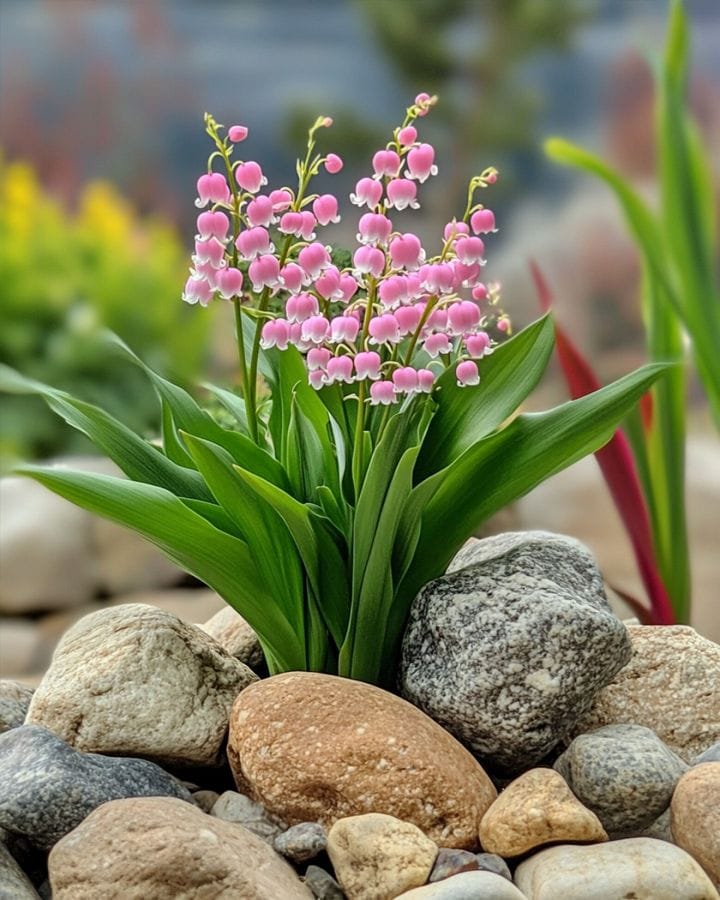
Lily of the Valley (Convallaria majalis) is a beloved perennial known for its delicate, bell-shaped flowers in soft shades of pink and white. These sweetly fragrant blooms are perfect for adding a touch of elegance and charm to any garden, particularly in shady areas. Their delicate beauty and fragrance make them a favorite for both garden enthusiasts and florists.
With proper care, Lily of the Valley can thrive in your garden for years, providing a lovely fragrance and graceful display of blooms. Let’s explore how to grow and care for this enchanting flower.
The Beauty of Lily of the Valley
The most distinctive feature of Lily of the Valley is its delicate, bell-shaped flowers that emerge from arching stems. These blossoms are usually white or soft pink and have an intoxicating fragrance that’s both sweet and subtle. The plants form dense, ground-hugging clusters of lush green leaves, making them an excellent choice for filling shady corners or under trees where other plants might struggle to grow.
These flowers are often associated with traditional spring gardens and are highly prized for their elegant appearance and sweet scent. Their ability to naturalize and spread over time makes them a perfect addition to perennial gardens.
Care Requirements for Lily of the Valley
Lily of the Valley is relatively easy to grow, but it does have some specific needs when it comes to light, water, soil, and temperature. Here’s what you need to know:
Light: Partial to Full Shade
Lily of the Valley thrives in partial to full shade, making it ideal for areas of your garden where other plants may struggle due to low light. These flowers can tolerate some morning sun, but they do best when shaded during the hottest part of the day. Under the canopy of trees or along the north side of a building, they will grow happily.
If you have an area of your garden that’s shaded by tall trees or large shrubs, Lily of the Valley can be an excellent option for adding color and fragrance to the space.
Watering: Keep Soil Moist, Not Waterlogged
These plants prefer consistently moist soil. While they like moisture, it’s important to ensure that the soil is well-draining, as soggy soil can lead to root rot. Water regularly, especially during dry periods, but avoid overwatering. The soil should stay moist but never wet.
If you’re planting in a container, ensure the pot has drainage holes, as this will help excess water to escape, preventing root rot.
Soil: Well-Draining and Rich in Organic Matter
Lily of the Valley thrives in well-draining soil that’s rich in organic matter. Before planting, amend the soil with compost or well-rotted manure to improve fertility and drainage. The soil should be slightly acidic to neutral, with a pH level between 6.0 and 7.0.
In the wild, Lily of the Valley grows in forested areas with rich, humus-filled soil, so replicating this environment will help it flourish in your garden.
Temperature: Prefers Cool Conditions
Lily of the Valley grows best in moderate temperatures, ideally between 60-70°F (16-21°C). It can tolerate cooler temperatures but will struggle in extreme heat. This makes it perfect for planting in cooler climates or in gardens that experience mild summers.
In regions with hot summers, consider planting Lily of the Valley in a spot that gets plenty of afternoon shade or cooler conditions.
Humidity: Moderate to High
Lily of the Valley prefers moderate to high humidity. They thrive in moisture-rich environments, which is why they are commonly found in wooded areas or along riverbanks in nature. If you live in a dry climate, you may need to ensure that the soil stays consistently moist or consider adding mulch around the base to retain moisture.
Fertilizing: Annually with Compost or Balanced Fertilizer
These plants benefit from annual fertilization. You can apply compost or a balanced, slow-release fertilizer once a year in early spring, just as the plants begin to grow. The compost will provide organic nutrients, while the fertilizer will ensure that the plants have all the nutrients they need to grow strong and produce abundant blooms.
Avoid over-fertilizing, as this can result in lush foliage at the expense of flowers.
Maintenance and Care Tips for Lily of the Valley
Caring for Lily of the Valley is fairly simple, but there are a few things to keep in mind to ensure healthy growth and blooming:
Pruning:
Deadheading is not necessary for Lily of the Valley, as the flowers fade naturally, and the plant continues to develop its leaves for the rest of the growing season. However, once the flowers have faded, you can cut back the foliage in the fall once it starts to yellow. This helps prevent the plant from spreading too aggressively and keeps the garden tidy.
Dividing and Propagating:
Lily of the Valley can spread quickly by rhizomes (underground stems), and it may naturalize throughout your garden over time. If the plant becomes too invasive or crowded, you can divide it every 2-3 years to keep it under control and encourage new growth.
To divide, carefully lift the clumps of plants in early spring or fall, then separate the rhizomes and replant them in a different spot. This will help the plant maintain healthy growth and flowering for years to come.
Pests and Diseases:
While Lily of the Valley is generally resistant to pests, it may occasionally attract aphids or snails. If you notice a pest infestation, treat the affected plants with insecticidal soap or a natural pest control method.
It’s also important to avoid overwatering or poorly-draining soil, as this can lead to fungal diseases such as root rot.
Using Lily of the Valley in Your Garden
Lily of the Valley is a versatile flower that adds both beauty and fragrance to shady corners of the garden. Here are some ways to incorporate it:
Under Trees and Shrubs: These plants are ideal for planting beneath trees or shrubs where other plants may struggle to grow.
Garden Borders: Line shady garden borders or walkways with Lily of the Valley for a fragrant, charming edge.
Groundcover: The spreading nature of Lily of the Valley makes it an excellent choice for groundcover in shady spots, especially in woodland gardens.
Cut Flowers: Lily of the Valley is often used in bouquets and floral arrangements, especially in wedding flowers. Its elegant, fragrant blooms add a touch of timeless beauty to any arrangement.
Conclusion: A Classic Garden Favorite
Lily of the Valley (Convallaria majalis) is a garden classic that brings charm, fragrance, and beauty to shady areas. Its delicate bell-shaped blooms, sweet fragrance, and ease of care make it a popular choice among gardeners. With a little attention to light, soil, and moisture requirements, you can enjoy these elegant flowers for many years to come.
Plant Lily of the Valley to add a touch of timeless beauty and fragrance to your garden or floral arrangements—its subtle charm is sure to delight.
More Articles You Might Like
-

Slow Cooker Beef Pot Roast with Gravy
### Slow Cooker Beef Pot Roast with Gravy ### Introduction Slow Cooker Beef Pot Roast with Gravy is the perfect comfort food for anyone who loves tender beef, hearty vegetables, and rich, savory gravy. Slowly cooked for hours, the beef becomes wonderfully soft and flavorful, while the carrots, potatoes, onions, and garlic absorb…
-

Apple Fritter Bites
Apple Fritter Bites ### Introduction Apple Fritter Bites are sweet, golden little treats packed with tender apple pieces, warm cinnamon, and a soft, fluffy interior. They bring all the comforting flavors of traditional apple fritters into a fun, bite-sized dessert that’s perfect for breakfast, afternoon snacks, holiday gatherings, or a cozy weekend at…
-

Healthy Broccoli and Mushroom Skillet in
### Healthy Broccoli and Mushroom Skillet in 15 Minutes ### Introduction If you’re looking for a quick, healthy, and delicious meal, this Broccoli and Mushroom Skillet is the perfect choice! Made with fresh broccoli, tender mushrooms, garlic, and a few simple seasonings, this colorful vegetable dish is packed with flavor and comes together…