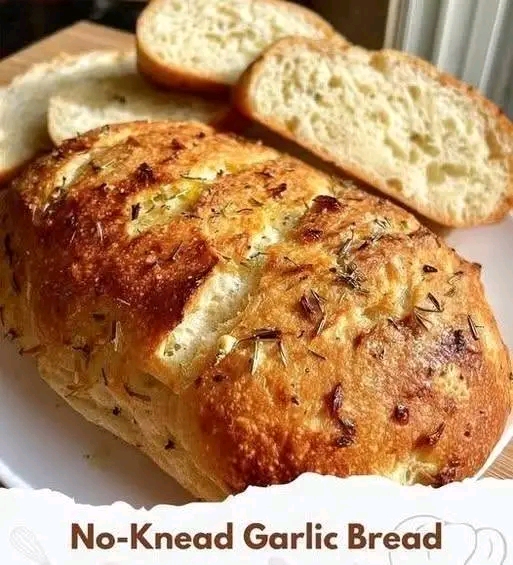
### Grandmother’s Diabetic-Friendly No-Knead Garlic Bread
### Introduction
There is something special about recipes passed down from grandmothers, especially the ones that bring simple ingredients together into something warm, comforting, and delicious. This diabetic-conscious no-knead garlic bread is inspired by old-fashioned home baking, offering a flavorful homemade bread with garlic aroma, a tender interior, and a beautifully golden crust.
No kneading and no complicated techniques make this bread especially convenient for beginner bakers. With a few simple ingredients and a little patience for rising, you can prepare a homemade loaf that pairs beautifully with soups, salads, vegetable dishes, and family meals.
This is a diabetes-conscious adaptation inspired by the original description, not a verified original family recipe. Its suitability for diabetes depends on ingredients, portion size, and individual blood-glucose response.
### Origin
Homemade garlic bread has roots in traditional bread-making cultures, particularly throughout Mediterranean and European cuisines, where bread was often seasoned with garlic, olive oil, herbs, or other simple ingredients.
No-knead bread is a more modern baking technique that relies on longer fermentation and a moist dough rather than extensive kneading. Combining this easy method with garlic creates a practical homemade loaf inspired by traditional flavors and simple kitchen techniques.
Grandmother-style recipes are often built around affordable ingredients, practical methods, and the ability to feed a family without unnecessary expense.
### Cultural Significance
Bread has been a central part of family meals and culinary traditions for centuries. Many families have treasured bread recipes passed down from generation to generation, with each household adding its own variations.
Garlic bread represents the tradition of transforming everyday bread into something flavorful and satisfying. In many cultures, garlic, herbs, and oils are used to enrich bread and create a delicious accompaniment to shared meals.
Recipes described as grandmother’s recipes often carry more than cooking instructions. They represent memories, family traditions, practical wisdom, and the joy of cooking something homemade.
### Ingredients Quantity
Makes 1 medium loaf, approximately 10–12 slices.
* 300 g whole-wheat flour.
* 100 g bread flour.
* 320 ml lukewarm water.
* 7 g instant yeast.
* 1 teaspoon salt.
* 3 cloves garlic, finely minced.
* 2 tablespoons olive oil.
* 1 teaspoon dried parsley or Italian herbs.
* ½ teaspoon dried rosemary, optional.
### Optional Additions
* 1 tablespoon ground flaxseed for additional fiber.
* 2 tablespoons sunflower seeds for crunch.
* 1 tablespoon chia seeds for added fiber.
* Fresh rosemary for a fragrant flavor.
* A pinch of chili flakes for a little heat.
* 1 tablespoon nutritional yeast for a savory, cheesy flavor without adding cheese.
* Fresh chopped parsley for a fresh finishing touch.
### Tips for Success
* Use whole-grain flour: Whole-wheat flour contributes fiber, which can help slow digestion and support better blood-glucose management compared with refined flour, though it doesn’t eliminate the carbohydrate content.
* Keep the dough moist: No-knead bread dough should be slightly sticky. Avoid adding too much extra flour.
* Don’t use excessively hot water: Lukewarm water helps activate yeast without damaging it.
* Let the dough rise properly: A good rise improves the texture and flavor.
* Distribute the garlic evenly: Mixing the garlic into the dough helps ensure flavor throughout the loaf.
* Avoid excessive salt: Salt can be adjusted to suit your dietary needs.
* Watch your portions: Bread still contains carbohydrates, even when made with whole-grain flour.
* Allow the bread to cool: Cooling helps the crumb set and makes slicing easier.
### Instructions
* Combine the dry ingredients: In a large bowl, mix the whole-wheat flour, bread flour, instant yeast, salt, and dried herbs.
* Prepare the garlic: Finely mince the garlic cloves.
* Add the wet ingredients: Pour the lukewarm water and olive oil into the dry ingredients. Add the minced garlic.
* Mix the dough: Stir with a wooden spoon until everything is combined and no dry flour remains. The dough will be sticky.
* Cover and rise: Cover the bowl and let the dough rise at room temperature for approximately 1½–2 hours, or until doubled in size.
* Shape gently: Lightly flour your work surface and turn out the dough. Fold the edges inward gently to form a round loaf. Avoid kneading.
* Second rise: Place the dough on parchment paper, cover, and let it rest for another 30–45 minutes.
* Preheat the oven: Preheat your oven to 220°C (425°F). If using a Dutch oven, preheat it as well.
* Bake: Transfer the dough carefully into the hot Dutch oven or onto a baking tray. Bake covered for 30 minutes if using a Dutch oven, then uncover and bake for another 15–20 minutes until golden brown.
* Check doneness: The loaf should sound hollow when tapped on the bottom and be fully baked inside.
* Cool: Let the bread cool on a wire rack for at least 45 minutes before slicing.
### Description
This no-knead garlic bread is rustic, aromatic, and wonderfully satisfying. The whole-grain flour creates a hearty texture, while garlic and herbs provide a savory flavor that makes the loaf delicious even without butter.
The crust is golden and slightly crisp, while the inside is soft, flavorful, and perfect for dipping into soups or serving alongside roasted vegetables and protein-rich dishes.
It is a practical homemade bread recipe inspired by traditional family cooking, designed to make baking easier without sacrificing flavor.
### Nutritional Information
Approximate nutritional values per slice, assuming 12 slices per loaf.
* Calories: 155 kcal
* Protein: 5 g
* Carbohydrates: 27 g
* Fat: 4 g
* Fiber: 3 g
* Sugar: 1 g
* Sodium: 200–250 mg
Values are estimates and depend on the flour brands, slice thickness, and exact ingredients. This bread is not carbohydrate-free and is not automatically suitable for every person with diabetes.
### Conclusion
This grandmother-inspired no-knead garlic bread is a wonderful way to enjoy homemade bread with simple ingredients and minimal effort. Its fragrant garlic flavor, hearty texture, and easy preparation make it an excellent addition to everyday meals.
Using whole-grain flour and pairing the bread with protein, vegetables, and healthy fats can make it a more balanced choice. The no-knead method also makes it convenient for anyone who wants fresh homemade bread without spending time working the dough.
### Recommendation
Serve this garlic bread alongside homemade vegetable soup, lentil soup, grilled chicken, roasted vegetables, salads, or bean dishes. It is particularly delicious when lightly toasted and served with olive oil and fresh herbs.
For a more diabetes-conscious meal, enjoy a modest slice alongside a meal rich in non-starchy vegetables and protein. Individual carbohydrate needs vary, so portion sizes and blood-glucose responses matter.
### Embracing Healthful Indulgence
Healthful indulgence is about enjoying familiar foods while making thoughtful adjustments to ingredients, portions, and preparation. Homemade bread gives you the opportunity to choose the flour, control the salt, and avoid unnecessary additives.
Whole-grain flour can provide more fiber than refined flour, but bread remains a carbohydrate-containing food. People living with diabetes may benefit from considering the total carbohydrate content per serving, pairing bread with protein and healthy fats, and monitoring their individual response.
The beauty of this recipe is its simplicity. A little garlic, wholesome flour, yeast, water, and olive oil can create something comforting and delicious that brings the warmth of traditional home baking into your kitchen.
Enjoy the homemade goodness, one slice at a time!