### Homemade English Muffins – Soft, Chewy, and Delicious
Introduction
Homemade English muffins are one of those simple baking projects that can completely change your breakfast routine. With their soft, chewy interiors, lightly crisp golden tops and bottoms, and signature little nooks and crannies, these muffins are perfect for butter, jam, honey, eggs, or breakfast sandwiches. Making them at home may take a little patience, but the flavor is so rewarding that you might never want to buy store-bought English muffins again. Even your first attempt can turn out incredibly delicious!
### Origin
English muffins are believed to have developed from traditional British griddle breads. Unlike ordinary muffins, they are not baked in the oven in the same way as cupcakes or quick breads. They are typically cooked on a griddle or skillet, giving them their distinctive lightly browned exterior and soft interior.
English muffins became especially popular in Britain and later in North America, where they evolved into a beloved breakfast staple. Their simple ingredients and unique texture have made them a favorite for generations.
### Cultural Significance
English muffins have become an iconic part of breakfast culture, particularly in the United Kingdom and the United States. They are often served toasted with butter, marmalade, jam, or savory toppings such as eggs, cheese, and bacon.
Their versatility makes them popular for everyday breakfasts, brunches, and quick snacks. Homemade English muffins also represent the joy of traditional baking, where simple ingredients and a little patience create something comforting and memorable.
### Ingredients Quantity
Makes approximately 8–10 English muffins
* 3 cups (360 g) all-purpose flour
* 1 cup (240 ml) warm milk
* 2 tablespoons unsalted butter, melted
* 1 tablespoon sugar
* 1 teaspoon salt
* 2 teaspoons instant yeast
* Cornmeal or semolina, for dusting
### Optional Additions
* 1–2 tablespoons honey instead of sugar for a slightly sweeter flavor.
* Whole wheat flour to replace part of the all-purpose flour.
* A pinch of cinnamon for sweet breakfast muffins.
* Shredded cheddar cheese for savory muffins.
* Garlic powder and dried herbs for a savory variation.
* Raisins or dried cranberries for a sweet version.
### Tips for Success
* Use warm milk, not hot, to avoid damaging the yeast.
* Knead until the dough becomes smooth and elastic.
* Allow enough time for the dough to rise until noticeably puffy.
* Use cornmeal or semolina to prevent sticking and create a traditional exterior.
* Avoid rolling the dough too thin; English muffins should be thick and fluffy.
* Cook over low to medium-low heat so the centers cook before the outside becomes too dark.
* Let the muffins cool before splitting them with a fork to preserve their signature texture.
* For the classic nooks and crannies, split the muffins with a fork rather than cutting them with a knife.
### Instructions
* Activate the yeast: In a bowl, combine the warm milk, sugar, and yeast. Let sit for about 5–10 minutes if using active dry yeast, until foamy. Instant yeast can be mixed directly with the flour.
* Mix the dough: Add the flour, salt, and melted butter. Mix until a soft dough forms.
* Knead: Knead by hand for about 8–10 minutes or with a stand mixer for 5–7 minutes until smooth and elastic.
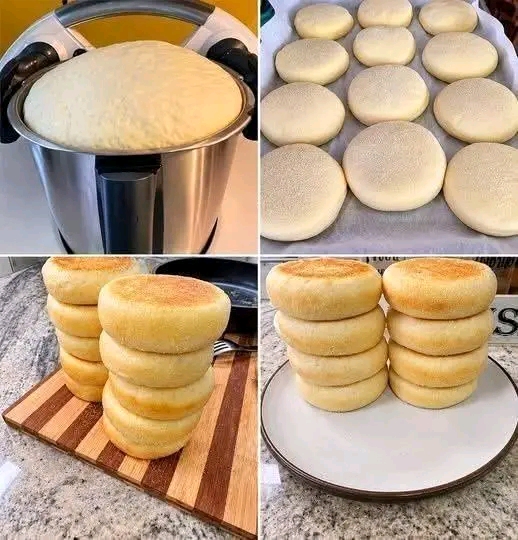
* First rise: Place the dough in a lightly greased bowl, cover, and let rise for approximately 1–1½ hours, or until doubled in size.
* Shape: Transfer the dough to a lightly floured surface. Roll it to about 1.5–2 cm (¾ inch) thick and cut into rounds using a biscuit cutter.
* Prepare for cooking: Sprinkle a tray with cornmeal or semolina and place the muffin rounds on it. Dust the tops lightly as well.
* Second rise: Cover and let rest for 30–45 minutes until puffy.
* Heat the skillet: Warm a heavy skillet or griddle over low to medium-low heat.
* Cook: Place the muffins on the skillet and cook for approximately 5–7 minutes per side. Adjust the heat as needed to ensure the centers cook through without burning the exterior.
* Check doneness: If the muffins are browning too quickly, lower the heat and cook a little longer. The centers should be cooked through and soft.
* Cool: Transfer to a wire rack and allow to cool completely.
* Serve: Split with a fork, toast, and enjoy with butter, jam, honey, or your favorite toppings.
### Description
These homemade English muffins are wonderfully soft, slightly chewy, and beautifully golden on the outside. Their rustic appearance is part of their charm, and their interior develops those little pockets that soak up melted butter perfectly. Fresh from the skillet, they have a comforting aroma and a flavor that is far more satisfying than many packaged versions. They are ideal for breakfast, brunch, sandwiches, or an afternoon snack.
### Nutritional Information
Approximate nutritional values per muffin, assuming 10 muffins.
* Calories: 180–210 kcal
* Protein: 5–7 g
* Carbohydrates: 30–35 g
* Fat: 4–5 g
* Fiber: 1–2 g
* Sugar: 2–4 g
Values will vary depending on the flour, milk, butter, and muffin size used.
### Conclusion
Making English muffins from scratch is a rewarding baking experience that brings the warmth and flavor of homemade bread into your kitchen. They may not look perfectly uniform on your first attempt, but their delicious taste, soft texture, and versatility make every batch worthwhile. With practice, you will develop your own technique and achieve the beautiful golden muffins you love.
### Recommendation
Enjoy your English muffins freshly toasted with butter and homemade jam, or turn them into breakfast sandwiches with eggs and your favorite fillings. They also freeze beautifully, making them perfect for meal preparation. Simply thaw, split, and toast whenever you want a quick and delicious breakfast.
### Embracing Healthful Indulgence
Homemade English muffins allow you to enjoy a classic comfort food while controlling the ingredients and portions. You can experiment with whole grains, reduce added sugar, or pair them with nourishing toppings such as eggs, avocado, nut butter, or fresh fruit. Baking your own bread is not just about the food; it is about enjoying the process, appreciating simple ingredients, and sharing something delicious with the people you love.