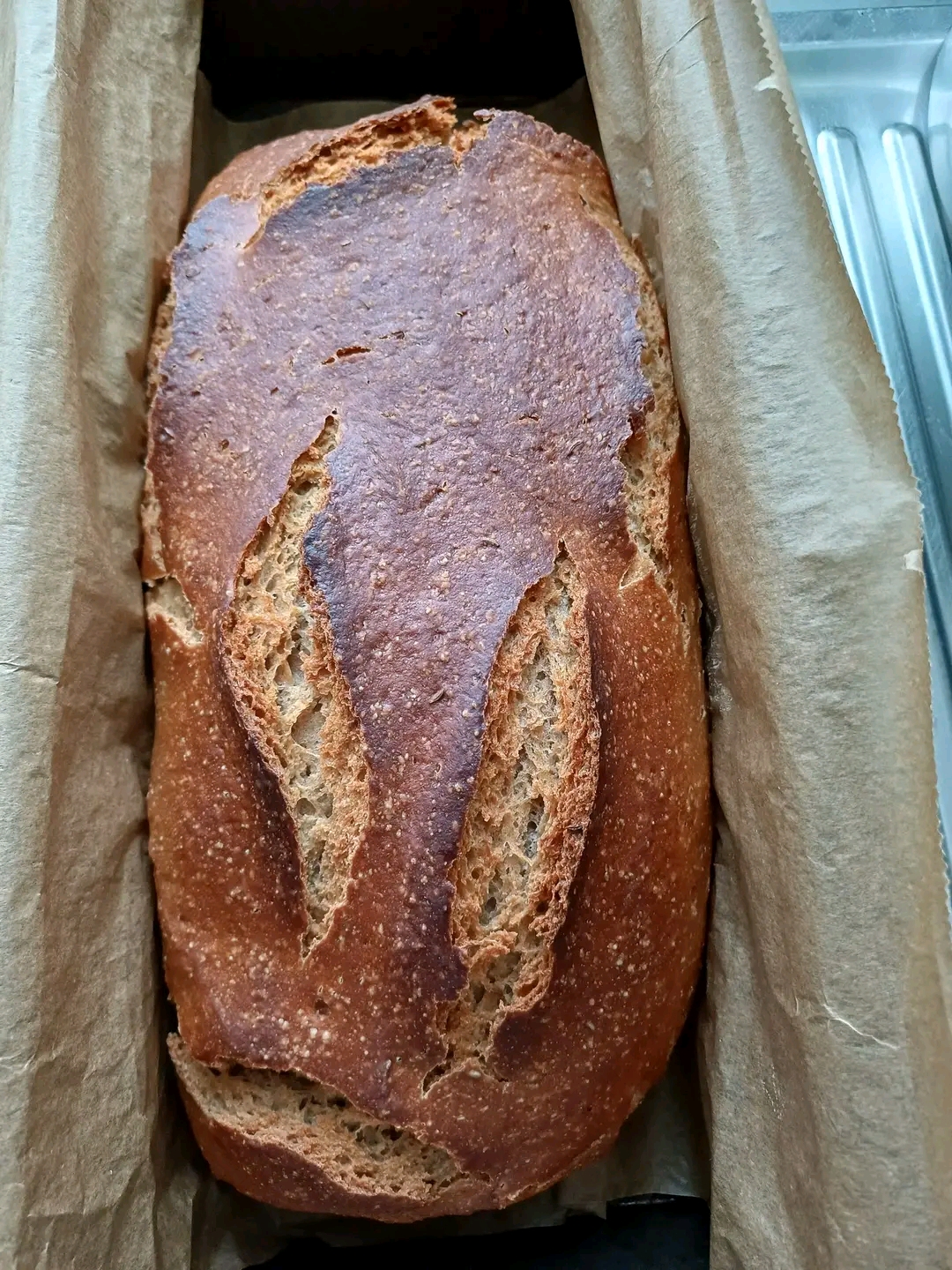
Homemade German Rye Bread (Roggenbrot Rustic, Hearty & Deliciously Crusty
### 1\. Introduction
There is nothing quite as satisfying as the smell of freshly baked homemade rye bread filling your kitchen! This traditional German-style rye bread is hearty, flavorful, and wonderfully rustic, with a delicious crust and a soft, dense interior.
Made with a combination of rye flour and wheat or spelt flour, this bread is simple to prepare and requires only a handful of basic ingredients. A little yeast helps the dough rise, while vinegar adds a subtle tanginess and complements the earthy flavor of the rye.
Whether served with butter, cheese, homemade spreads, or a bowl of warm soup, this homemade rye bread is a comforting addition to any meal.
### 2\. Origin
Rye bread has a long history in Central and Northern Europe, particularly in Germany, Scandinavia, Poland, and neighboring regions.
Rye became an important grain in areas where wheat was more difficult or expensive to cultivate. Because rye grows well in cooler climates and less fertile soils, it became a staple ingredient in traditional European baking.
German baking culture is especially famous for its wide variety of rye breads, including dark country loaves, sourdough rye breads, and mixed-grain varieties.
This recipe is inspired by traditional German household baking, combining rye flour with wheat or spelt flour to create a flavorful loaf with a lighter texture than bread made entirely from rye.
### 3\. Cultural Significance
In Germany, bread is much more than a breakfast food. It is an important part of everyday life and culinary heritage.
Rye bread is traditionally served for breakfast, dinner, and the popular German Abendbrot, a simple evening meal featuring sliced bread, cheese, cold cuts, vegetables, and spreads.
Homemade bread also represents family traditions, comfort, and the pleasure of preparing food from scratch.
A freshly baked loaf of Roggenbrot brings back memories of traditional bakeries, family kitchens, and the wonderful aroma of bread straight from the oven.
### 4\. Ingredients Quantity

Preparation Time: 20 minutes
First Rise: 2 hours
Second Rise: 30 minutes
Baking Time: Approximately 1 hour
Total Time: Approximately 3 hours 50 minutes
Yield: 1 large loaf
### Ingredients
* 500 g rye flour
* 200 g wheat flour or spelt flour
* 500 ml lukewarm water
* 2 tablespoons salt (see note below)
* 1 packet (approximately 7 g) dry yeast
* 1 tablespoon vinegar
Important salt note: Two tablespoons of salt is quite a large amount for this quantity of flour. For a more balanced loaf, I recommend using approximately 2 teaspoons (10–12 g) instead. Increase only if you specifically prefer a saltier bread.
### 5\. Optional Additions
You can customize this homemade rye bread with several delicious ingredients:
* Sunflower seeds: Add 50–75 g for a nutty flavor and extra texture.
* Pumpkin seeds: Provide a pleasant crunch.
* Flaxseeds: Add fiber and a slightly nutty taste.
* Caraway seeds: A traditional seasoning that pairs beautifully with rye.
* Fennel seeds: Bring a subtle aromatic flavor.
* Rolled oats: Add texture and a rustic appearance.
* Chopped walnuts: Create a delicious combination with rye flour.
* Molasses: A small amount adds color and depth.
* Coriander seeds: Give the bread a traditional German bakery-style aroma.
For a classic country-style loaf, sunflower seeds and caraway seeds are particularly good additions.
### 6\. Tips for Success
* Measure the ingredients carefully: Accurate measurements help produce a consistent loaf.
* Use lukewarm water: Water should feel comfortably warm, not hot, to avoid damaging the yeast.
* Don’t expect a wheat-like dough: Rye dough is naturally stickier and less elastic because rye contains less gluten-forming protein.
* Mix thoroughly: Make sure the flour, water, yeast, salt, and vinegar are evenly distributed.
* Allow enough rising time: Rye dough may rise differently from wheat dough, so watch its appearance rather than relying entirely on the clock.
* Grease the baking pan: This helps prevent the loaf from sticking.
* Create steam in the oven: A heatproof dish of water helps delay crust formation and encourages better oven spring.
* Remove the water dish near the end: This allows the crust to become firmer and more golden.
* Check that the bread is fully baked: The center should be cooked through. An internal temperature around 96–98°C is a useful guide.
* Let the bread cool completely: Rye bread benefits from cooling before slicing. Cutting too early can make the interior seem gummy.
### 7\. Instructions


### Step 1: Prepare the Ingredients
Measure the rye flour, wheat or spelt flour, salt, dry yeast, vinegar, and lukewarm water.
Grease a large loaf pan or line it with baking parchment.
### Step 2: Mix the Dough
Place the rye flour and wheat or spelt flour in a large mixing bowl.
Add the salt and dry yeast, then mix briefly.
Pour in the lukewarm water and vinegar.
Mix and knead until everything is evenly combined into a thick, sticky dough. Rye dough does not need the same intensive kneading as traditional wheat bread.
### Step 3: First Rise
Cover the bowl with a clean kitchen towel or plastic wrap.
Leave the dough in a warm, draft-free place for approximately 2 hours, or until visibly risen.
### Step 4: Transfer to the Baking Pan
Gently transfer the dough into the prepared loaf pan.
Smooth the surface with a wet spatula or damp hands.
### Step 5: Second Rise
Cover the pan and allow the dough to rise for another 30 minutes.
Meanwhile, preheat the oven to 200°C (392°F), using conventional top-and-bottom heat.
### Step 6: Prepare the Steam
Place a heatproof oven-safe dish containing water on a lower oven rack.
The steam helps keep the crust flexible during the early baking stage.
### Step 7: Begin Baking
Place the loaf on the middle rack and bake at 200°C for the first 10 minutes.
### Step 8: Reduce the Temperature
After 10 minutes, reduce the oven temperature to 180°C (356°F).
Continue baking for approximately 50 minutes.
About 10 minutes before the end, carefully remove the water dish so the crust can become firmer.
### Step 9: Check for Doneness
Check that the bread is fully baked. The crust should be nicely browned, and the internal temperature should reach approximately 96–98°C.
If the top becomes too dark before the bread is cooked through, loosely cover it with aluminum foil.
### Step 10: Cool and Enjoy
Remove the bread from the oven and carefully take it out of the baking pan.
Transfer it to a wire rack and allow it to cool completely before slicing.
Enjoy your homemade German rye bread!
### 8\. Description
This homemade Roggenbrot is a beautiful rustic loaf with a deeply flavored crust and a soft, hearty interior.
The rye flour provides an earthy, slightly nutty flavor, while the wheat or spelt flour helps create a lighter crumb. The vinegar adds a subtle tang, balancing the natural richness of the rye.
Every slice is satisfying and delicious, making it perfect for sandwiches, breakfast, or a traditional German evening meal.
### 9\. Nutritional Information
Estimated values per slice, assuming 16 slices and using wheat flour. Actual values vary with flour brands and slice size.
| Nutrient | Approximate Amount |
| ————- | —————— |
| Calories | 170 kcal |
| Protein | 5 g |
| Carbohydrates | 35 g |
| Dietary Fiber | 4 g |
| Fat | 1 g |
| Saturated Fat | 0.2 g |
| Sugar | 1 g |
| Sodium | 250–350 mg |
Nutritional Highlights:
* Rye flour provides dietary fiber.
* Rye contains naturally occurring plant compounds and minerals.
* Spelt or wheat flour contributes additional protein.
* The recipe contains no added butter or oil.
* It has no added sugar.
Rye bread is not gluten-free. Both rye and wheat or spelt contain gluten.
### 10\. Conclusion
Homemade German Rye Bread is a wonderful recipe for anyone who loves traditional, hearty bread.
With simple ingredients, straightforward preparation, and a little patience, you can create a delicious loaf that tastes like something fresh from a traditional German bakery.
The beautiful crust, satisfying texture, and rich rye flavor make it a fantastic addition to your homemade bread collection.
Once you experience the smell and taste of freshly baked Roggenbrot, you’ll understand why homemade bread is so special!
### 11\. Recommendation
For an authentic German-style meal, serve this rye bread with:
* Fresh butter and a pinch of salt.
* Sliced cheese and fresh tomatoes.
* Cucumber and radishes.
* Homemade egg salad.
* Smoked salmon and fresh herbs.
* Avocado and boiled eggs.
* A warm bowl of vegetable or lentil soup.
* Homemade hummus or white bean spread.
My favorite recommendation: Slice the cooled bread, toast it lightly, and top it with avocado, tomato, olive oil, and freshly ground black pepper.
For the best flavor, store the completely cooled loaf in a bread box or paper bread bag. Properly stored, it generally stays fresh for several days. It can also be sliced and frozen for convenient use later.
### 12\. Embracing Healthful Indulgence
Homemade rye bread can be a wonderful part of a balanced eating routine. Its hearty texture and fiber content make it a satisfying alternative to many refined white breads.
This recipe is particularly appealing because it contains no added sugar, butter, or unnecessary additives.
For an even more nutritious variation, consider:
* Adding sunflower or pumpkin seeds.
* Including ground flaxseeds for additional fiber.
* Using whole-grain spelt flour instead of refined wheat flour.
* Serving it with protein-rich foods such as eggs, beans, or hummus.
* Pairing slices with fresh vegetables and healthy fats.
If you prefer to avoid white flour, remember that the original recipe includes 200 g of wheat or spelt flour, which may be refined. You can experiment with whole-grain spelt flour or another suitable whole-grain flour, adjusting the water as needed.
For those avoiding gluten, this particular recipe is not suitable because rye, wheat, and spelt all contain gluten.
The beauty of homemade bread is that you control the ingredients, enjoy traditional flavors, and bring something wholesome and delicious to your table.
🥖❤️ Freshly baked, wonderfully rustic, and made with love!