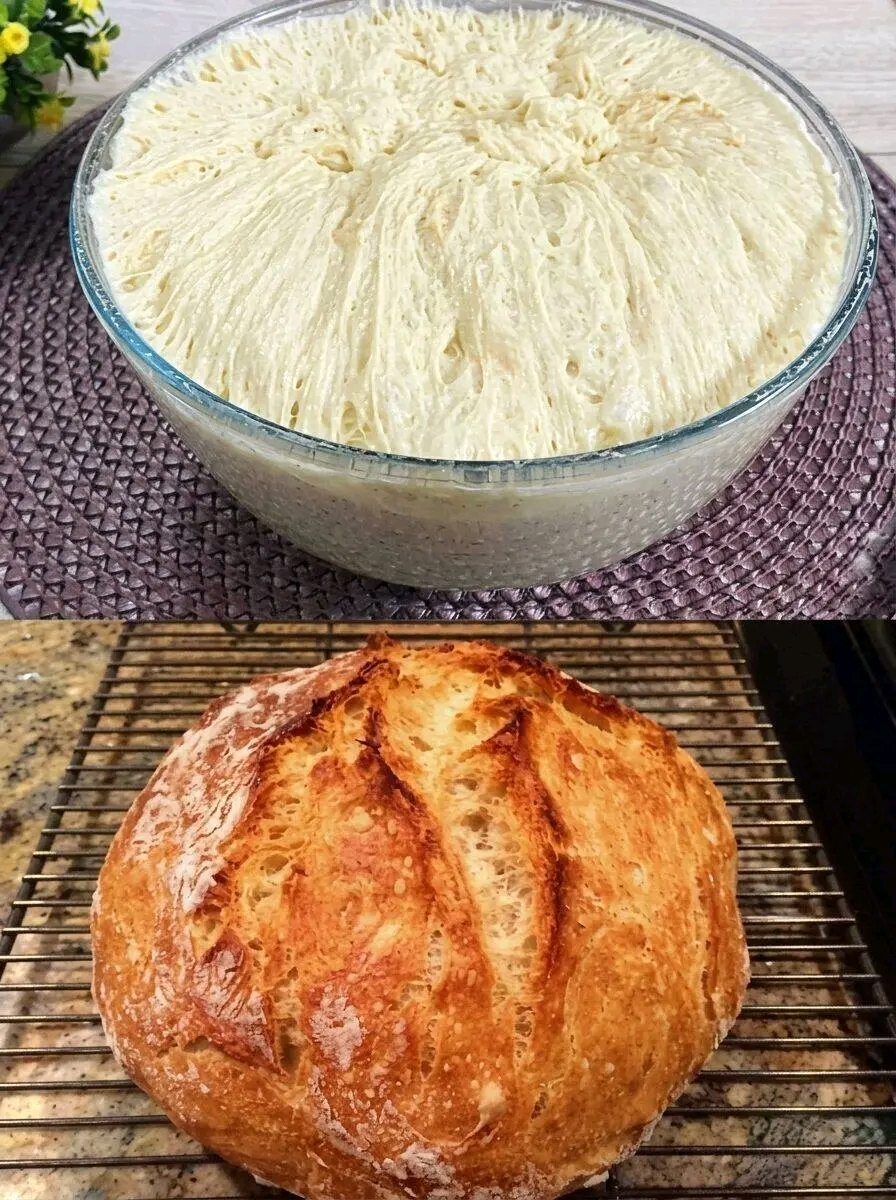
Easy No-Knead Homemade Bread Fresh Bread Without Buying It
### Introduction
Imagine enjoying freshly baked homemade bread several times a week without kneading dough by hand! This easy no-knead bread recipe is perfect for anyone who loves a crusty exterior, a soft and airy interior, and the comforting aroma of bread straight from the oven.
With just a few basic ingredients and minimal hands-on effort, you can make delicious homemade bread without a complicated baking process. Simply mix the ingredients, allow the dough to rise, shape it gently, and bake until golden.
Once you discover how easy homemade bread can be, you may find yourself baking it three times a week, too!
### Origin
No-knead bread became especially popular through modern home-baking methods that rely on time rather than intensive kneading to develop the dough. Although traditional bread-making techniques often involve extensive kneading, bakers have long used slow fermentation to develop flavor and texture.
A widely recognized modern no-knead method was popularized in the United States in the 2000s. It demonstrated that a wet dough, a long resting period, and a hot covered pot could produce a wonderfully crisp crust with little effort.
Today, no-knead bread is a favorite among beginners and experienced home bakers alike.
### Cultural Significance
Bread is a staple food in cultures around the world. From European farmhouse loaves to North African khobz, freshly baked bread has long been associated with hospitality, family meals, and sharing food.
Making bread at home also offers a practical way to control ingredients, reduce packaging, and enjoy the satisfaction of preparing a daily staple from scratch.
This simple no-knead recipe brings that tradition into a busy modern kitchen, making fresh bread accessible even to people with limited baking experience.
### Ingredients Quantity

Preparation time: 10 minutes Rising time: 2–3 hours Baking time: 40–45 minutes Total time: Approximately 3–4 hours Yield: 1 medium-large loaf
### Ingredients
* 500 g (4 cups, approximately) all-purpose flour or bread flour
* 375 ml (1½ cups) lukewarm water
* 7 g (2¼ teaspoons) instant yeast
* 10 g (1¾ teaspoons) salt
* 1 teaspoon sugar (optional, to help activate the yeast)
Flour absorbs water differently, so you may need a small adjustment. The dough should be sticky and soft rather than firm.
### Optional Additions
* Whole-wheat flour: Replace up to 100–150 g of the white flour for a heartier loaf.
* Seeds: Add sunflower, pumpkin, sesame, or flax seeds.
* Fresh herbs: Rosemary or thyme gives the bread a savory flavor.
* Garlic: Add minced garlic for a fragrant loaf.
* Olives: Fold in chopped olives for a Mediterranean-inspired variation.
* Rolled oats: Sprinkle oats on top before baking.
* Sourdough flavor: Replace some of the water and flour with an appropriately adjusted amount of sourdough starter, reducing the commercial yeast as needed.
### Tips for Success
* Don’t knead the dough. Mixing until the flour is hydrated is enough.
* Use lukewarm water. Very hot water can damage the yeast.
* Expect sticky dough. No-knead dough is generally wetter than traditional bread dough.
* Allow sufficient rising time. The dough should expand noticeably and develop bubbles.
* Avoid adding too much flour. Extra flour can make the loaf dense.
* Preheat the oven thoroughly. A hot oven helps the bread rise and develop a crust.
* Use a covered oven-safe pot if available. Steam trapped inside helps create a crisp, golden crust.
* Let the bread cool before slicing. Cutting too early can leave the inside gummy.
### Instructions
### Step 1: Mix the ingredients
In a large bowl, combine the flour, instant yeast, salt, and optional sugar. Add the lukewarm water and stir with a wooden spoon until no dry flour remains.
The dough will be sticky and rough. There is no need to knead it.
### Step 2: Let the dough rise
Cover the bowl with a clean kitchen towel or plastic wrap. Leave it in a warm place for approximately 2–3 hours, or until it has expanded significantly and looks bubbly.
The exact rising time depends on room temperature and yeast activity.
### Step 3: Shape the loaf
Lightly flour your work surface and turn out the dough. With floured hands or a dough scraper, gently fold the edges toward the center to form a loose round loaf.
Avoid working the dough excessively. Let it rest for 20–30 minutes while the oven heats.
### Step 4: Preheat the oven
Preheat the oven to 230°C (450°F). If using a Dutch oven or another suitable covered baking pot, place it in the oven while it heats.
Important: Only use cookware rated for the oven temperature. Follow the manufacturer’s instructions, especially when handling a hot pot and lid.
### Step 5: Bake the bread
Carefully transfer the dough onto baking parchment and place it into the hot pot.
Cover and bake for 30 minutes. Remove the lid and continue baking for another 10–15 minutes, until the crust is deep golden brown.
If you don’t have a covered pot, bake the loaf on a preheated baking tray. Place a separate oven-safe pan with hot water on the lower rack to create steam, taking care to avoid burns.
### Step 6: Cool and serve
Remove the bread from the oven and transfer it to a wire rack. Let it cool for at least 45–60 minutes before slicing.
Enjoy with soup, eggs, olive oil, or your favorite savory toppings.
### Description
This homemade no-knead bread has a beautifully crisp crust and a soft, chewy interior. Its irregular air pockets give it a rustic artisan appearance, while the simple ingredients create a clean, comforting bread flavor.
It is delicious fresh from the oven, excellent for sandwiches, and ideal for dipping into soups or serving alongside family meals.
Best of all, the preparation is easy enough to repeat throughout the week without spending hours kneading dough.
### Nutritional Information
Estimated values per serving, assuming 12 slices per loaf.
| Nutrient | Approximate amount |
| ————- | —————— |
| Calories | 160 kcal |
| Protein | 5 g |
| Carbohydrates | 33 g |
| Fat | 0.5 g |
| Fiber | 1–2 g |
| Sugar | Less than 1 g |
Values vary according to the flour used and slice size. These estimates assume the optional sugar is omitted.
### Conclusion
This easy no-knead bread proves that homemade baking doesn’t have to be complicated. With flour, water, yeast, salt, and a little patience, you can make a beautiful loaf with very little hands-on work.
Whether you’re new to bread-making or simply want a reliable everyday recipe, this loaf is an excellent place to start.
### Recommendation
Bake this bread when you have a few hours at home to allow the dough to rise. For convenience, prepare the dough earlier in the day and bake it when you’re ready.
Store the cooled loaf in a bread box or paper bag for the best crust. For longer storage, slice and freeze it in an airtight bag, then toast individual slices as needed.
If you want a more rustic flavor, try replacing a small portion of the flour with whole-wheat or rye flour.
### Embracing Healthful Indulgence
Homemade bread allows you to control the ingredients and avoid unnecessary additives. You can make it more nutritious by replacing part of the white flour with whole-grain flour or adding seeds for extra fiber and healthy fats.
Since you’ve mentioned preferring to avoid white flour and added sugar, you can experiment with a whole-grain version and omit the optional sugar. Keep in mind that whole-grain flour absorbs water differently, so adjust the dough gradually until it remains soft and sticky.
For a dairy-free loaf, this recipe is already suitable as written, provided any optional additions are also dairy-free.
Fresh homemade bread can be simple, satisfying, and adaptable—a wonderful way to bring the pleasure of baking into everyday life.