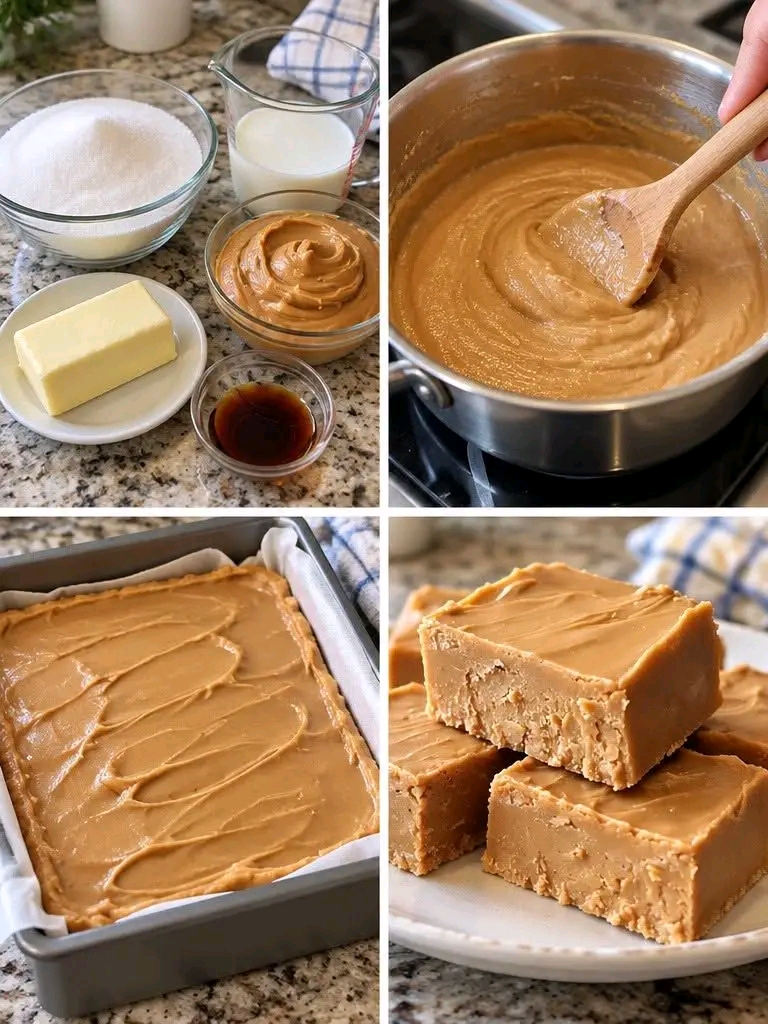
### Peanut Butter Fudge – Creamy, Rich, and Melt-in-Your-Mouth
YAY or NAY? If you love the combination of creamy peanut butter, buttery sweetness, and a soft, melt-in-your-mouth texture, this classic peanut butter fudge is definitely a YAY! It is easy to make with just five simple ingredients and makes a wonderful treat for holidays, parties, homemade gifts, or a cozy afternoon snack.
### Introduction
Peanut Butter Fudge is a timeless homemade confection that brings together the irresistible flavor of roasted peanuts and the sweetness of traditional fudge. Its smooth, creamy texture and rich peanut butter taste make every bite satisfying.
This recipe requires no oven and uses everyday pantry ingredients. With a little attention to temperature and stirring, you can create delicious squares of fudge that look beautiful on a dessert platter and taste wonderfully nostalgic.
Preparation Time: 10 minutes Cooking Time: 10–15 minutes Cooling Time: 2–3 hours Total Time: Approximately 3 hours Servings: 16–24 squares
### Origin
Fudge became popular in the United States during the late nineteenth century, with early recipes appearing in American cookbooks and home kitchens. Traditional fudge was commonly made by cooking sugar, butter, and milk together before beating the mixture until it formed a smooth, creamy confection.
Peanut butter fudge developed as peanut butter became a popular household ingredient. It offered a delicious variation on chocolate fudge, combining the familiar texture of traditional fudge with the nutty richness of peanut butter. Today, it remains a favorite in American home baking and candy-making traditions.
### Cultural Significance
Homemade fudge is often associated with family gatherings, holiday celebrations, bake sales, and thoughtful edible gifts. It is easy to cut into small squares, arrange in decorative boxes, and share with friends and loved ones.
Peanut butter fudge is especially popular among people who enjoy nostalgic homemade sweets. Its simple ingredients and straightforward preparation make it a recipe that can be passed from one generation to another, creating memories around the kitchen table.
### Ingredients Quantity
* 2 cups granulated sugar
* ½ cup unsalted butter
* ½ cup whole milk
* 1 cup creamy peanut butter
* 1 teaspoon vanilla extract
Equipment: A medium heavy-bottomed saucepan, wooden spoon or heat-resistant spatula, candy thermometer if available, and an 8-inch square pan.
### Optional Additions
* Chopped roasted peanuts: Add ¼ cup for extra crunch.
* Chocolate chips: Stir in ¼ cup of chocolate chips for a chocolate-peanut butter combination.
* Flaky sea salt: Sprinkle a small amount over the top to balance the sweetness.
* Mini marshmallows: Fold in a small handful after the mixture has cooled slightly.
* Cinnamon: Add a small pinch for a subtle warming flavor.
* Sugar-free variation: A suitable sugar substitute formulated for candy-making may be used, but the texture and setting can differ considerably from traditional fudge. Follow the substitute manufacturer’s instructions.
### Tips for Success
* Prepare the pan first. Line an 8-inch square pan with parchment paper, leaving some overhang so the fudge can be lifted out easily.
* Use a heavy-bottomed saucepan. This helps distribute heat evenly and reduces the risk of scorching.
* Dissolve the sugar completely. Stir gently while heating the sugar, butter, and milk.
* Monitor the temperature. For classic fudge, the mixture generally needs to reach the soft-ball stage, approximately 234–240°F (112–116°C), depending on conditions and the desired texture.
* Avoid excessive stirring after boiling begins. Stirring at the wrong stage can encourage sugar crystals to form, resulting in grainy fudge.
* Work quickly once the peanut butter is added. The mixture begins to thicken as it cools.
* Allow enough cooling time. Let the fudge set completely before slicing for clean, neat squares.
* Measure carefully. The balance of sugar, milk, butter, and peanut butter determines whether the fudge sets properly.
### Instructions
Step 1: Prepare the pan
Line an 8-inch square baking pan with parchment paper. Lightly grease the paper if necessary, then set the pan aside.
Step 2: Combine the ingredients
Place the granulated sugar, butter, and whole milk in a medium heavy-bottomed saucepan. Heat over medium heat, stirring gently until the butter melts and the sugar dissolves.
Step 3: Bring the mixture to a boil
Once the mixture reaches a steady boil, cook it without vigorous stirring until it reaches 234–240°F (112–116°C) on a candy thermometer. Keep a close eye on the temperature to prevent overcooking.
Step 4: Add the peanut butter
Remove the saucepan from the heat. Immediately stir in the creamy peanut butter and vanilla extract until the mixture is smooth and thoroughly combined.
Step 5: Transfer to the pan
Carefully pour the hot fudge mixture into the prepared pan. Smooth the top with a spatula, working quickly before the mixture becomes too firm.
Step 6: Cool and set
Leave the fudge at room temperature until completely cool and firm, usually 2–3 hours. If your kitchen is warm, refrigerate it after the initial cooling period.
Step 7: Slice and serve
Lift the fudge out using the parchment paper. Cut it into 16–24 small squares with a sharp knife, wiping the blade between cuts for cleaner edges.
Step 8: Store properly
Place the squares in an airtight container. Store them in a cool place or refrigerate them for a firmer texture. For longer storage, freeze the fudge in a well-sealed container, separating layers with parchment paper.
### Description
This Peanut Butter Fudge is rich, smooth, buttery, and full of peanut butter flavor. Each square has a creamy texture that softens in your mouth, while the vanilla adds warmth and rounds out the sweetness.
The recipe is ideal for anyone who enjoys old-fashioned homemade candy without the need for an oven or complicated equipment. Serve it in small portions alongside coffee or tea, add it to a holiday dessert tray, or package it as a homemade gift.
### Nutritional Information
Approximate nutrition per square, assuming the recipe makes 20 squares:
| Nutrient | Amount |
| ————- | ———— |
| Calories | 145–165 kcal |
| Carbohydrates | 17–20 g |
| Total sugars | 16–19 g |
| Fat | 8–10 g |
| Protein | 2–3 g |
| Fiber | 0.5–1 g |
| Sodium | 35–65 mg |
Values vary according to the peanut butter brand, portion size, and final yield. These estimates are for the traditional recipe, which contains added sugar and dairy.
### Conclusion
Peanut Butter Fudge is a simple, nostalgic treat that transforms five everyday ingredients into rich, creamy squares. With careful temperature control and enough time to set, the result is a delicious homemade confection suitable for sharing or enjoying in small portions.
Whether you prepare it for a celebration, give it as a gift, or keep a few pieces for an occasional treat, this classic recipe is a lovely reminder that homemade sweets can be both uncomplicated and memorable.
### Recommendation
Serve the fudge in small squares because its flavor and sweetness are concentrated. It pairs beautifully with unsweetened coffee, black tea, or a glass of cold milk.
For a special dessert platter, arrange it alongside fresh strawberries, apple slices, or a few squares of dark chocolate. If you are making it as a gift, place the fully cooled pieces in a decorative tin lined with parchment paper.
My vote: YAY! It is an excellent choice for peanut butter lovers, especially when enjoyed as an occasional sweet treat.
### Embracing Healthful Indulgence
Traditional peanut butter fudge is a dessert to savor in moderation. Although peanut butter contributes some protein and unsaturated fats, the recipe contains a substantial amount of added sugar, so it is not a sugar-free or low-sugar treat.
If you prefer to limit sugar or avoid dairy, you can experiment with a peanut butter dessert made with an appropriate sugar substitute and a dairy-free alternative. Keep in mind that these changes may produce a different texture and may require a recipe specifically developed for those ingredients.
For a simpler option, enjoy one small square slowly and pair it with unsweetened tea or coffee. That way, you can appreciate the rich peanut butter flavor without needing a large serving.