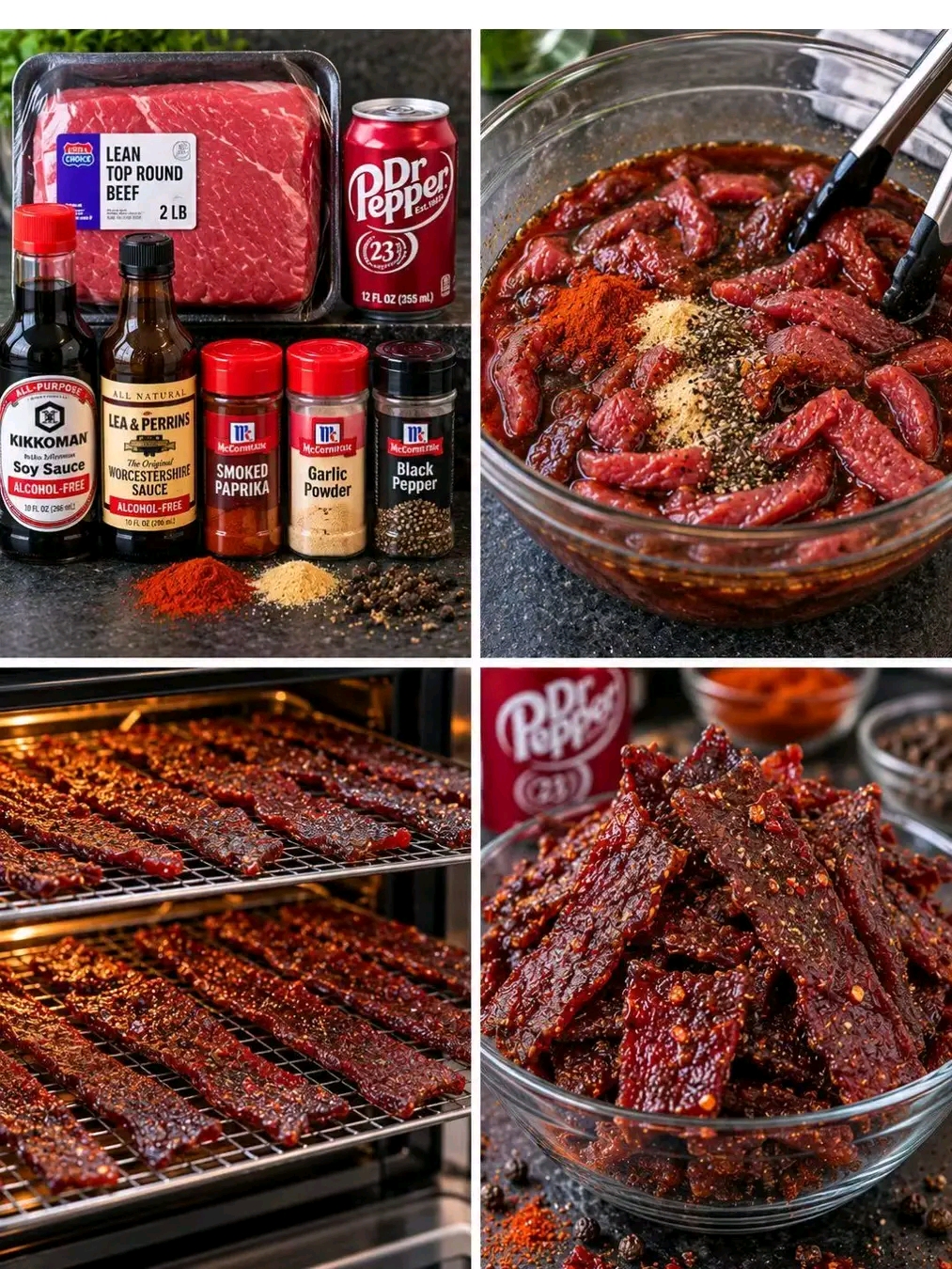
### Dr Pepper Beef Jerky – Sweet, Smoky, and Savory Homemade Beef Jerky
### Introduction
Dr Pepper Beef Jerky is a delicious homemade snack that combines lean beef with the distinctive sweetness of Dr Pepper, savory soy sauce, Worcestershire sauce, and smoky spices. The result is a bold, flavorful jerky with a balance of sweet, salty, peppery, and smoky notes.
Perfect for road trips, hiking, lunchboxes, or a protein-rich snack, this homemade beef jerky offers a fun twist on traditional dried beef. The secret is allowing the beef to marinate long enough to absorb the flavors before drying it to a chewy, satisfying texture.
### Origin
Beef jerky has a long history as a practical way to preserve meat by removing moisture. Indigenous peoples of the Americas developed traditional meat-drying methods long before modern refrigeration, and dried meat became an important food for travelers and communities.
The word jerky is commonly traced to the Quechua word ch’arki, referring to dried meat. Over time, beef jerky became a popular snack throughout the United States.
Dr Pepper, introduced in Texas in the late 19th century, is a distinctive American soft drink. Using it in a beef jerky marinade is a modern flavor variation that combines a familiar soda with the sweet-and-savory tradition of American barbecue cooking.
### Cultural Significance
Beef jerky is closely associated with outdoor adventures, road trips, camping, and convenient snacking. Its portability and concentrated flavor have made it a favorite among hikers, travelers, and people looking for a shelf-stable-style meat snack.
This Dr Pepper version adds a creative Southern-inspired touch. The soda contributes sweetness and a distinctive flavor, while smoked paprika and black pepper create a barbecue-like character.
Making jerky at home also allows you to customize the seasoning, sweetness, and level of spice to suit your taste.
### Ingredients Quantity
Preparation: 20 minutes · Marinating: 12–24 hours · Drying: approximately 4–6 hours · Makes: about 8 servings
* 2 pounds (900 g) lean top round beef, trimmed of visible fat
* 1 can (12 oz / 355 ml) Dr Pepper
* ½ cup (120 ml) soy sauce
* ¼ cup (60 ml) Worcestershire sauce
* 1 tablespoon smoked paprika
* 1 tablespoon garlic powder
* 1 tablespoon coarsely ground black pepper
### Optional Additions
Personalize your jerky with these flavorful additions:
* Brown sugar: Add 1 tablespoon for a sweeter, barbecue-style finish.
* Red pepper flakes: Add ½ teaspoon for a little heat.
* Onion powder: Add 1 teaspoon for deeper savory flavor.
* Chili powder: Add ½–1 teaspoon for a smoky, spicy kick.
* Liquid smoke: Add a few drops for a stronger smoked flavor.
* Honey: Add 1 tablespoon for extra sweetness, keeping in mind that additional sugar can make the finished jerky stickier.
* Reduced-sodium soy sauce: Use this to help control the saltiness.
### Tips for Success
* Choose lean beef. Top round, eye of round, and bottom round work well because they contain relatively little fat. Excess fat can shorten storage life.
* Partially freeze the beef. Chilling it in the freezer for 1–2 hours makes it firmer and easier to slice evenly.
* Slice against the grain. This usually produces a more tender, easier-to-chew jerky. For a chewier texture, some people prefer slicing with the grain.
* Marinate in the refrigerator. Keep the beef refrigerated throughout the 12–24-hour marinating period.
* Remove excess marinade. Pat the strips dry before drying to help them dehydrate efficiently.
* Arrange in a single layer. Leave space between strips so air can circulate freely.
* Prioritize food safety. Beef jerky must receive a validated heat treatment to destroy harmful bacteria. A dehydrator set to 160°F does not necessarily mean every strip reaches a safe internal temperature.
* Check doneness carefully. Properly dried jerky should be dry and leathery, with some flexibility, rather than wet or soft in the center.
### Instructions
Step 1: Prepare the beef
Trim away visible fat. Place the beef in the freezer for approximately 1–2 hours until firm but not frozen solid. Slice into strips about ¼ inch thick.
Step 2: Make the marinade
In a large bowl, whisk together the Dr Pepper, soy sauce, Worcestershire sauce, smoked paprika, garlic powder, and black pepper until combined.
Step 3: Marinate the beef
Add the beef strips and toss thoroughly to coat every piece. Cover and refrigerate for 12–24 hours, turning or stirring occasionally.
Step 4: Drain and arrange
Remove the strips from the marinade and discard the used marinade. Pat the beef dry with clean paper towels. Arrange the strips in a single layer on dehydrator trays, ensuring they do not overlap.
Step 5: Apply a food-safe heat treatment
For safety, heat the marinated beef strips to an internal temperature of 160°F (71°C) before dehydrating, using a reliable food thermometer and a method that heats the meat evenly. Alternatively, follow a tested beef jerky recipe or the dehydrator manufacturer’s instructions that specify a validated pathogen-killing step.
Do not assume that setting an oven or dehydrator to 160°F guarantees the beef itself reaches that temperature.
Step 6: Dehydrate the beef
Dry the strips in a dehydrator according to the manufacturer’s directions, typically around 4–6 hours depending on thickness, airflow, and equipment. If using an oven, follow a tested jerky-drying method that provides adequate airflow and safe temperature control. Drying time can vary significantly, so do not rely on time alone.
Step 7: Test the texture
Allow a strip to cool before checking it. Properly dried jerky should be firm, leathery, and bendable without feeling wet or releasing moisture. It should not be brittle unless you prefer a very dry texture.
Step 8: Cool and store safely
Cool the finished jerky completely before packing it into a clean, airtight container. Because home dehydration does not automatically make meat shelf-stable, refrigerate the jerky and use it within a short period, or freeze it for longer storage. Do not assume it is safe at room temperature for two weeks without a validated preservation process.
### Description
Dr Pepper Beef Jerky delivers a satisfying combination of sweet soda flavor, salty umami, smoky paprika, and bold black pepper. The lean beef becomes chewy and concentrated in flavor as moisture is removed, creating a portable snack with plenty of savory character.
The Dr Pepper marinade gives the jerky a distinctive twist, making it an interesting alternative to traditional peppered or teriyaki beef jerky. Adjust the sweetness and spices to make each batch your own.
### Nutritional Information
Approximate nutrition per serving, assuming 8 servings and depending on the beef, marinade absorption, and drying yield:
* Calories: 150–220
* Protein: 20–28 g
* Carbohydrates: 5–12 g
* Fat: 3–7 g
* Sugar: 3–9 g
* Sodium: 600–1,000 mg
These figures are estimates. Beef loses substantial water during drying, so nutrition per ounce of finished jerky is more concentrated than nutrition per ounce of raw beef. Soy sauce and Worcestershire sauce can also contribute considerable sodium.
### Conclusion
Dr Pepper Beef Jerky is a creative homemade snack that transforms lean beef into a flavorful combination of sweet, smoky, and savory goodness. With a well-seasoned marinade and careful drying, it can become a favorite for outdoor adventures, busy days, and anytime cravings.
The most important part of making it at home is following safe heating, drying, and storage practices. Good flavor matters, but food safety is essential when preparing dried meat.
### Recommendation
Enjoy this jerky on road trips, during hikes, or as a convenient snack between meals. Pair it with fresh fruit, unsalted nuts, or crunchy vegetables for a more balanced snack.
For a less sweet version, choose a reduced-sugar soda and omit additional sweeteners. For a less salty version, use reduced-sodium soy sauce and avoid adding extra salt.
If you make a batch for friends or family, label the container with the preparation date and keep it refrigerated unless you have used a tested process that establishes room-temperature shelf stability.
### Embracing Healthful Indulgence
Homemade beef jerky can be a convenient source of protein, and choosing lean beef helps limit excess fat. You can also customize the recipe by reducing added sugars and using lower-sodium seasonings.
Keep in mind that jerky is often high in sodium, and the Dr Pepper adds sugar. Enjoying a moderate portion alongside fresh, minimally processed foods is a practical way to balance flavor and nutrition.
The result: a bold, chewy, sweet-and-smoky snack that brings a fun twist to classic beef jerky—made with care from marinade to storage.