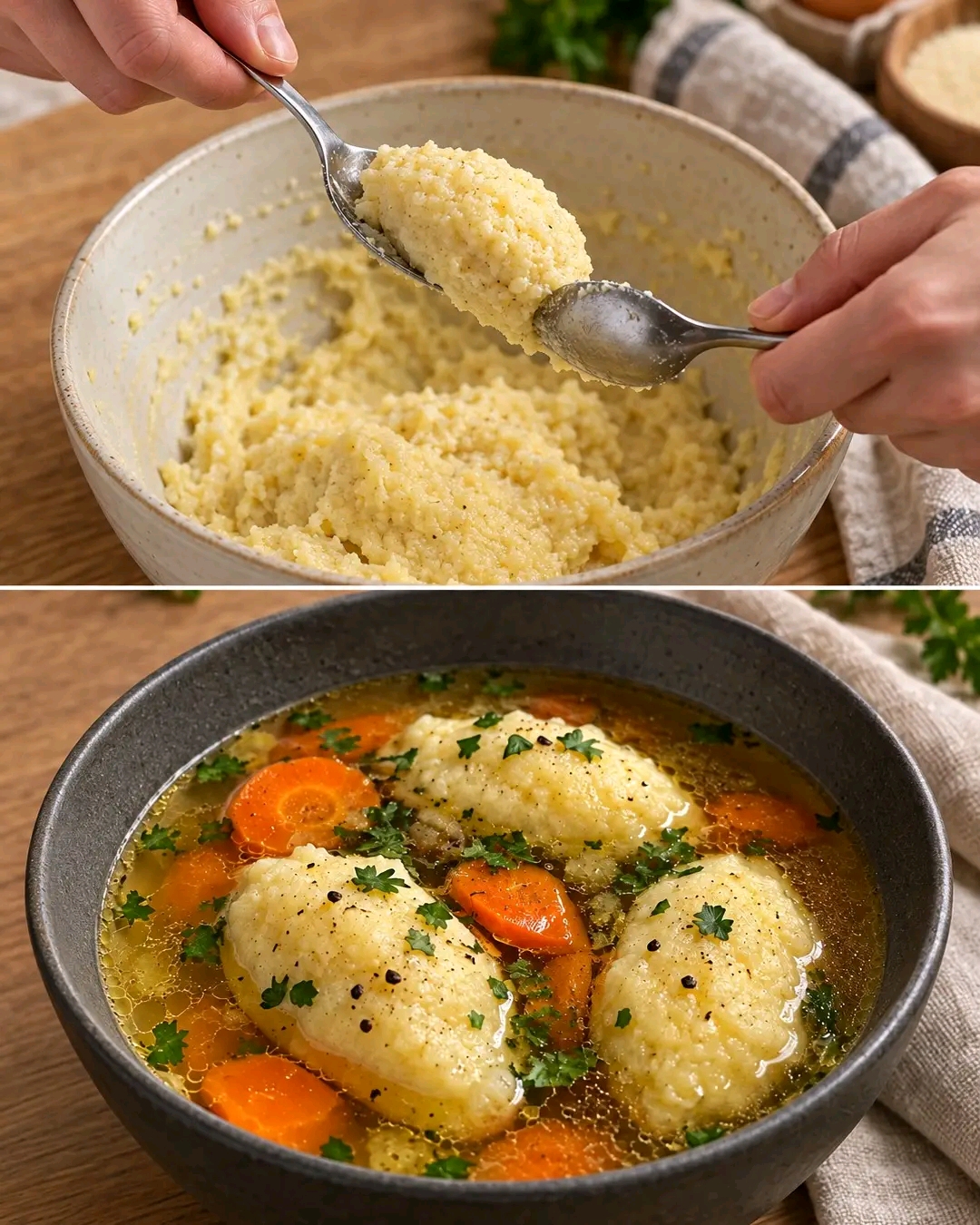
Omas Grießnockerlsuppe Grandma’s Semolina Dumpling Soup
### Introduction
There is something truly special about a bowl of homemade Grießnockerlsuppe, the traditional German-speaking comfort soup made with delicate semolina dumplings floating in a warm, flavorful broth. Just like Grandma used to make, these dumplings are soft, tender, and wonderfully light, making every spoonful taste like a little piece of childhood.
This classic soup is simple, nourishing, and comforting. Made with a handful of everyday ingredients, it is perfect as a light lunch, a cozy dinner starter, or a warming meal on a chilly day.
Preparation Time: 15 minutes Resting Time: 10–15 minutes Cooking Time: 15–20 minutes Total Time: Approximately 40–50 minutes Servings: 4
### Origin
Grießnockerlsuppe has deep roots in the culinary traditions of Austria, Bavaria, and other German-speaking regions of Central Europe. The dish is especially associated with Austrian home cooking, where semolina dumplings are commonly served in clear beef broth.
Semolina, made from durum wheat, has long been used in European kitchens for porridges, puddings, and dumplings. Combining it with butter, eggs, and seasoning creates a simple dough that can be shaped into dumplings and gently cooked in broth.
Over generations, families have developed their own versions, adjusting the proportions of semolina, butter, and eggs to achieve their preferred texture.
### Cultural Significance
For many families in Austria and southern Germany, Grießnockerlsuppe is a beloved traditional dish associated with home cooking, family meals, and childhood memories.
Grandmothers often prepare it using handwritten recipes and familiar kitchen techniques. The dumplings may be served as a first course during Sunday lunch or enjoyed as a comforting meal when someone needs something warm and gentle.
Its enduring popularity comes from its simplicity: inexpensive ingredients, a flavorful broth, and soft dumplings that turn an ordinary meal into something memorable.
### Ingredients Quantity
### For the semolina dumplings
* 60 g (approximately ½ cup) fine wheat semolina
* 30 g (2 tablespoons) unsalted butter, softened
* 1 medium egg
* 1 tablespoon milk, if needed
* ¼ teaspoon salt
* A pinch of freshly grated nutmeg
* 1 tablespoon finely chopped fresh parsley, optional
### For the soup
* 1.5 liters (6 cups) beef broth or vegetable broth
* 1 small carrot, finely diced, optional
* 1 small piece of leek, thinly sliced, optional
* Salt and black pepper, to taste
* 1–2 tablespoons chopped fresh chives or parsley, for garnish
### Optional Additions
* Vegetable broth: Use vegetable broth instead of beef broth for a meat-free version.
* Fresh chives: Add a delicate onion flavor and a traditional finishing touch.
* Carrots and celery: Add finely diced vegetables for extra color and flavor.
* Nutmeg: A small pinch enhances the dumplings’ warm, savory character.
* Liver dumplings: For a more substantial traditional soup, serve alongside liver dumplings in a separate variation.
* Dairy-free butter alternative: Replace the butter with a suitable plant-based alternative.
* Gluten-free semolina alternative: Traditional wheat semolina contains gluten, so use a specifically formulated gluten-free dumpling recipe if needed; simply swapping the semolina may change the texture considerably.
### Tips for Success
* Use softened butter. It combines more easily with the egg and helps create a smooth dumpling mixture.
* Mix thoroughly but gently. Cream the butter and egg together before adding the semolina.
* Let the mixture rest. Resting for 10–15 minutes allows the semolina to absorb moisture and helps the dumplings hold their shape.
* Keep the broth at a gentle simmer. A vigorous boil can break apart delicate dumplings.
* Test one dumpling first. Cook a small test dumpling to check its texture. If it falls apart, the mixture may need a little more semolina and resting time.
* Use two teaspoons to shape the dumplings. This creates the traditional oval shape and helps keep their size consistent.
* Avoid making them too large. The dumplings expand as they cook, so small portions usually produce a lighter result.
* Be patient. Cook until the dumplings are fully set and tender in the center.
### Instructions
### Step 1: Prepare the dumpling mixture
Place the softened butter in a mixing bowl and stir until creamy. Add the egg and salt, mixing until well combined.
Gradually stir in the semolina and a pinch of nutmeg. Add the optional parsley and a little milk if the mixture seems unusually dry.
### Step 2: Rest the mixture
Cover the bowl and let the mixture rest for 10–15 minutes at room temperature. The semolina will absorb moisture, making the mixture easier to shape.
### Step 3: Heat the broth
Pour the beef or vegetable broth into a large saucepan. Add the optional diced carrot and sliced leek, if using.
Bring the broth to a boil, then reduce the heat until it reaches a gentle simmer. Allow the vegetables to soften before adding the dumplings.
### Step 4: Shape the dumplings
Dip two teaspoons into warm water. Use them to shape small oval dumplings from the semolina mixture, transferring each carefully into the simmering broth.
Leave enough space between the dumplings because they will expand as they cook.
### Step 5: Cook gently
Simmer the dumplings gently for approximately 15–20 minutes, depending on their size. Avoid a rolling boil, which can damage their delicate texture.
Check that the dumplings are cooked through and soft in the center before serving.
### Step 6: Season the soup
Taste the broth and adjust the salt and pepper as needed. If desired, add a little more chopped parsley or fresh chives.
### Step 7: Serve warm
Ladle the broth and dumplings into soup bowls. Garnish with fresh herbs and serve immediately while warm.
### Description
Omas Grießnockerlsuppe is a comforting, traditional soup featuring pillowy semolina dumplings in a clear, savory broth. The dumplings have a delicate, tender texture, with a subtle buttery flavor and a hint of nutmeg.
The broth provides warmth and depth without overpowering the dumplings. A sprinkle of fresh parsley or chives adds color and freshness, creating a simple yet satisfying dish that feels timeless.
### Nutritional Information
Approximate nutritional values per serving, assuming four servings and using beef broth without optional vegetables:
* Calories: 180–240 kcal
* Protein: 6–9 g
* Carbohydrates: 15–22 g
* Fat: 9–13 g
* Fiber: 1 g or less
* Sugar: Approximately 1–3 g
Values vary depending on the size of the egg, the amount of butter used, and the nutritional content of the broth. Adding vegetables will change the nutritional values slightly.
### Conclusion
Grandma’s Grießnockerlsuppe is proof that the simplest recipes are often the most memorable. Soft semolina dumplings, fragrant broth, and a few carefully chosen seasonings create a warm and comforting meal that has delighted families for generations.
Whether you are recreating a childhood favorite or discovering this Austrian classic for the first time, this soup is a wonderful way to bring traditional home cooking into your kitchen.
### Recommendation
Serve Grießnockerlsuppe as a starter before a traditional roast or schnitzel dinner, or enjoy a larger bowl as a light meal with fresh bread and a side salad.
For extra flavor, use a good-quality homemade broth and finish with fresh chives. If you are preparing the soup in advance, cook the dumplings separately and store them in a little broth. Reheat them gently in fresh hot broth just before serving to help preserve their texture.
### Embracing Healthful Indulgence
Grießnockerlsuppe can be enjoyed as part of a balanced diet. Eggs provide protein and several important nutrients, while semolina supplies carbohydrates for energy. The broth adds flavor and warmth without requiring a heavy sauce.
For a lighter version, reduce the butter slightly and choose a lower-sodium broth. Add carrots, leeks, or celery for extra vegetables and flavor.
Traditional semolina dumplings contain wheat and usually include butter and egg. If you avoid white flour or prefer dairy-free meals, this classic recipe will need more substantial ingredient changes rather than a simple substitution. A separately developed alternative using suitable gluten-free grains and a dairy-free fat can offer a different but comforting version.
The best part of this recipe is its simplicity: a few humble ingredients, a little patience, and the familiar warmth of a homemade soup that brings comfort to the table.