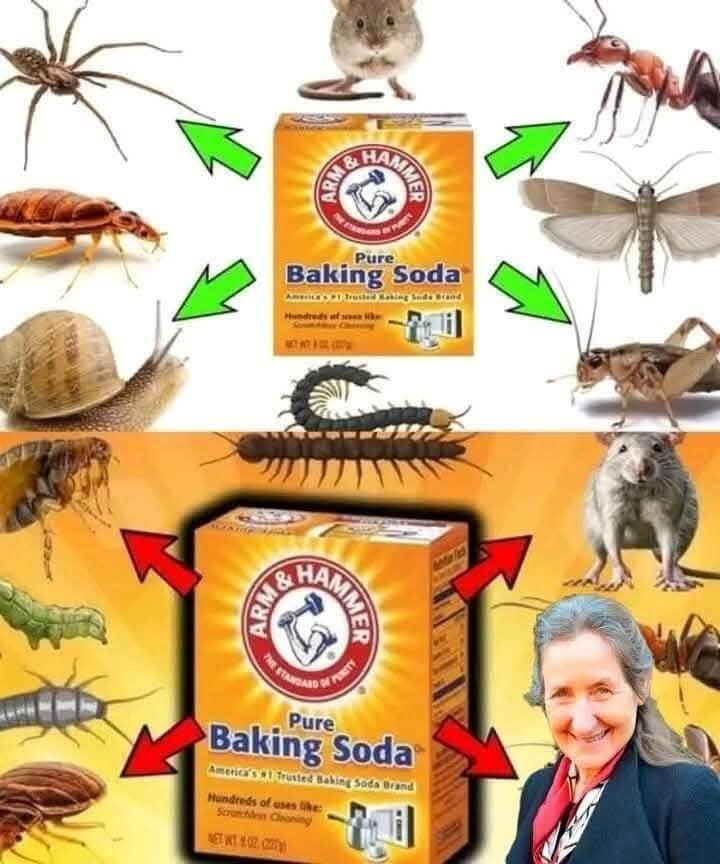
Baking soda is a versatile and environmentally friendly solution for eliminating various household pests, including cockroaches, fleas, ants, moths, mice, rats, and spiders. Its non-toxic nature makes it a safer alternative to chemical pesticides, especially in homes with children and pets. Below is a detailed guide on how to use baking soda effectively against common pests.
Cockroaches
Why It Works: Baking soda reacts with the acidic fluids in a cockroach’s stomach, producing gas that the insect cannot expel, ultimately killing it.
Steps:
Mix equal parts baking soda and sugar in a small bowl or container.
Sugar acts as a bait to attract cockroaches.
Sprinkle the mixture along areas where cockroaches frequent, such as:
Baseboards
Under sinks
Inside cabinets
Cracks and crevices in walls or floors
Check and replenish the mixture as needed until the infestation is gone.
Fleas
Why It Works: Baking soda dehydrates fleas and their eggs, disrupting their life cycle.
Steps:
Sprinkle a generous amount of baking soda on carpets, rugs, pet beds, and upholstery.
Use a brush or broom to work the baking soda into the fibers.
Let it sit for 12-24 hours to effectively kill fleas and eggs.
Vacuum thoroughly to remove the baking soda and dead fleas.
Repeat the process weekly until the fleas are eradicated.
Ants
Why It Works: When ants consume baking soda, it reacts with their digestive acids, leading to their death.
Steps:
Combine equal parts baking soda and powdered sugar.
Place small piles of the mixture near ant trails, entry points, and nests.
Monitor and reapply as necessary until the ant problem is resolved.
Moths
Why It Works: Baking soda absorbs moisture and odors, deterring moths and disrupting their breeding environment.
Steps:
Mix baking soda with dried lavender or cedar chips to create a moth-repellent sachet.
Place sachets in closets, drawers, or storage boxes where moths may lay eggs.
Regularly replace sachets to maintain effectiveness.
Mice and Rats
Why It Works: Baking soda reacts with stomach acids, producing gas that rodents cannot expel, ultimately killing them.
Steps:
Mix baking soda with flour and sugar to form bait.
Place small amounts of the mixture in areas where mice or rats are active, such as:
Corners of rooms
Behind furniture
Along baseboards
Ensure pets and children cannot access the bait.
Spiders
Why It Works: Spiders dislike the texture and desiccating properties of baking soda.
Steps:
Sprinkle baking soda in areas where spiders enter, such as window sills, doorways, and dark corners.
Leave the baking soda for a few days before vacuuming.
Repeat weekly to discourage spiders from returning.
Additional Tips for Using Baking Soda Against Pests
Combine with Vinegar for Extra Power: For pests like ants and cockroaches, you can pair baking soda with vinegar to create a reactive, effervescent solution that disrupts their nests and hiding spots.
Use as a Preventative Measure: Regularly sprinkle baking soda in potential pest entry points, cracks, and crevices to deter infestations before they start.
Keep Surfaces Clean: Baking soda is most effective when used alongside general cleanliness and sanitation, as it reduces food and moisture sources for pests.
Benefits of Using Baking Soda for Pest Control
Environmentally Friendly: Baking soda is biodegradable and safe for the planet.
Non-Toxic: Unlike chemical pesticides, baking soda poses minimal risks to humans and pets when used appropriately.
Cost-Effective: Readily available and inexpensive, baking soda is an affordable pest control solution.
Multi-Purpose: In addition to killing pests, baking soda can deodorize and clean affected areas.
Precautions
Keep Away from Pets and Children: Although safer than chemical pesticides, ingestion of large amounts of baking soda can still be harmful to pets and children. Store it securely and avoid placing bait in easily accessible areas.
Monitor Results: Baking soda is a gradual solution and may require consistent application over time for complete pest eradication.
Conclusion
Baking soda is a powerful, natural alternative for dealing with common household pests like cockroaches, fleas, ants, moths, mice, rats, and spiders. Its effectiveness, coupled with its safety and affordability, makes it an essential item in any home pest control toolkit. By following the steps above, you can protect your home from unwanted pests while maintaining a clean and eco-friendly environment.