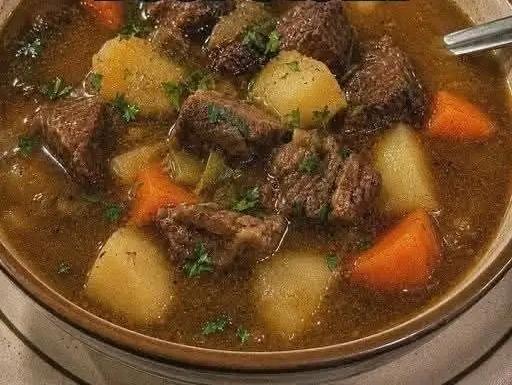
Irish Beef Stew Recipe A Hearty Traditional Comfort Meal
### Introduction
Irish Beef Stew is a warm, comforting dish made with tender chunks of beef, potatoes, carrots, onions, and a rich, savory broth. Slowly simmered until the beef becomes melt-in-your-mouth tender and the vegetables soak up all the delicious flavors, this classic stew is perfect for chilly evenings, Sunday dinners, and cozy family gatherings.
Made in one pot with simple, wholesome ingredients, Irish Beef Stew is satisfying, flavorful, and wonderfully easy to prepare. Serve it with crusty bread to soak up every last drop of the delicious broth.
Preparation Time: 20 minutes Cooking Time: 2–2½ hours Total Time: Approximately 2 hours 45 minutes Servings: 6 Difficulty: Easy
### Origin
Irish stew has a long history in Ireland, where families traditionally relied on affordable, locally available ingredients to create nourishing meals. Potatoes, onions, and root vegetables became staples of Irish cooking, while meat was added when available.
Traditional Irish stew was often prepared with lamb or mutton, but beef variations became popular as beef grew more accessible. Today, Irish Beef Stew is a beloved variation that combines slow-cooked beef with vegetables and a flavorful broth. Although recipes vary from household to household, the heart of the dish remains the same: simple ingredients transformed into a deeply comforting meal through slow cooking.
### Cultural Significance
Stew holds a special place in Irish food culture because it represents resourcefulness, hospitality, and the importance of sharing meals with family and friends. A large pot of stew can feed a crowd, making it ideal for family gatherings and celebrations.
Irish Beef Stew is especially enjoyable during the colder months and around St. Patrick’s Day, when Irish-inspired dishes are often featured on dinner tables around the world. Its rustic character and rich aroma evoke the warmth of home cooking and the pleasure of gathering around a hearty meal.
### Ingredients Quantity
For 6 servings:
* 2 pounds (900 g) beef chuck, cut into 1½-inch cubes
* 2 tablespoons olive oil
* 1 large onion, chopped
* 3 cloves garlic, minced
* 4 medium potatoes, peeled and cut into chunks
* 3 carrots, peeled and sliced
* 2 celery stalks, sliced
* 2 tablespoons all-purpose flour
* 4 cups (950 ml) beef broth
* 1 tablespoon tomato paste
* 1 teaspoon dried thyme
* 1 teaspoon dried rosemary
* 2 bay leaves
* 1 tablespoon Worcestershire sauce
* 1 teaspoon salt, or to taste
* ½ teaspoon black pepper
* 1 cup (240 ml) Irish stout or dark beer, optional
* 1 cup frozen peas, optional
* 2 tablespoons chopped fresh parsley, for garnish
### Optional Additions
Customize your stew with these delicious additions:
* Mushrooms: Add 8 ounces of sliced mushrooms for extra savory flavor.
* Parsnips: Replace one carrot with a parsnip for a slightly sweet, earthy taste.
* Leeks: Add one sliced leek for a mild onion flavor.
* Pearl barley: Add ¼ cup for a heartier, thicker stew, with extra broth as needed.
* Smoked paprika: Add ½ teaspoon for a subtle smoky note.
* Fresh herbs: Use fresh thyme or rosemary instead of dried herbs.
* Gluten-free option: Replace the flour with a suitable gluten-free thickener and check that the broth and Worcestershire sauce are gluten-free.
* Dairy-free option: The recipe is naturally dairy-free when prepared with dairy-free ingredients.
### Tips for Success
* Choose the right beef. Beef chuck is ideal because its connective tissue softens during slow cooking, producing tender, flavorful meat.
* Brown the beef well. Sear the meat in batches instead of overcrowding the pot. This creates a rich, savory foundation.
* Don’t rush the simmer. Cook the stew gently until the beef is fork-tender. Boiling too vigorously can make the meat tougher and cause the vegetables to break apart.
* Cut vegetables evenly. Similar-sized pieces cook more consistently.
* Add potatoes at the right time. For firm, distinct potato chunks, add them during the final 45–60 minutes of cooking.
* Adjust the thickness. Simmer uncovered at the end if the broth is too thin. For a thicker stew, mash a few cooked potato pieces into the broth.
* Taste before serving. Adjust the salt, pepper, and herbs after the flavors have developed.
* Make it ahead. The flavors often become even better the next day. Refrigerate promptly and reheat thoroughly.
### Instructions
### Step 1: Prepare the beef
Pat the beef cubes dry with paper towels and season with salt and black pepper. Dry meat browns more effectively, helping develop a rich flavor.
### Step 2: Brown the beef
Heat the olive oil in a large, heavy-bottomed pot or Dutch oven over medium-high heat. Add the beef in batches and brown on all sides, approximately 3–4 minutes per batch. Transfer the browned beef to a plate.
### Step 3: Cook the aromatics
Reduce the heat to medium. Add the chopped onion and celery to the same pot and cook for 4–5 minutes until softened. Stir in the garlic and tomato paste and cook for another minute.
### Step 4: Add the flour and liquid
Sprinkle the flour over the vegetables and stir for about one minute. Gradually pour in the beef broth, scraping the bottom of the pot to release the flavorful browned bits.
If using Irish stout, add it now and allow it to simmer for 2–3 minutes. Stir in the Worcestershire sauce, thyme, rosemary, and bay leaves.
### Step 5: Simmer the beef
Return the browned beef and any accumulated juices to the pot. Bring the mixture to a gentle simmer, cover, and cook over low heat for approximately 1–1½ hours.
Stir occasionally and check that the liquid is simmering gently rather than boiling rapidly.
### Step 6: Add the potatoes and carrots
Add the potato chunks and sliced carrots. Cover and continue cooking for another 45–60 minutes, or until the beef is tender and the vegetables are cooked through.
If the stew becomes too thick, add a little more broth or water.
### Step 7: Finish the stew
Remove the bay leaves. If using frozen peas, stir them in during the final 5 minutes of cooking. Taste and adjust the seasoning as needed.
For a thicker broth, simmer uncovered for a few minutes or gently mash a few potato pieces against the side of the pot.
### Step 8: Garnish and serve
Ladle the hot stew into bowls and sprinkle with chopped fresh parsley. Serve with crusty bread, whole-grain bread, or a fresh green salad for a satisfying meal.
### Description
Irish Beef Stew is rich, rustic, and deeply comforting. Tender beef absorbs the savory broth while potatoes provide a soft, hearty texture and carrots contribute a natural sweetness. Onions, garlic, herbs, and Worcestershire sauce create layers of flavor that make every spoonful delicious.
The broth is thick and warming without being overly heavy, and the ingredients come together beautifully during the slow cooking process. Whether served for a quiet weeknight dinner or a gathering with loved ones, this stew brings traditional comfort straight to the table.
### Nutritional Information
Approximate nutrition per serving, based on 6 servings and excluding optional stout, peas, and bread:
* Calories: 430–500 kcal
* Protein: 32–38 g
* Carbohydrates: 30–38 g
* Fat: 18–23 g
* Fiber: 4–6 g
* Sugar: 4–7 g
* Sodium: 600–900 mg
Actual nutrition varies according to the cut of beef, amount of oil, broth brand, and portion size. Using low-sodium broth and trimming excess fat can reduce the overall fat and sodium content.
### Conclusion
Irish Beef Stew is a timeless comfort food that transforms everyday ingredients into a hearty, nourishing meal. With tender beef, wholesome vegetables, fragrant herbs, and a rich broth, it offers satisfying flavor in every bite.
Its straightforward preparation and one-pot cooking method make it a practical choice for busy families, meal preparation, and relaxed weekend dinners. Make a generous batch, share it with loved ones, and enjoy the comforting taste of slow-cooked goodness.
### Recommendation
For the best experience, serve Irish Beef Stew hot with freshly baked bread or roasted vegetables. If you prefer a lighter meal, pair it with a simple cabbage salad or steamed green vegetables.
Prepare it a day ahead if possible, refrigerate it safely, and reheat it gently for an easy meal with well-developed flavors. Leftovers can generally be refrigerated in an airtight container for 3–4 days or frozen for about 2–3 months for best quality.
For a more traditional Irish-inspired flavor, use a little Irish stout and fresh thyme. For a family-friendly version, simply omit the beer and use additional beef broth instead.
### Embracing Healthful Indulgence
Enjoying comfort food can fit into a balanced eating pattern. Irish Beef Stew provides protein from beef, fiber and nutrients from vegetables, and satisfying carbohydrates from potatoes.
Here are a few ways to make it lighter while keeping its comforting character:
* Use leaner beef or trim visible fat before cooking.
* Increase the carrots, celery, and other vegetables for additional fiber and volume.
* Reduce the olive oil slightly while still browning the beef in batches.
* Choose low-sodium beef broth to better control salt.
* Skip the flour and thicken the stew naturally by mashing some of the cooked potatoes into the broth.
* Serve a moderate portion alongside extra vegetables rather than relying on large servings of bread.
The goal is not to remove the pleasure from a beloved traditional dish, but to balance flavor, nourishment, and satisfaction. With its hearty ingredients and homemade goodness, Irish Beef Stew is a wonderful reminder that wholesome food can also be deeply comforting.