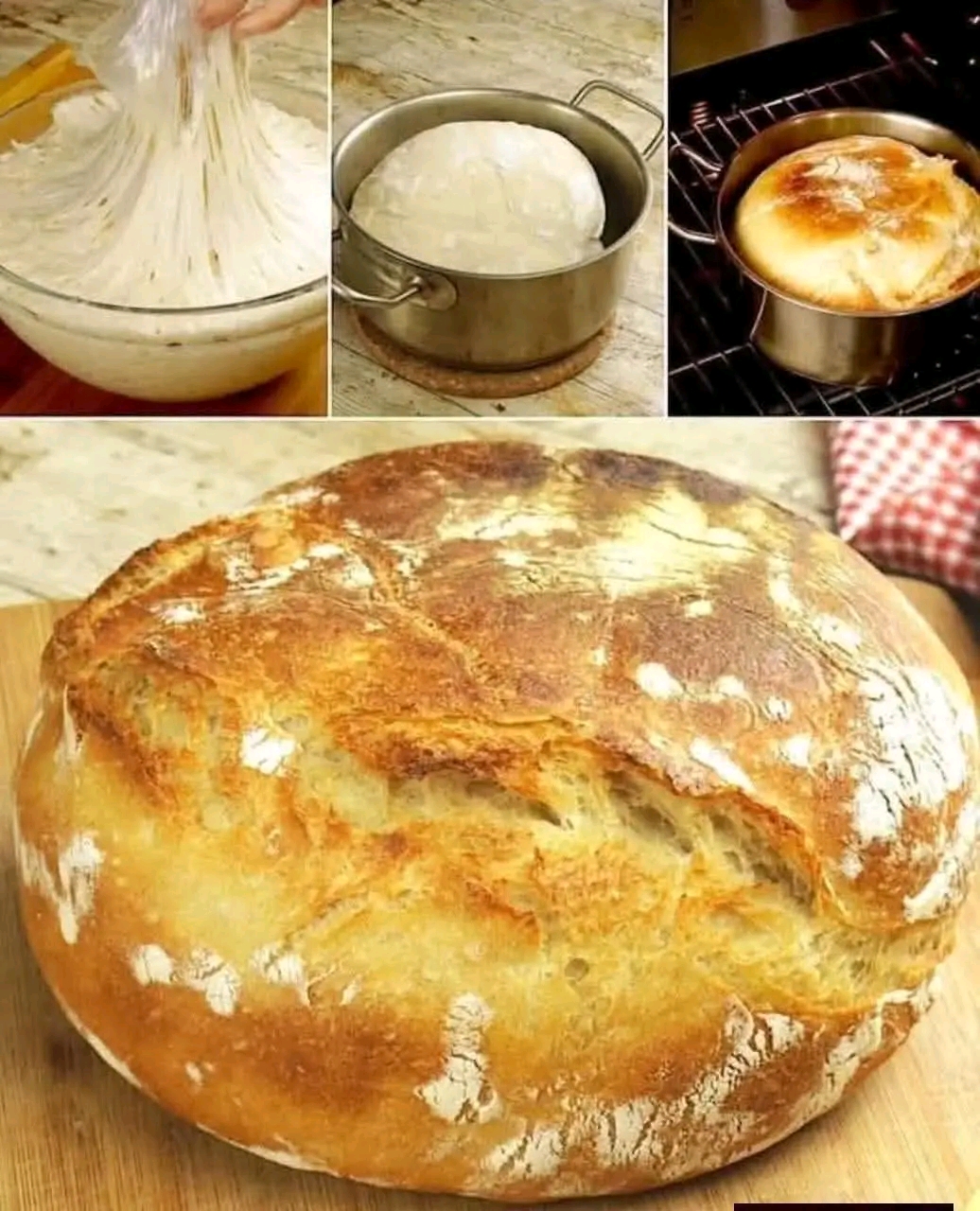
Simple Three-Ingredient Homemade Bread
Introduction
Sometimes the best bread is the simplest. This rustic homemade bread uses just flour, water, and salt to create a beautiful loaf with a crisp crust and soft, chewy interior. With no complicated ingredients or special equipment required, it is an excellent recipe for beginners and a satisfying staple for experienced bakers.
Prep Time: 15 minutes
Resting Time: 8–18 hours
Baking Time: 40–50 minutes
Yield: 1 loaf
Origin
Simple flour-and-water breads have existed for thousands of years, long before commercial yeast and modern bread-making ingredients became common. Many traditional European rustic breads were built around the same basic foundation of flour, water, and salt, with fermentation providing flavor and structure.
This modern version is inspired by the simplicity of traditional no-knead and rustic artisan breads.
Cultural Significance
Bread is one of the world’s most universal foods. Nearly every culture has its own version, from crusty European loaves to flatbreads and hearth-baked breads. A recipe requiring only a few pantry staples reflects an older tradition of making nourishing food from what was readily available.
Ingredients Quantity
– 3 cups (375 g) bread flour or all-purpose flour
– 1½ cups (360 ml) water
– 1½ teaspoons (8 g) salt
Optional Additions
The classic recipe needs only three ingredients, but you can customize it with:
– 1–2 tablespoons olive oil for a softer crumb
– 1 teaspoon dried rosemary
– 1 teaspoon dried thyme
– 1–2 teaspoons sesame or sunflower seeds
– 1–2 cloves finely minced garlic
– A little cracked black pepper
For the most traditional three-ingredient loaf, simply leave everything out.
Tips for Success
– Weigh the flour when possible for the most consistent results.
– Do not add too much flour during mixing; a slightly sticky dough is normal.
– Give the dough plenty of resting time. Slow fermentation develops flavor and improves the texture.
– Keep the dough covered while resting so the surface does not dry out.
– A Dutch oven or covered heavy baking pot helps trap steam and produces a crisp crust.
– Allow the bread to cool before slicing. Cutting too early can make the interior gummy.
– Oven temperatures vary, so watch the crust and adjust the baking time if necessary.
Instructions
1. Add the flour and salt to a large mixing bowl and stir to combine.
2. Pour in the water and mix with a wooden spoon or your hands until no dry flour remains.
3. The dough will be sticky and rough. Cover the bowl tightly.
4. Let the dough rest at room temperature for approximately 8–18 hours. It should become noticeably expanded and bubbly.
5. Place the dough onto a lightly floured surface and gently shape it into a round loaf. Avoid heavily kneading or deflating it.
6. Place the shaped dough on parchment paper and let it rest for another 30–60 minutes.
7. Meanwhile, preheat the oven to 450°F (230°C) with a Dutch oven or heavy covered pot inside.
8. Carefully transfer the dough into the hot pot. Score the top with a sharp knife if desired.
9. Cover and bake for about 30 minutes.
10. Remove the lid and continue baking for another 10–20 minutes, until the loaf is deeply golden and crusty.
11. Transfer the bread to a wire rack and cool for at least 45–60 minutes before slicing.
Description
This rustic loaf has a beautifully crisp, golden crust surrounding a soft, chewy interior. The long resting period gives the bread a deeper flavor despite its incredibly short ingredient list. It is perfect for dipping into soup, serving with olive oil, or simply enjoying warm with your favorite toppings.
Nutritional Information
Approximate per serving, assuming 10 slices:
– Calories: 145
– Carbohydrates: 29 g
– Protein: 5 g
– Fat: 1 g
– Fiber: 1 g
– Sodium: 190 mg
Values will vary depending on the flour used and slice size.
Conclusion
This three-ingredient bread proves that homemade baking doesn’t have to be complicated. With flour, water, salt, patience, and a hot oven, you can create a satisfying rustic loaf with impressive flavor and texture.
Recommendation
Serve it warm alongside soups, stews, roasted vegetables, or salads. It is also delicious toasted and topped with avocado, tomatoes, olive oil, herbs, or your favorite savory spread.
Embracing Healthful Indulgence
Homemade bread gives you control over what goes into your loaf. This version contains no added sugar or unnecessary additives and relies on a simple combination of flour, water, and salt. For more fiber and a heartier texture, substitute part of the white flour with whole-wheat flour, keeping in mind that the dough may require a little additional water.