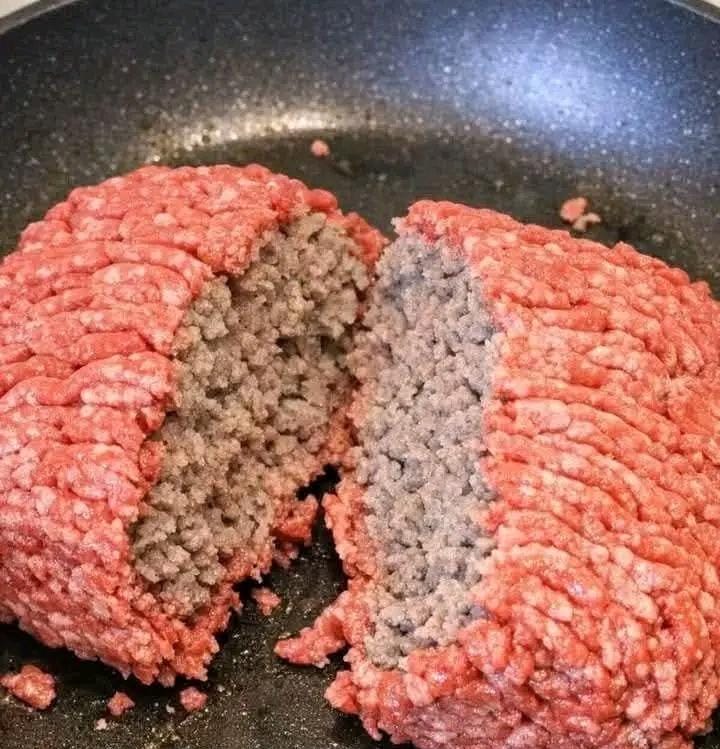
Ground Beef: Why Is It Grey Inside but Red Outside?
Introduction
Opening a package of ground beef and finding that the outside is bright red while the inside is gray can be alarming, especially when you purchased the meat recently. Fortunately, color alone does not always mean that ground beef has spoiled.
Fresh beef can naturally have different colors depending on how much oxygen reaches different parts of the meat. The important thing is to consider color together with smell, texture, packaging, storage, and the use-by date.
Origin
The color change in beef is largely related to myoglobin, a protein naturally found in muscle tissue. When meat is exposed to oxygen, myoglobin forms oxymyoglobin, which gives the surface a bright cherry-red appearance.
The interior of a tightly packed block receives much less oxygen, so it can remain purple-red or become grayish-brown. Once the meat is separated and exposed to air, the interior may become redder.
Cultural Significance
Ground beef is a staple ingredient in countless cuisines. From tacos and burgers to meatballs, chili, casseroles, and pasta sauces, it is valued for being versatile, affordable, and easy to cook.
Because ground beef is used so frequently, understanding normal color changes—and recognizing genuine signs of spoilage—is an important part of safe home cooking.
Ingredients Quantity
For a simple taco meal using 500 g (1.1 lb) ground beef:
500 g ground beef
1 tablespoon cooking oil, if needed
1 small onion, diced
2 cloves garlic, minced
2 tablespoons taco seasoning
½ cup water
8–10 taco shells or tortillas
Lettuce, shredded
Tomato, diced
Onion, diced
Avocado, optional
Shredded cheese, optional
Salsa, optional
Lime wedges, optional
Optional Additions
Chopped jalapeño
Black beans
Corn
Fresh cilantro
Smoked paprika
Cumin
Chili powder
Greek yogurt or sour cream
Pico de gallo
Hot sauce
Tips for Success
Gray inside does not automatically mean spoiled. A tightly packed block of beef can have less oxygen in its center, causing it to appear gray or brown while the oxygen-exposed surface remains red.
Smell matters, but isn’t the only test. A strong unpleasant, sour, rotten, or otherwise abnormal odor is a reason to discard the meat.
Pay attention to texture. If the meat is unusually sticky, slimy, or has an abnormal surface texture, don’t use it.
Check the packaging. A damaged, leaking, swollen, or compromised package is another reason to be cautious.
Keep it cold. Ground beef is perishable and should remain properly refrigerated until you’re ready to cook it.
Don’t taste raw ground beef to determine whether it is safe. If you’re uncertain about the meat, discard it rather than taking a chance.
Instructions
1. Inspect the Beef
Before cooking, check the package and examine the meat after opening it. If the interior is gray but the meat has been properly refrigerated and otherwise looks and smells normal, the color difference can simply be caused by limited oxygen exposure.
If there is a distinctly foul odor, slimy or sticky texture, or other obvious signs of spoilage, do not cook or eat it.
2. Prepare the Taco Filling
Heat a large skillet over medium-high heat. Add the ground beef and break it apart with a spatula.
Add the diced onion and cook until the beef is browned and the onion is tender.
Drain excess fat if necessary.
3. Season
Add the garlic and taco seasoning. Pour in the water and stir well.
Simmer for approximately 3–5 minutes, allowing the seasoning to coat the beef and the excess liquid to reduce.
4. Serve
Spoon the cooked beef into warm taco shells or tortillas.
Top with lettuce, tomato, onion, avocado, salsa, cilantro, or your favorite taco toppings.
Description
The key lesson is that red outside and gray inside can be completely normal in tightly packed ground beef. Oxygen exposure changes the appearance of myoglobin, so different parts of the same package can have noticeably different colors.
However, color should never be considered the only indicator of freshness. When the meat has an unpleasant odor, an abnormal slimy texture, or other signs of spoilage, it is safest to throw it away.
Nutritional Information
Approximate nutrition for the taco filling alone, using 500 g of moderately lean ground beef and the listed seasonings:
Calories: approximately 1,000–1,200 for the entire batch
Protein: approximately 100–110 g
Fat: approximately 65–80 g
Carbohydrates: approximately 15–20 g
Fiber: approximately 2–3 g
Values vary substantially depending on the fat percentage of the beef and the seasoning used.
Conclusion
Finding gray meat inside a red block of ground beef can look strange, but grayness by itself is not proof that the meat has spoiled. The interior can receive less oxygen than the surface and therefore develop a different color.
When deciding whether to use it, consider the entire picture: storage temperature, package condition, date, odor, texture, and appearance. When in doubt—particularly if there is a foul smell or slimy texture—the safest choice is to discard it.
Recommendation
If the ground beef simply has a gray interior but otherwise appears and smells normal, break it apart and allow the interior to contact air briefly; it may become redder. Then cook it thoroughly.
For food safety, use a food thermometer rather than judging doneness by color. Ground beef should reach 160°F (71°C) internally.
Embracing Healthful Indulgence
Tacos can easily become a balanced meal when you build them around protein and plenty of fresh toppings. Use leaner ground beef if desired, add lettuce, tomatoes, onions, salsa, avocado, or beans, and choose whole-grain or smaller tortillas if they fit your eating preferences.
Most importantly, don’t let a bright-red color convince you that meat is safe—or a gray interior convince you that it is spoiled. Food safety depends on more than color alone.