Tips for Success
* Use room-temperature ingredients: Butter, eggs, and coconut milk at room temperature blend more evenly and help create a soft cake.
* Measure flour correctly: Spoon flour into the measuring cup and level it off to avoid a dry, dense cake.
* Avoid overmixing: Mix the batter just until the ingredients are combined.
* Use full-fat coconut milk: It adds moisture and gives the cake a richer coconut flavor.
* Check for doneness: Insert a toothpick into the center. If it comes out clean or with a few moist crumbs, the cake is ready.
* Cool completely before frosting: Warm cake can cause the frosting to melt and slide.
* Toast some coconut: Lightly toasted coconut adds a wonderful aroma and a subtle crunch.
* Chill before slicing: Refrigerating the finished cake briefly helps the frosting set and makes serving easier.
### Instructions
Step 1: Prepare the oven and pans.
Preheat the oven to 350°F (175°C). Grease and flour two 9-inch round cake pans. Line the bottoms with parchment paper for easier removal.
Step 2: Mix the dry ingredients.
In a medium bowl, whisk together the flour, baking powder, baking soda, and salt. Set aside.
Step 3: Cream the butter and sugar.
In a large mixing bowl, beat the softened butter and granulated sugar for 3–4 minutes until pale and fluffy.
Step 4: Add the eggs and flavorings.
Add the eggs one at a time, beating well after each addition. Mix in the vanilla extract and coconut extract.
Step 5: Combine the wet and dry ingredients.
Add the flour mixture in three portions, alternating with the coconut milk. Begin and end with the flour mixture. Mix gently until just combined.
Fold in the shredded coconut using a spatula.
Step 6: Bake the cake.
Divide the batter evenly between the prepared pans. Smooth the tops and bake for 30–35 minutes, or until a toothpick inserted into the center comes out clean.
Step 7: Cool the layers.
Allow the cakes to cool in their pans for about 10 minutes. Transfer them to wire racks and let them cool completely.
Step 8: Prepare the frosting.
Beat the softened butter until creamy. Gradually add the powdered sugar, mixing on low speed. Add the coconut milk, vanilla extract, coconut extract, and salt. Beat until smooth and fluffy.
Step 9: Assemble the cake.
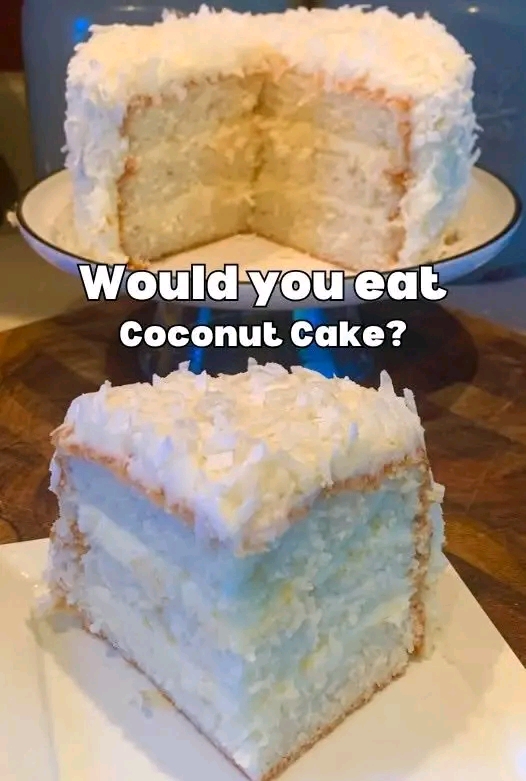
Place one cake layer on a serving plate. Spread a generous layer of frosting over the top. Add the second cake layer and frost the top and sides.
Step 10: Decorate and serve.
Gently press shredded coconut onto the top and sides of the cake. Add toasted coconut or decorative coconut flakes if desired. Refrigerate briefly to help the frosting set, then slice and enjoy.
### Description
This homemade coconut cake is a beautiful combination of soft, buttery cake layers, delicate coconut flavor, and rich, creamy frosting. The shredded coconut adds a pleasant texture, while the coconut milk keeps the crumb moist and tender.
Every slice offers a delightful balance of sweetness and tropical aroma. Whether served with coffee, tea, or a glass of cold milk, this cake makes an inviting centerpiece for any dessert table.
### Nutritional Information
Estimated nutritional values per serving, assuming 12 slices:
| Nutrient | Approximate amount |
| ————- | —————— |
| Calories | 590 kcal |
| Protein | 5 g |
| Carbohydrates | 78 g |
| Fat | 29 g |
| Saturated fat | 19 g |
| Fiber | 2 g |
| Sugar | 57 g |
| Sodium | 240 mg |
Values are estimates and vary according to the brands, frosting quantity, and coconut products used.
### Conclusion
Homemade coconut cake is a timeless dessert that combines simple ingredients with irresistible flavor. Its soft texture, creamy frosting, and generous coconut topping make it a wonderful choice for celebrations or everyday sweet moments.
Whether baking it for a family gathering or simply satisfying a coconut craving, this cake delivers the warmth and comfort of homemade baking in every bite.
### Recommendation
Serve this coconut cake slightly chilled or at room temperature with freshly brewed coffee, black tea, or unsweetened coconut tea.
For a more elegant presentation, decorate it with toasted coconut flakes, fresh strawberries, or delicate white chocolate curls. If preparing it for a special occasion, bake the layers a day ahead and frost them shortly before serving.
For another tropical variation, try a pineapple-coconut filling between the layers for a fruity, refreshing finish.
### Embracing Healthful Indulgence
Enjoying dessert can be part of a balanced lifestyle. This coconut cake is a rich treat, and a few thoughtful adjustments can make it better suited to different preferences.
* Reduce the sugar in the cake modestly, keeping in mind that changing the amount may affect its texture.
* Use unsweetened shredded coconut to reduce added sugar.
* Replace some of the frosting with lightly sweetened whipped coconut cream for a lighter topping.
* Serve smaller slices with fresh berries for extra freshness and fiber.
* Experiment with almond flour or a suitable gluten-free flour blend if avoiding conventional wheat flour, using a recipe specifically developed for that substitution.
For a no-added-sugar version, use an appropriate baking sweetener and a recipe formulated for it, including a compatible frosting. Remember that coconut itself contains calories and fat, even when unsweetened.
The goal is to enjoy a delicious homemade dessert while making choices that feel satisfying and sustainable.
Enjoy every coconut-filled bite!