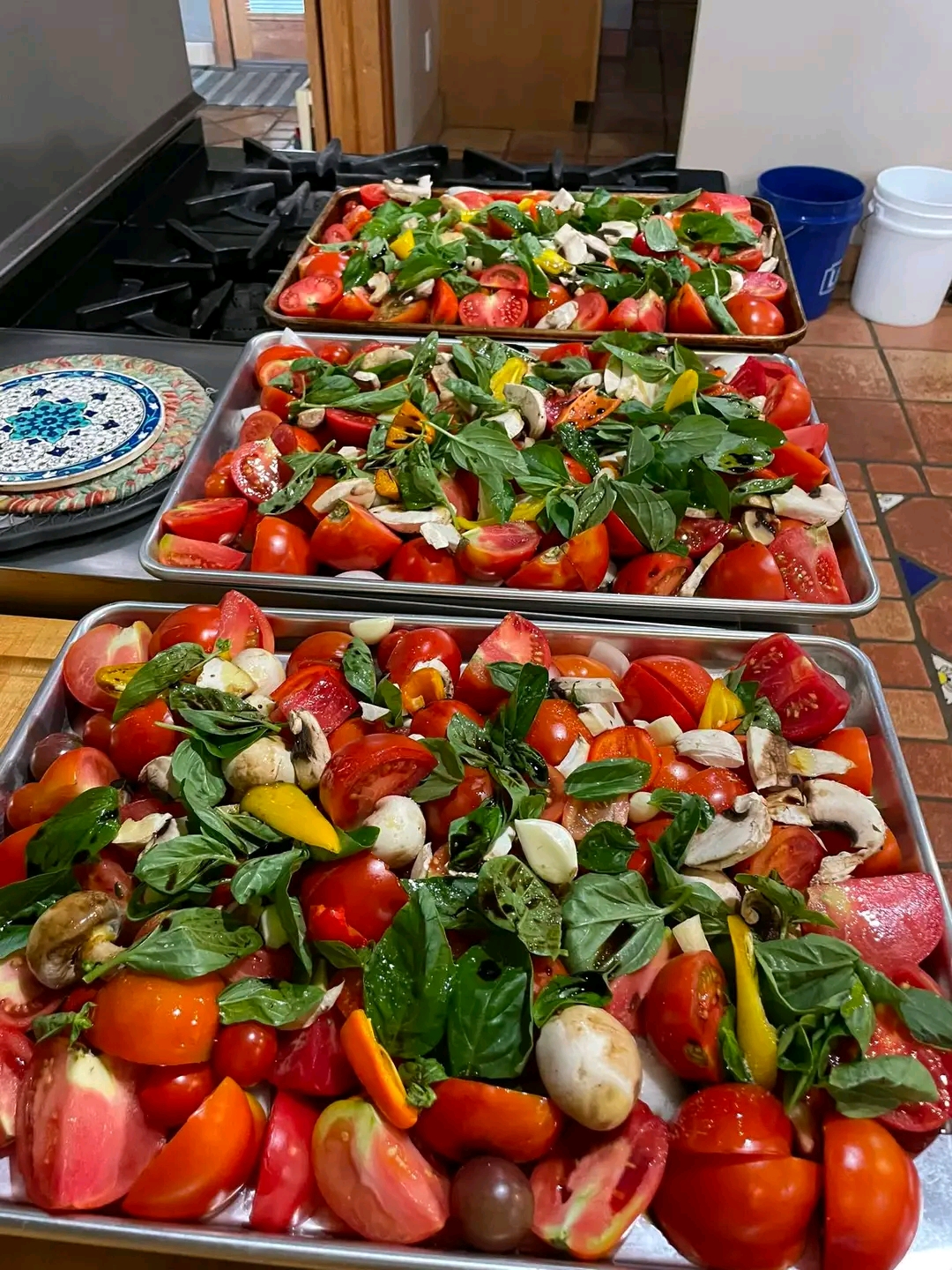
Roasted Tomato, Garlic & Vegetable Pasta Sauce
Introduction
This homemade pasta sauce is a wonderful way to turn fresh vegetables into a rich, flavorful sauce. Roasting the tomatoes, onions, garlic, peppers, and mushrooms concentrates their natural flavors, while fresh basil, extra-virgin olive oil, and balsamic vinegar add brightness and depth. Blending everything afterward creates a smooth, rustic sauce that is perfect for pasta, pizza, lasagna, or dipping.
Important canning note: Because your recipe contains low-acid vegetables such as onions, peppers, and mushrooms, plus oil, you should not simply water-bath can this exact recipe based on the ingredients alone. Safe home canning requires a tested recipe with validated proportions and processing times. The National Center for Home Food Preservation specifically warns that proportions of onions, peppers, and mushrooms should not be increased in its tested spaghetti-sauce recipe.
Freezing your sauce, as you currently do, is a good option when you want to preserve your own customized recipe.
Origin
Tomato-based pasta sauces have deep roots in Italian cooking, where tomatoes eventually became a defining ingredient after their introduction to Europe from the Americas. Roasting vegetables before blending is a more modern technique that intensifies their sweetness and creates a particularly rich homemade sauce.
Cultural Significance
Tomato sauce is an important part of Italian and Italian-American cooking and has become a worldwide kitchen staple. Homemade sauce also represents the tradition of preserving seasonal produce and transforming simple ingredients into something useful for many meals.
Ingredients Quantity
For approximately 5–6 cups of sauce:
3 lb (1.4 kg) ripe tomatoes, quartered
1 large onion, roughly chopped
1 red or yellow bell pepper, chopped
8 oz (225 g) mushrooms, sliced
5–6 cloves garlic
1 cup fresh basil leaves
3 tablespoons extra-virgin olive oil
1–2 tablespoons balsamic vinegar
1–1½ teaspoons salt
½ teaspoon black pepper
These quantities are for a freezer sauce, not a validated canning formula.
Optional Additions
Red pepper flakes
Dried oregano
Italian seasoning
A small carrot for natural sweetness
Parmesan cheese when serving
Fresh parsley
A pinch of sugar if the tomatoes are particularly acidic
Tips for Success
Roast until caramelized: Don’t worry if the vegetables develop browned edges; this adds wonderful flavor.
Don’t burn the garlic: Add it partway through roasting if your oven tends to brown it quickly.
Blend carefully: Allow the roasted vegetables to cool slightly before blending.
Adjust after blending: Taste for salt, pepper, and balsamic vinegar and adjust gradually.
For freezing: Cool the sauce promptly, portion it into freezer-safe containers, and leave room for expansion.
For canning: Don’t improvise a water-bath process for this particular formula. Tomatoes can vary in acidity, and adding low-acid vegetables changes the safety profile. Extension guidance recommends following research-tested recipes.
Instructions
1. Preheat the oven to 400°F (200°C).
2. Prepare the vegetables: Place tomatoes, onion, peppers, mushrooms, and garlic on a large baking sheet.
3. Season: Drizzle with olive oil and sprinkle with salt and black pepper.
4. Roast: Bake for approximately 35–50 minutes, stirring once or twice, until the vegetables are soft and caramelized around the edges.
5. Add basil: Transfer the roasted vegetables to a blender or food processor and add the fresh basil.
6. Blend: Process until smooth or leave slightly chunky if you prefer a rustic sauce.
7. Add balsamic vinegar: Start with 1 tablespoon, blend briefly, and taste. Add more if desired.
8. Adjust seasoning: Add salt, pepper, herbs, or red pepper flakes according to taste.
9. Serve or freeze: Use immediately, or cool and portion into appropriate freezer containers.
Description
The finished sauce is thick, savory, naturally sweet, and intensely flavorful. Roasting brings out the sweetness of the tomatoes and onions while giving the peppers and mushrooms a delicious depth. Fresh basil adds a fragrant herbal note, and a small amount of balsamic vinegar provides a pleasant balance.
Nutritional Information
Approximate per ½-cup serving, before optional additions:
Calories: 90–110 kcal
Protein: 2–3 g
Carbohydrates: 10–13 g
Fat: 5–6 g
Fiber: 2–3 g
Sodium: Approximately 350–450 mg
Actual values depend on the vegetables, amount of olive oil, and salt used.
Conclusion
This roasted vegetable pasta sauce is an excellent freezer-friendly recipe and a delicious alternative to commercially prepared sauces. Your current method—roasting the ingredients, blending them, and freezing the finished sauce—is especially convenient because you can customize the ingredients without having to worry about whether your particular proportions have been validated for shelf-stable canning.
Recommendation
I would continue freezing this particular recipe rather than water-bath canning it. If you want a shelf-stable pantry sauce, use a research-tested canning recipe and follow its ingredients, proportions, preparation method, jar size, headspace, and processing time exactly. The National Center for Home Food Preservation has a tested meatless spaghetti sauce that includes tomatoes, onions, peppers, mushrooms, garlic, and oil, but specifically says not to increase the proportion of onions, peppers, or mushrooms.
A tested standard tomato sauce also requires acidification and specifies exact boiling-water processing times depending on jar size and altitude.
Embracing Healthful Indulgence
This sauce is naturally packed with vegetables and can be made with a modest amount of extra-virgin olive oil and salt. Serving it over whole-grain pasta, lentil pasta, or a generous portion of vegetables can make a satisfying, nutrient-rich meal. The homemade approach also lets you control the amount of added salt, oil, and sugar.
Bottom line: Your roasted sauce is excellent for freezing, but I would not water-bath can the exact recipe you listed unless you adapt it to a properly tested canning formula.