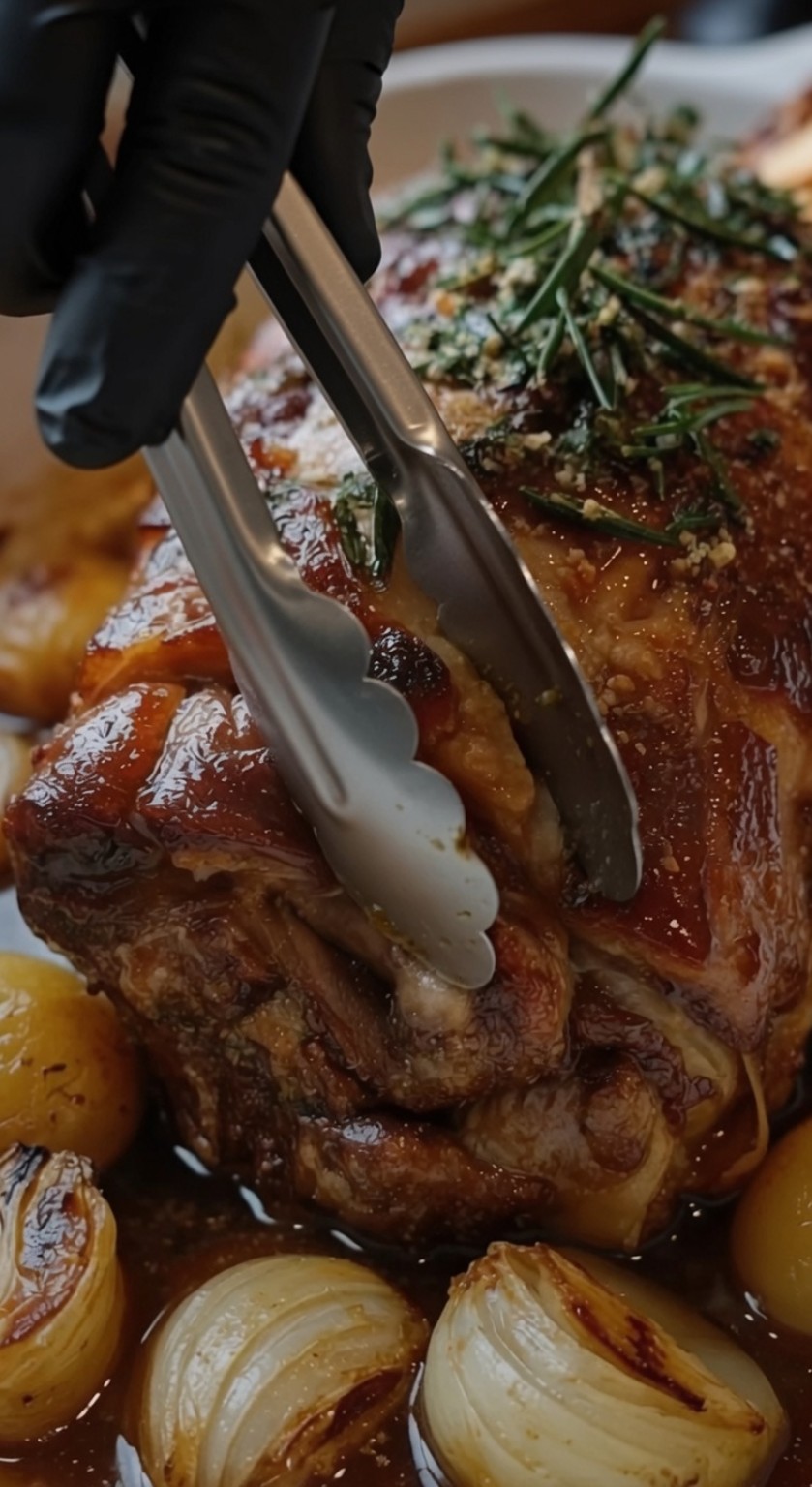
Garlic Rosemary Slow-Roasted Pork Shoulder is a rich, tender, and deeply flavorful roast made with a juicy pork shoulder, garlic, rosemary, onions, baby potatoes, olive oil, butter, and savory seasonings. The outside becomes glossy, golden, and caramelized, while the inside turns soft, juicy, and easy to pull apart.
This recipe is perfect for Sunday dinner, holiday meals, family gatherings, comfort-food plates, or anytime you want a centerpiece roast that looks impressive but uses simple ingredients. The pork cooks slowly until the fat melts into the meat, the garlic becomes mellow and sweet, and the onions and potatoes soak up all the delicious pan juices.
Serve it with roasted vegetables, mashed potatoes, gravy, dinner rolls, rice, salad, or warm bread for a complete homemade meal.
Recipe Overview
| Detail | Information |
|---|---|
| Recipe Name | Garlic Rosemary Slow-Roasted Pork Shoulder |
| Prep Time | 20 minutes |
| Cook Time | 3–4 hours |
| Rest Time | 20 minutes |
| Total Time | About 4 hours |
| Servings | 8–10 |
| Main Ingredients | Pork shoulder, garlic, rosemary, onions, potatoes |
| Best Served With | Potatoes, gravy, vegetables, rolls, salad |
Why You’ll Love This Recipe
This pork roast is tender, juicy, and full of savory flavor.
You will love it because it is:
Perfect for family dinners
Rich and comforting
Slow-roasted until tender
Full of garlic rosemary flavor
Beautiful as a centerpiece meal
Great with potatoes and onions
Perfect for leftovers
Easy to prepare
Deeply flavorful with simple ingredients
The best part is the pan sauce. As the pork roasts, the juices mix with garlic, herbs, onions, butter, and browned bits, creating a rich natural sauce that tastes amazing spooned over the meat.
Ingredients
For the Pork Roast
| Ingredient | Amount |
|---|---|
| Pork shoulder or pork roast | 4–5 lb |
| Olive oil | 3 tablespoons |
| Butter, softened | 3 tablespoons |
| Garlic, minced | 6 cloves |
| Fresh rosemary, chopped | 2 tablespoons |
| Fresh thyme | 1 tablespoon |
| Paprika | 1 tablespoon |
| Garlic powder | 1 teaspoon |
| Onion powder | 1 teaspoon |
| Salt | 2 teaspoons |
| Black pepper | 1 teaspoon |
| Dijon mustard | 1 tablespoon, optional |
| Worcestershire sauce | 1 tablespoon |
| Brown sugar | 1 tablespoon, optional |
For the Roasted Vegetables
| Ingredient | Amount |
|---|---|
| Baby potatoes | 1 1/2 lb |
| Yellow onions, quartered | 3 |
| Garlic cloves, whole | 6 |
| Carrots, chopped | 3, optional |
| Olive oil | 2 tablespoons |
| Salt | To taste |
| Black pepper | To taste |
| Rosemary sprigs | 2–3 |
For the Pan Juices
| Ingredient | Amount |
|---|---|
| Chicken broth or beef broth | 1 cup |
| Apple juice or water | 1/2 cup, optional |
| Butter | 2 tablespoons |
| Fresh parsley | For garnish |
Instructions
Step 1: Prepare the Pork
Pat the pork shoulder dry with paper towels.
This helps the seasoning stick better and helps the outside brown beautifully.
If the pork has a thick fat cap, lightly score it with a sharp knife in a shallow crosshatch pattern. Do not cut too deep into the meat.
Scoring helps the seasoning soak in and allows the fat to render as it roasts.
Step 2: Make the Garlic Rosemary Rub
In a small bowl, mix olive oil, softened butter, minced garlic, chopped rosemary, thyme, paprika, garlic powder, onion powder, salt, black pepper, Dijon mustard, Worcestershire sauce, and brown sugar if using.
Stir until it forms a thick paste.
The paste should be aromatic, slightly glossy, and full of garlic herb flavor.
Step 3: Season the Roast
Rub the garlic rosemary mixture all over the pork.
Make sure to coat the top, sides, and any scored areas.
For deeper flavor, let the pork rest with the seasoning for at least 30 minutes.
For best results, season it overnight in the refrigerator and bring it close to room temperature before roasting.
Step 4: Prepare the Baking Dish
Preheat the oven to 325°F / 160°C.
Place onions, baby potatoes, whole garlic cloves, and carrots if using in a roasting pan or large baking dish.
Drizzle with olive oil.
Season with salt, black pepper, and rosemary.
Place the seasoned pork shoulder on top of the vegetables.
Pour broth and apple juice or water around the pork, not directly over the seasoned top.
Step 5: Slow Roast
Cover the roasting pan tightly with foil or a lid.
Roast for 2 1/2 to 3 hours, depending on the size of the pork.
The pork should become tender and juicy.
During roasting, baste the pork once or twice with pan juices if possible.
Step 6: Brown the Top
Remove the foil during the last 30–45 minutes of roasting.
Increase the oven temperature to 400°F / 200°C.
Let the top become glossy, browned, and caramelized.
If the pan juices reduce too much, add a splash of broth.
The outside should look golden and rich, while the meat should feel tender when pierced.
Step 7: Rest the Pork
Remove the roast from the oven.
Transfer it to a cutting board or serving platter.
Let it rest for 20 minutes before slicing or pulling apart.
Resting is important because it keeps the meat juicy.
If you slice too soon, the juices can run out.
Step 8: Finish the Pan Sauce
While the pork rests, spoon off excess fat from the pan if needed.
Stir the pan juices with the roasted onions and garlic.
Add 2 tablespoons butter for a richer finish.
You can serve the juices as they are, or simmer them in a small saucepan until slightly thickened.
Step 9: Slice and Serve
Slice the pork into thick pieces or pull it apart into tender chunks.
Serve with roasted potatoes, onions, garlic, and pan juices.
Sprinkle with fresh parsley or extra rosemary before serving.
Best Tips for Tender Pork Roast
Use pork shoulder for the juiciest result.
Do not rush the cooking time.
Cover during the first part of roasting.
Uncover near the end for a caramelized top.
Let the meat rest before slicing.
Use enough garlic and herbs.
Roast with onions and potatoes for extra flavor.
Spoon pan juices over the meat before serving.
Best Cut of Pork to Use
Pork shoulder is one of the best cuts for slow roasting because it has enough fat and connective tissue to become tender.
You can also use:
Pork butt
Boston butt
Pork picnic shoulder
Bone-in pork roast
Boneless pork roast
Pork loin roast
Pork loin is leaner and cooks faster, but pork shoulder gives the most tender and juicy result.
How to Know When the Pork Is Done
For sliceable pork, cook until the meat is tender and reaches a safe internal temperature.
For pull-apart pork, it needs to cook longer until very tender.
A meat thermometer is the easiest way to check.
The pork should be juicy, tender, and easy to cut. If it still feels tough, it usually needs more time.
Recipe Variations
Honey Garlic Pork Shoulder
Add 2 tablespoons honey to the seasoning paste for a sweet glaze.
Spicy Garlic Pork Roast
Add chili flakes, cayenne pepper, or smoked paprika.
Lemon Rosemary Pork
Add lemon zest and lemon juice to brighten the flavor.
Herb Butter Pork Roast
Use extra butter, parsley, thyme, rosemary, and garlic.
BBQ Pork Shoulder
Use BBQ seasoning and brush with BBQ sauce during the last 30 minutes.
Apple Onion Pork Roast
Add sliced apples with the onions for a sweet savory flavor.
What to Serve With Garlic Rosemary Pork Shoulder
This roast pairs beautifully with classic comfort sides.
Great serving ideas include:
Roasted potatoes
Mashed potatoes
Green beans
Roasted carrots
Corn on the cob
Mac and cheese
Dinner rolls
Rice
Coleslaw
Caesar salad
Garlic bread
Steamed vegetables
Gravy
For a cozy dinner, serve with mashed potatoes, roasted onions, and gravy.
For a holiday-style meal, serve with carrots, rolls, salad, and roasted vegetables.
Make-Ahead Instructions
You can season the pork one day ahead.
Rub it with the garlic rosemary mixture, cover tightly, and refrigerate overnight.
This helps the flavor go deeper into the meat.
You can also chop the vegetables ahead and store them separately.
When ready to cook, place everything in the roasting pan and bake.
Storage
Let leftovers cool completely.
Store sliced or shredded pork in an airtight container in the refrigerator for up to 4 days.
Keep some pan juices with the meat so it stays moist.
Reheating
Reheat gently so the pork does not dry out.
Oven Method
Place pork in a baking dish.
Add a few spoonfuls of pan juices or broth.
Cover with foil.
Warm at 325°F / 160°C until heated through.
Skillet Method
Warm slices in a covered skillet with a splash of broth.
Microwave Method
Heat individual portions in short intervals with a spoonful of sauce.
Freezing
This pork freezes well.
Let it cool completely.
Slice or shred the meat.
Place it in freezer-safe containers with some pan juices.
Freeze for up to 3 months.
Thaw overnight in the refrigerator before reheating.
Leftover Ideas
Leftover pork shoulder is delicious in many meals.
Use it for:
Sandwiches
Tacos
Rice bowls
Pasta
Soup
Breakfast hash
Quesadillas
Loaded potatoes
Wraps
Salads
Grilled cheese sandwiches
The pan juices can also be used to flavor rice, gravy, or roasted vegetables.
Common Mistakes to Avoid
Cooking Too Fast
Pork shoulder needs slow roasting to become tender.
Not Resting the Meat
Resting keeps the juices inside.
Using Too Little Seasoning
A large roast needs generous seasoning.
Letting the Pan Dry Out
Add broth if the pan juices reduce too much.
Slicing Too Early
Hot meat can lose moisture if cut immediately.
Using a Lean Cut Without Adjusting Time
Lean pork cooks faster and can dry out if treated like shoulder.
Nutrition Estimate
Nutrition will vary depending on serving size and cut of pork.
| Serving | Estimated Amount |
|---|---|
| Calories | 420–720 |
| Protein | 35–55 g |
| Carbohydrates | 12–30 g |
| Fat | 24–48 g |
| Sugar | 3–8 g |
| Serving Size | 1 portion with vegetables |
Frequently Asked Questions
Can I use pork loin instead of pork shoulder?
Yes, but pork loin is leaner and cooks faster. Reduce cooking time and avoid overbaking.
Can I make this in a slow cooker?
Yes. Cook on low for 7–8 hours or high for 4–5 hours, then broil the top briefly for color.
Can I add potatoes in the same pan?
Yes. Baby potatoes work very well and absorb the pan juices.
Can I use dried rosemary?
Yes. Use about 1 teaspoon dried rosemary for every tablespoon of fresh rosemary.
Can I make it spicy?
Yes. Add chili flakes, cayenne pepper, or hot sauce to the seasoning paste.
Why is my pork tough?
It likely needs more cooking time. Pork shoulder becomes tender after slow cooking.
Should I cover the roast?
Cover it during the first part of roasting, then uncover near the end to brown the top.
Can I make gravy from the pan juices?
Yes. Simmer the pan juices with a little butter and thicken with cornstarch or flour if desired.
Can I prepare it the night before?
Yes. Season it overnight for deeper flavor.
What herbs work best?
Rosemary, thyme, parsley, sage, and oregano all pair well with pork.
Final Thoughts
Garlic Rosemary Slow-Roasted Pork Shoulder is tender, juicy, glossy, and full of deep homemade flavor. The garlic herb crust, slow-roasted meat, caramelized onions, baby potatoes, rosemary, and rich pan juices create a comforting meal that looks beautiful and tastes satisfying.
Serve it warm with roasted vegetables, mashed potatoes, gravy, salad, or dinner rolls. This is a classic slow-roasted pork recipe that works perfectly for family dinners, holiday meals, and cozy weekend cooking.