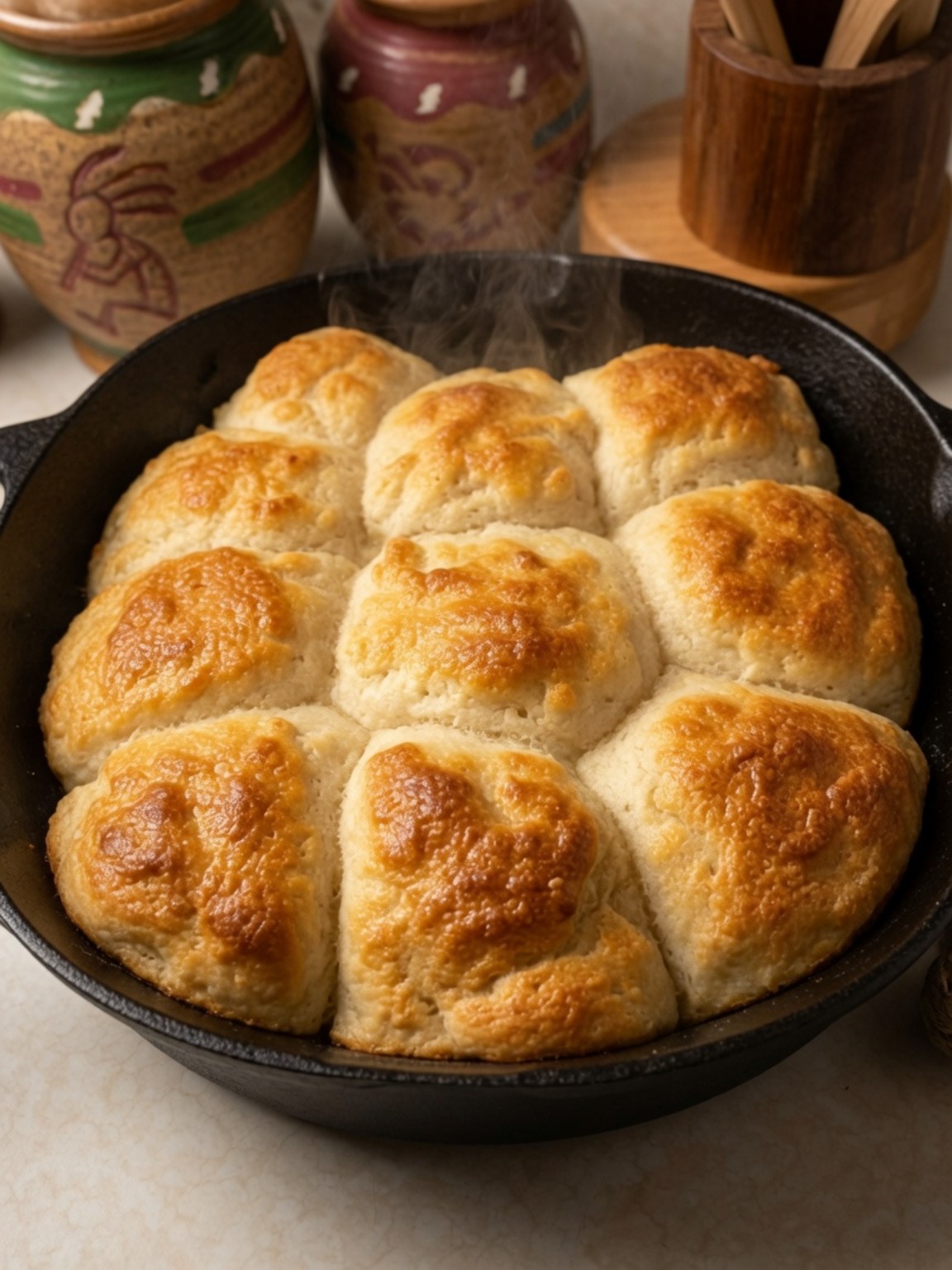
Golden Buttermilk Skillet Biscuits are soft, fluffy, buttery biscuits baked together in a hot cast iron skillet until the tops are golden brown and the centers are tender and warm. They are simple, comforting, and perfect for breakfast, brunch, dinner sides, holiday meals, or anytime you want homemade biscuits with a crisp edge and a soft middle.
These biscuits have a classic old-fashioned texture: lightly crisp on the outside, fluffy inside, and rich with butter and buttermilk flavor. Baking them close together in a skillet helps them rise high and stay soft, while the hot pan gives the bottoms a beautiful golden crust.
Serve them warm with butter, honey, jam, sausage gravy, fried chicken, soup, stew, eggs, or roasted meat. They are the kind of homemade bread that makes any meal feel cozy and complete.
Recipe Overview
| Detail | Information |
|---|---|
| Recipe Name | Golden Buttermilk Skillet Biscuits |
| Prep Time | 15 minutes |
| Cook Time | 18–22 minutes |
| Total Time | 35–40 minutes |
| Servings | 8–10 biscuits |
| Main Ingredients | Flour, buttermilk, butter, baking powder |
| Best Served With | Butter, honey, gravy, eggs, soup, fried chicken |
Why You’ll Love This Recipe
These skillet biscuits are warm, fluffy, and easy to make.
You will love them because they are:
Soft and fluffy inside
Golden and buttery on top
Crisp around the edges
Perfect for breakfast or dinner
Baked beautifully in a skillet
Made with simple ingredients
Great with sweet or savory toppings
Comforting and homemade
Easy to serve warm from the pan
The best part is the texture. The biscuits bake close together, which keeps the sides tender while the tops become golden and slightly crisp.
Ingredients
For the Biscuits
| Ingredient | Amount |
|---|---|
| All-purpose flour | 2 1/2 cups |
| Baking powder | 1 tablespoon |
| Baking soda | 1/2 teaspoon |
| Salt | 1 teaspoon |
| Sugar | 1 tablespoon, optional |
| Cold unsalted butter, cubed | 1/2 cup |
| Cold buttermilk | 1 cup |
| Melted butter | 2–3 tablespoons, for brushing |
Optional Add-Ins
| Add-In | Amount |
|---|---|
| Shredded cheddar cheese | 1 cup |
| Garlic powder | 1/2 teaspoon |
| Fresh parsley or chives | 2 tablespoons |
| Black pepper | 1/2 teaspoon |
| Honey | 1 tablespoon |
| Parmesan cheese | 1/4 cup |
Instructions
Step 1: Prepare the Oven
Preheat your oven to 425°F / 220°C.
Place a cast iron skillet in the oven while it preheats.
A hot skillet helps the biscuits get a golden bottom and a better rise.
If you do not have cast iron, you can use a baking dish or sheet pan, but cast iron gives the best crust.
Step 2: Mix the Dry Ingredients
In a large mixing bowl, whisk together flour, baking powder, baking soda, salt, and sugar if using.
Make sure the baking powder is evenly mixed into the flour.
This helps the biscuits rise evenly.
Step 3: Cut in the Cold Butter
Add the cold cubed butter to the flour mixture.
Use your fingers, a pastry cutter, or a fork to cut the butter into the flour until the mixture looks like coarse crumbs.
You should still see small pieces of butter.
Those cold butter pieces melt in the oven and create soft, flaky layers.
Step 4: Add Buttermilk
Pour in the cold buttermilk.
Stir gently with a fork or spatula until the dough just comes together.
Do not overmix.
The dough should look slightly shaggy and soft.
If it feels too dry, add 1 tablespoon of buttermilk at a time.
If it feels too wet, sprinkle with a little flour.
Step 5: Shape the Dough
Turn the dough onto a lightly floured surface.
Gently press it together with your hands.
Fold the dough over itself 2–3 times to create light layers.
Pat it into a thick rectangle or circle about 3/4 to 1 inch thick.
Do not knead heavily. Gentle handling keeps the biscuits tender.
Step 6: Cut the Biscuits
Use a biscuit cutter, round glass, or knife to cut the biscuits.
Press straight down without twisting.
Twisting the cutter can seal the edges and prevent the biscuits from rising properly.
Gather scraps gently and cut more biscuits.
Step 7: Add Biscuits to the Skillet
Carefully remove the hot skillet from the oven.
Brush the bottom with a little melted butter.
Place the biscuits close together in the skillet.
The sides can touch. This helps them rise taller and stay soft.
Brush the tops with melted butter.
Step 8: Bake
Bake for 18–22 minutes, or until the tops are golden brown and the biscuits are cooked through.
The tops should be puffed and golden, and the bottoms should be lightly crisp.
If the tops brown too fast, cover loosely with foil during the last few minutes.
Step 9: Brush with Butter
Remove the skillet from the oven.
Brush the hot biscuits with more melted butter.
Let them rest for 5 minutes before serving.
Serve warm.
Best Tips for Fluffy Biscuits
Use very cold butter.
Use cold buttermilk.
Do not overmix the dough.
Handle the dough gently.
Do not twist the cutter.
Bake in a hot oven.
Place biscuits close together for a taller rise.
Brush with butter before and after baking.
Why Cold Butter Matters
Cold butter is one of the most important parts of biscuit making.
When cold butter melts in the oven, it creates steam inside the dough.
That steam helps the biscuits rise and creates a tender, layered texture.
If the butter gets too warm before baking, the biscuits can become flat or dense.
For best results, keep the butter cold until it goes into the oven.
Why Use Buttermilk?
Buttermilk gives biscuits a soft texture and slightly tangy flavor.
It also reacts with baking soda and baking powder to help the biscuits rise.
If you do not have buttermilk, you can make a quick substitute.
Mix 1 cup milk with 1 tablespoon lemon juice or vinegar.
Let it sit for 5–10 minutes before using.
Best Skillet to Use
A cast iron skillet is best because it holds heat well and gives the biscuits a golden bottom.
You can use:
Cast iron skillet
Round baking dish
Square baking pan
Ceramic casserole dish
Sheet pan
If using a sheet pan, the biscuits may have crispier sides because they are more exposed.
If using a skillet, they will stay softer and more pull-apart style.
Recipe Variations
Cheddar Garlic Skillet Biscuits
Add shredded cheddar cheese, garlic powder, and parsley to the dough.
Honey Butter Biscuits
Brush the tops with melted butter mixed with honey.
Black Pepper Biscuits
Add cracked black pepper to the dough for a savory flavor.
Herb Buttermilk Biscuits
Add chopped parsley, chives, rosemary, or thyme.
Parmesan Biscuits
Add grated Parmesan cheese and Italian seasoning.
Sweet Breakfast Biscuits
Add 2 tablespoons sugar and serve with jam or honey.
What to Serve With Buttermilk Skillet Biscuits
These biscuits work with many meals.
Great serving ideas include:
Butter
Honey
Jam
Sausage gravy
Fried chicken
Scrambled eggs
Bacon
Soup
Beef stew
Chicken pot pie filling
Chili
Roasted chicken
Mashed potatoes
Country gravy
For breakfast, serve with butter, honey, eggs, and bacon.
For dinner, serve with soup, stew, fried chicken, or roasted meat.
Make-Ahead Instructions
You can prepare the dry ingredients ahead of time.
You can also cut the butter into the flour mixture and refrigerate it until ready to use.
For best texture, add buttermilk right before baking.
You can cut the biscuits and refrigerate them for 30 minutes before baking if needed.
Cold biscuits often bake even taller.
Storage
Let leftover biscuits cool completely.
Store them in an airtight container at room temperature for up to 2 days.
For longer storage, refrigerate for up to 5 days.
They are best served fresh, but they reheat well.
Reheating
To reheat biscuits, place them in a 325°F / 160°C oven for 8–10 minutes.
Brush with a little butter before reheating if desired.
You can also microwave one biscuit for 10–15 seconds, but the outside will be softer.
For a crispier texture, use an oven or air fryer.
Freezing
Biscuits freeze well.
To Freeze Unbaked Biscuits
Cut the biscuits and place them on a tray.
Freeze until firm.
Transfer to a freezer bag.
Bake from frozen, adding 3–5 extra minutes.
To Freeze Baked Biscuits
Cool completely.
Wrap tightly and freeze for up to 2 months.
Reheat in the oven until warm.
Common Mistakes to Avoid
Overmixing the Dough
Overmixing makes biscuits tough.
Using Warm Butter
Warm butter melts too soon and can make biscuits dense.
Twisting the Cutter
Twisting seals the edges and stops the biscuits from rising high.
Adding Too Much Flour
Too much flour makes biscuits dry.
Baking at Low Heat
Biscuits need high heat to rise quickly and become golden.
Skipping the Butter Brush
Brushing with butter gives the tops flavor, color, and shine.
Nutrition Estimate
Nutrition will vary depending on biscuit size and ingredients.
| Serving | Estimated Amount |
|---|---|
| Calories | 190–310 |
| Protein | 4–7 g |
| Carbohydrates | 25–38 g |
| Fat | 8–17 g |
| Sugar | 1–4 g |
| Serving Size | 1 biscuit |
Frequently Asked Questions
Can I use regular milk instead of buttermilk?
Yes, but buttermilk gives the best flavor and texture. You can make a substitute with milk and lemon juice or vinegar.
Why did my biscuits not rise?
The butter may have been too warm, the dough may have been overmixed, or the cutter may have been twisted.
Can I make these without a cast iron skillet?
Yes. Use a baking dish or sheet pan.
Can I add cheese?
Yes. Cheddar, Parmesan, or Monterey Jack work well.
Can I make them sweet?
Yes. Add a little extra sugar and serve with honey or jam.
Can I use self-rising flour?
Yes. If using self-rising flour, reduce or skip the baking powder and salt.
Can I freeze the dough?
Yes. Cut the biscuits and freeze them unbaked.
How do I keep biscuits soft?
Store them covered and reheat gently with a little butter.
Can I make mini biscuits?
Yes. Cut smaller biscuits and reduce baking time.
What is the best topping?
Butter, honey, jam, and sausage gravy are classic choices.
Final Thoughts
Golden Buttermilk Skillet Biscuits are warm, fluffy, buttery, and full of classic homemade comfort. The crisp golden tops, soft centers, and buttery edges make them perfect for breakfast, brunch, dinner, or holiday meals.
Serve them hot from the skillet with butter, honey, jam, gravy, eggs, soup, or your favorite comfort-food dinner. This is a simple homemade biscuit recipe that tastes cozy, rich, and delicious every time.