Avocado Seed Tea Evaluating the Health Claims Against Nutritional Science
Avocados (Persea americana) are globally celebrated for their creamy texture, healthy monounsaturated fats, and dense micronutrient profile. However, while the rich green flesh of the fruit is a staple in modern diets, the large woody pit in the center is almost universally discarded. In recent years, viral social media infographics have challenged this practice, claiming that saving and brewing this prominent seed can unlock an array of hidden medical advantages.
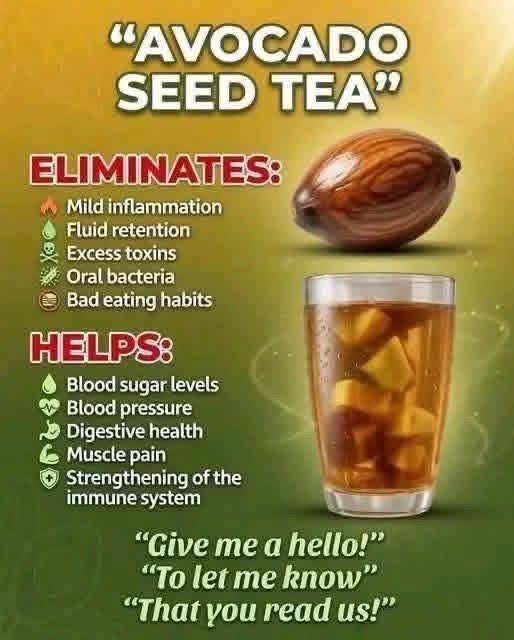
A prime example is the graphic featured in 1000005702.jpg, which claims that “Avocado Seed Tea” eliminates mild inflammation, fluid retention, excess toxins, oral bacteria, and bad eating habits. It further asserts that the brew directly helps regulate blood sugar levels, blood pressure, digestive health, muscle pain, and the strengthening of the immune system.
While it is true that avocado seeds contain active organic compounds, making definitive statements about eliminating complex physiological conditions requires rigorous, clinical evidence. To utilize botanical ingredients safely, it is essential to separate laboratory findings from practical dietary applications, understand the underlying biochemistry of the seed, and examine the potential risks associated with consuming parts of the plant traditionally deemed inedible.
The Biochemistry of the Avocado Seed
To evaluate whether avocado seed tea can deliver on the extensive promises listed in 1000005702.jpg, we must look at what the seed is made of. The pit comprises roughly 13% to 18% of the entire fruit’s weight and serves as its reproductive core, packed with nutrients intended to fuel a developing plant.
Phenolic and Antioxidant Compounds
In laboratory settings, researchers have discovered that avocado pits are rich in phytochemicals, including polyphenols, catechins, proanthocyanidins, and tannins. These compounds function as antioxidants, which assist the body in neutralizing free radicals—unstable molecules that contribute to cellular damage and systemic oxidative stress over time.
Saponins and Alkaloids
The seed also contains trace plant chemicals such as saponins and alkaloids. In nature, these bitter-tasting molecules act as a chemical defense system designed to deter insects, fungi, and foraging animals from consuming the seed before it has a chance to germinate.
Fact-Checking the Infographic: Science vs. Social Media Claims
Let us break down the specific claims highlighted in the 1000005702.jpg infographic to understand what is scientifically plausible and where the claims overshoot reality.
1. “Eliminates Mild Inflammation and Oral Bacteria”
- The Reality: Plausible in vitro. Laboratory studies analyzing concentrated avocado seed extracts in petri dishes have shown that the polyphenols and tannins present do exhibit genuine anti-inflammatory and antimicrobial properties against certain strains of bacteria. However, drinking a diluted tea brewed from the seed at home is vastly different from using concentrated laboratory extracts, and it cannot be claimed to actively “eliminate” internal inflammation or oral infections.
2. “Eliminates Excess Toxins and Fluid Retention”
- The Reality: Misleading. From a biological standpoint, the human body does not rely on herbal teas to remove waste products. Your liver and kidneys continuously filter, metabolize, and eliminate unwanted compounds around the clock. While some mild herbal preparations can act as minor diuretics to temporarily increase urine output, there is no clinical evidence proving that avocado seed tea accelerates or improves the body’s natural detoxification pathways.
3. “Helps Blood Sugar and Blood Pressure Levels”
- The Reality: Unverified in Humans. A handful of preliminary animal studies conducted on rats have indicated that high doses of specific avocado seed extracts can help lower blood glucose and support cardiovascular markers. However, these effects have never been replicated or verified in human clinical trials. Animal models utilize highly concentrated, standardized extracts that do not accurately represent a homemade water infusion.
4. “Eliminates Bad Eating Habits”
- The Reality: Inaccurate. Dietary habits and behavioral patterns are deeply psychological and lifestyle-driven. No beverage, seed, or herbal supplement possesses the capability to alter behavioral choices or eliminate poor eating mechanics.
Safety Concerns and Toxin Risks
The most critical factor to consider when evaluating avocado seed tea is the question of consumption safety. While the flesh of the avocado is safe and nutritious, the seed was never traditionally utilized as a food source by historical civilizations.
The Presence of Persin
Avocado plants produce a natural, fungicidal toxin called persin. While persin is harmless to humans in the tiny amounts found in the ripe flesh, it is significantly more concentrated in the leaves, bark, and seeds of the plant. Persin is highly toxic to domestic animals and livestock (such as horses, birds, rabbits, and dogs), capable of causing severe respiratory distress and myocardial damage. While human tolerance levels for the specific compounds in the seed are still being researched, major toxicology and botanical organizations advise against regular consumption of the pit due to a lack of long-term human safety data.
High Tannin Content
The high concentration of tannins that gives the seed its protective properties also makes it incredibly bitter and astringent. Consuming large quantities of raw or boiled tannins can irritate the mucosal lining of the stomach, potentially leading to nausea, acute indigestion, or stomach cramping.
Evidence-Based Habits for Comprehensive Wellness
If you want to achieve the core health goals highlighted in 1000005702.jpg—such as managing blood pressure, balancing blood sugar, and supporting your immune system—it is far more effective to rely on established, clinically verified wellness practices.
- Eat a Diverse, Whole-Food Diet: To manage blood sugar levels efficiently, prioritize a diet rich in soluble dietary fiber, lean proteins, and complex carbohydrates. Incorporating the actual flesh of the avocado provides healthy monounsaturated oleic acid and potassium, which actively help maintain healthy blood pressure levels.
- Support Digestive Health with Fiber: Instead of relying on a seed infusion, fuel your gastrointestinal tract with prebiotic fibers found in whole grains, legumes, oats, flaxseeds, and fermented foods like yogurt or kefir. These feed your beneficial gut microbes, which directly govern about 70% of your immune system functionality.
- Engage in Consistent Physical Activity: Daily movement is a powerful tool for reducing systemic inflammation and managing muscle health. Regular exercise improves insulin sensitivity, assists in circulation, and reduces the risk of chronic cardiovascular issues.
Conclusion: Prioritizing Verified Nutrition Over Trends
The avocado pit is a fascinating botanical structure, rich in natural antioxidant polyphenols and protective plant chemicals that serve vital functions in the lifecycle of the Persea americana tree. However, when confronting viral graphics like 1000005702.jpg, it is essential to exercise analytical caution. The dramatic claims that an avocado seed tea can eliminate complex internal ailments or replace sound lifestyle choices are unverified by human clinical science.
Given the current lack of comprehensive human safety data, the presence of bitter tannins, and the concentration of protective compounds like persin within the pit, the potential risks of consuming avocado seed tea outweigh its unproven benefits. Rather than attempting to utilize the discarded seed, you can fully support your cellular health, immunity, and metabolic vitality by enjoying the nutrient-dense green flesh of the fruit and maintaining a lifestyle anchored in whole foods, consistent movement, and proven medical guidelines. Keep your focus on verified dietary staples, and leave the pits to germinate in the garden!