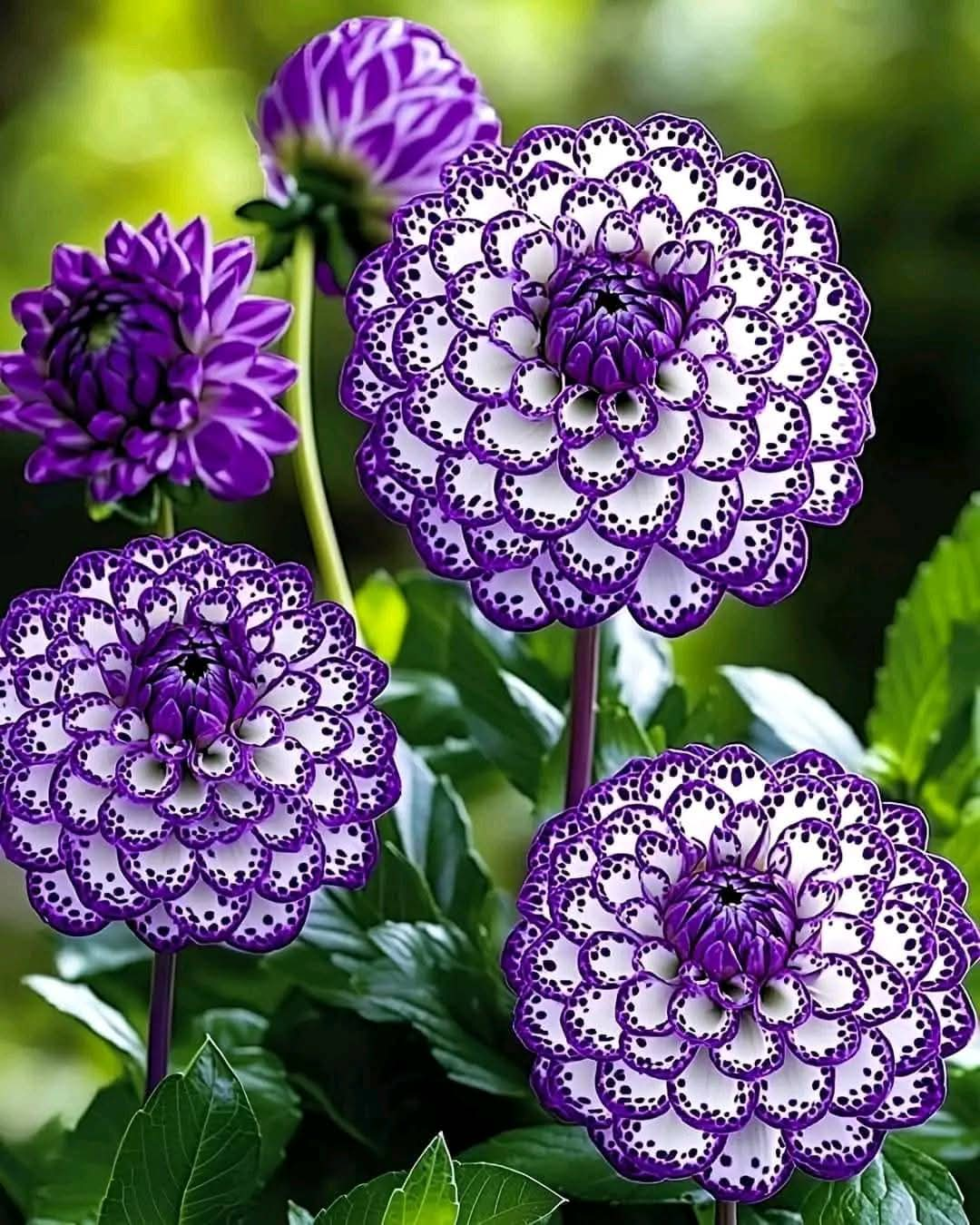
If you’re looking to add a bold, artistic flair to your garden, look no further than Dahlia ‘Tartan’. With its mesmerizing ball-shaped blooms streaked with purple and white, this dahlia variety is a true showstopper. Whether you’re building a dramatic flower bed or searching for the perfect cut flower, Dahlia ‘Tartan’ delivers beauty, texture, and undeniable charm.
Let’s dive into what makes this stunning flower so special and how you can grow it to perfection in your own backyard!
Why Grow Dahlia ‘Tartan’?
The Dahlia ‘Tartan’ is beloved by gardeners for its striking appearance and reliable blooms. Its intricate petals unfold in a swirl of deep purple and crisp white, creating a dynamic, eye-catching display.
Here’s why you’ll want this dahlia in your garden:
Unique Color Patterns: The rich purple petals with white streaks add a painterly touch to flower beds and bouquets.
Impressive Blooms: The large, spherical flowers can reach 4–6 inches in diameter, making them stand out in any arrangement.
Long Blooming Season: Dahlias bloom from mid-summer until the first frost, filling your garden with color for months.
Pollinator Friendly: These vibrant blooms attract bees, butterflies, and hummingbirds, supporting your local ecosystem.
Perfect for Cutting: Their sturdy stems and long vase life make them a favorite for floral arrangements.
Whether you plant them for personal enjoyment or as a dramatic focal point in your landscape, Dahlia ‘Tartan’ is guaranteed to turn heads!
Planting & Care Guide for Dahlia ‘Tartan’
To help your dahlias thrive and produce lush, healthy blooms, follow this simple care guide:
Light Requirements
Full Sun to Partial Shade: Dahlias need at least 6 hours of sunlight per day, though they can tolerate light afternoon shade in hotter climates.
Watering Needs
Consistently Moist Soil: Water deeply whenever the top inch of soil feels dry. Dahlias like regular moisture but can suffer from root rot if waterlogged, so proper drainage is essential.
Soil Preferences
Rich, Well-Draining Soil: Use fertile, loose soil enriched with compost or organic matter. Aim for a pH between 6.5 and 7.0 for optimal growth.
Temperature & Humidity
Warm Climates (60–70°F / 15–21°C): Dahlias thrive in mild, warm conditions and should be planted after the last frost.
Moderate Humidity: While they enjoy humidity, good air circulation is important to prevent fungal issues like powdery mildew.
Fertilizing Schedule
Balanced Fertilizer Early On: Use a low-nitrogen fertilizer when the plants are young to encourage strong root development.
High-Phosphorus Fertilizer for Blooms: Once buds appear, switch to a bloom booster fertilizer (like 10-30-20) every 3–4 weeks to encourage abundant, healthy flowers.
How to Plant Dahlia ‘Tartan’ Tubers
Get your dahlias started right with this easy planting guide!
Timing: Plant tubers in the spring, after the last frost date in your area.
Planting Depth: Dig a hole 4–6 inches deep and place the tuber horizontally with the eye (growing point) facing up.
Spacing: Space plants 18–24 inches apart to give them room to spread.
Support the Stems: Dahlia ‘Tartan’ grows 3–4 feet tall, so use stakes, cages, or bamboo poles to prevent the heavy blooms from bending or breaking the stems.
Pro Tip: Don’t water the tubers immediately after planting — wait until you see the first green shoots emerge to avoid rotting the tubers!
Ongoing Care & Maintenance
Once your dahlias are growing, a little TLC will keep them blooming all season long.
Pinch for More Blooms: When the plants are about 12 inches tall, pinch off the top 1–2 inches of growth to encourage bushier growth and more flower buds.
Deadhead Spent Blooms: Regularly remove faded flowers to redirect energy into producing new blooms.
Monitor for Pests: Keep an eye out for aphids, spider mites, and slugs. Treat infestations with insecticidal soap or neem oil as needed.
Winter Storage: In zones below USDA Zone 8, dig up and store tubers indoors over winter. After the first frost, cut the
More Articles You Might Like
-

Delicious Cabbage and Eggs
Delicious Cabbage and Eggs Breakfast – Easy, Healthy, and Budget-Friendly! ### Introduction If you’re looking for a simple, nutritious, and delicious breakfast, this cabbage and eggs recipe is worth trying! Made with inexpensive everyday ingredients, this dish transforms humble cabbage and fresh eggs into a satisfying meal that the whole family can enjoy.…
-

Mini Festive Stollen Bites Stollenkonfekt
Mini Festive Stollen Bites Stollenkonfekt Incredibly Soft Little Christmas Treats! Introduction Mini Stollen bites, traditionally known as Stollenkonfekt, are delightful little German Christmas pastries filled with dried fruits, almonds, warm spices, and buttery goodness. These miniature versions of traditional Stollen offer all the wonderful flavors of the classic Christmas cake in convenient, bite-sized portions.…
-

Classic Liver and Onions A Traditional
Classic Liver and Onions A Traditional, Tender, and Flavorful Homemade Dish ### Introduction Would you really eat liver and onions? For many people, this traditional dish brings back memories of home-cooked family meals, while others are discovering its rich flavor and impressive nutritional value for the first time. Classic liver and onions…