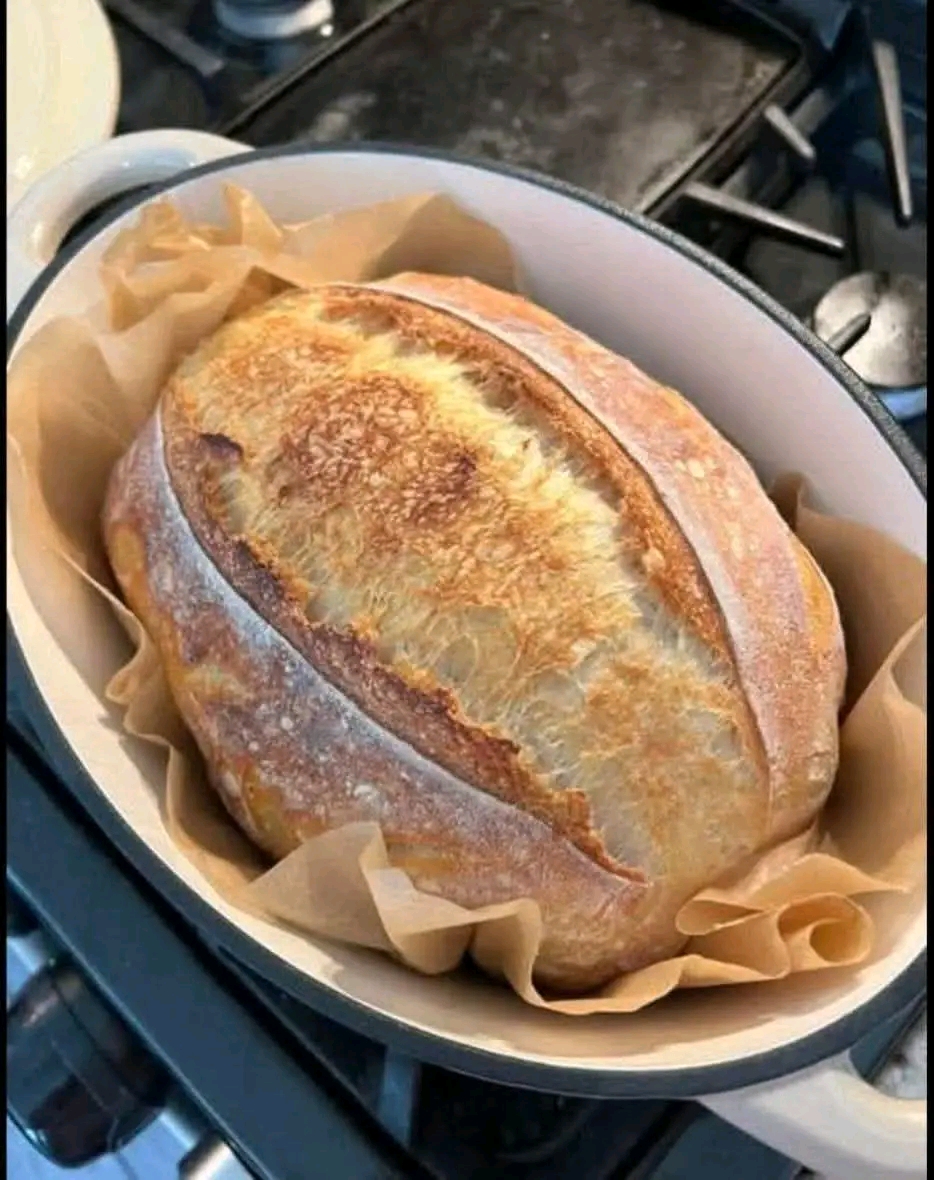
Easy No-Knead Sourdough SandwichBread – Soft, Fluffy and Perfect for Everyday Baking
1\. Introduction
If you’ve been looking for a simple way to make beautiful homemade sourdough sandwich bread without spending hours stretching, folding, and handling sticky dough, this recipe is for you!
This Easy No-Knead Sourdough Sandwich Bread produces a wonderfully soft, fluffy loaf with a tender crumb, a golden crust, and that delicious natural sourdough flavor.
Unlike traditional artisan sourdough recipes, this method requires very little hands-on work. There is no stretching and folding, no complicated shaping techniques, and no need to constantly monitor the dough.
Simply mix the ingredients, allow the sourdough starter to do its work, shape the loaf, and bake!
It’s perfect for sandwiches, morning toast, grilled cheese, and everyday family meals.
### 2\. Origin
Sourdough bread is one of the oldest forms of leavened bread, dating back thousands of years.
Before commercial baker’s yeast became widely available, people relied on naturally fermented mixtures of flour and water to make their bread rise.
Sandwich bread, as we recognize it today, became increasingly popular during the nineteenth and twentieth centuries, particularly with the development of commercial bread production and sliced loaves.
This recipe combines traditional sourdough fermentation with the convenience of modern sandwich bread baking, creating a soft homemade loaf without complicated techniques.
### 3\. Cultural Significance
Homemade bread has always represented comfort, nourishment, and family traditions.
Sourdough baking has experienced renewed popularity as more people discover the satisfaction of maintaining a starter and creating bread from simple ingredients.
Sandwich bread holds a special place in everyday kitchens because it is incredibly versatile. It can be used for school lunches, breakfast toast, sandwiches, and comforting grilled cheese.
Making a homemade sourdough sandwich loaf brings together traditional baking methods and the convenience families need in their daily lives.
### 4\. Ingredients Quantity
Makes 1 standard sandwich loaf
Preparation Time: 15 minutes First Rise: 6–10 hours, depending on starter activity and room temperature Final Proof: 1–3 hours Baking Time: 40–45 minutes Total Time: Approximately 8–14 hours
* 120 g active sourdough starter (100% hydration)
* 350 g warm water
* 500 g bread flour
* 10 g salt
* 20 g olive oil or softened butter
* 15 g honey (optional, for a slightly softer and sweeter loaf)
Note: Fermentation times are estimates. Watch the dough rather than relying entirely on the clock.
### 5\. Optional Additions
Customize your sourdough sandwich bread with these delicious additions:
* 2 tablespoons rolled oats for extra texture.
* 2 tablespoons sunflower seeds for a nutty flavor.
* 1 tablespoon flaxseed for additional fiber.
* 1 teaspoon garlic powder for savory sandwiches.
* 2 tablespoons chopped fresh herbs for an aromatic loaf.
* 50 g whole-wheat flour replacing part of the bread flour for a heartier texture.
* 1 tablespoon sesame seeds for sprinkling over the top.
### 6\. Tips for Success
Use an active starter: Your starter should be bubbly, healthy, and recently fed. This helps the dough rise reliably.
Don’t overcomplicate the process: This recipe does not require stretch-and-fold sessions. Thorough mixing followed by adequate fermentation develops the dough.
Measure accurately: A kitchen scale is much more reliable than measuring flour by cups.
Watch the dough during bulk fermentation: It should become visibly expanded, airy, and slightly domed. Avoid waiting for it to double automatically if the dough is already showing signs of overfermentation.
Use a loaf pan: A standard 9 x 5-inch loaf pan helps create the familiar sandwich bread shape.
Shape gently: Create a smooth, even loaf without pressing out all the air.
Don’t rush the final proof: Allow the dough to rise until it reaches approximately 1 inch above the rim of the loaf pan, depending on the pan and dough consistency.
Cool completely: Let the loaf cool before slicing. Cutting too early can make the interior gummy.
### 7\. Instructions
1\. Prepare the starter: Make sure your sourdough starter is active and bubbly before beginning.
2\. Mix the ingredients: In a large mixing bowl, combine the sourdough starter, warm water, olive oil or softened butter, and honey if using.
3\. Add the flour and salt: Add the bread flour and salt. Mix thoroughly with a wooden spoon until no dry flour remains.
4\. Form the dough: The dough should be soft and slightly sticky. This is normal for a hydrated sourdough sandwich loaf.
5\. First fermentation: Cover the bowl and leave the dough at room temperature for approximately 6–10 hours, depending on the temperature of your kitchen and the strength of your starter.
6\. Prepare the loaf pan: Lightly grease a 9 x 5-inch loaf pan.
7\. Shape the dough: Transfer the fermented dough to a lightly floured surface. Gently shape it into a rectangle, then roll it into a loaf, pinching the seam closed.
8\. Transfer to the pan: Place the shaped dough seam-side down into the prepared loaf pan.
9\. Final proof: Cover loosely and allow the dough to rise for approximately 1–3 hours, or until visibly puffy and risen near or slightly above the pan’s rim.
10\. Preheat the oven: Heat the oven to 375°F (190°C).
11\. Bake: Bake for approximately 40–45 minutes until the crust is golden brown and the loaf is cooked through. The internal temperature should reach approximately 200–205°F (93–96°C).
12\. Cool: Remove the bread from the pan and transfer it to a wire rack.
13\. Slice and enjoy: Allow the loaf to cool completely before slicing into beautiful sandwich-sized pieces.
### 8\. Description
This no-knead sourdough sandwich bread is everything homemade bread should be: soft, fluffy, tender, and full of wonderful flavor.
The crust develops a beautiful golden color, while the inside remains light and moist with a fine, even crumb.
It has a gentle sourdough tang that pairs perfectly with both sweet and savory fillings.
The best part is how little hands-on work it requires. No stretching, no folding, and no complicated techniques—just simple ingredients and natural fermentation.
### 9\. Nutritional Information
Estimated per slice, assuming 16 slices per loaf. Values vary with flour, starter, and optional ingredients.
| Nutrient | Amount |
| ————- | ——– |
| Calories | 140 kcal |
| Protein | 4.5 g |
| Carbohydrates | 25 g |
| Fat | 2.5 g |
| Saturated Fat | 0.4 g |
| Fiber | 1 g |
| Sugar | 1 g |
| Sodium | 250 mg |
### 10\. Conclusion
This Easy No-Knead Sourdough Sandwich Bread proves that making beautiful homemade bread doesn’t have to be complicated.
With a simple mixing process, natural fermentation, and no stretching or folding, you can create a soft, delicious loaf that’s perfect for everyday use.
Whether you’re an experienced sourdough baker or just starting your bread-making journey, this recipe is a wonderful addition to your collection.
Once you taste a fresh slice with butter, you may never want to go back to ordinary store-bought sandwich bread!
### 11\. Recommendation
For the best results, I recommend making this loaf the night before and allowing the first fermentation to happen overnight, provided your kitchen temperature and starter activity are suitable.
Try serving it in these delicious ways:
* Toasted with butter and homemade jam.
* Filled with eggs and avocado.
* Used for grilled cheese sandwiches.
* Spread with almond butter and banana.
* Turned into delicious French toast.
* Served alongside homemade soups.
You can also slice the cooled loaf and freeze individual portions, making it easy to enjoy homemade sourdough throughout the week.
### 12\. Embracing Healthful Indulgence
Homemade sourdough sandwich bread allows you to control the ingredients and avoid unnecessary preservatives and additives.
Natural fermentation contributes distinctive flavor and can change the characteristics of the bread, although it does not automatically make every sourdough loaf low in carbohydrates or suitable for everyone.
For additional fiber, consider replacing 10–20% of the bread flour with whole-wheat flour. You can also add flaxseed, sunflower seeds, or oats for extra texture and nutrients.
If you prefer a dairy-free loaf, olive oil works beautifully instead of butter.
Pair your homemade bread with protein-rich fillings, fresh vegetables, eggs, or avocado for a satisfying and balanced meal.
The beauty of this recipe is that you can enjoy the comfort of homemade bread while choosing ingredients that suit your preferences.
Final Thought: No stretching, no folding, and no complicated techniques—just a beautiful homemade sourdough sandwich loaf that makes you proud of what comes out of your oven! ❤️