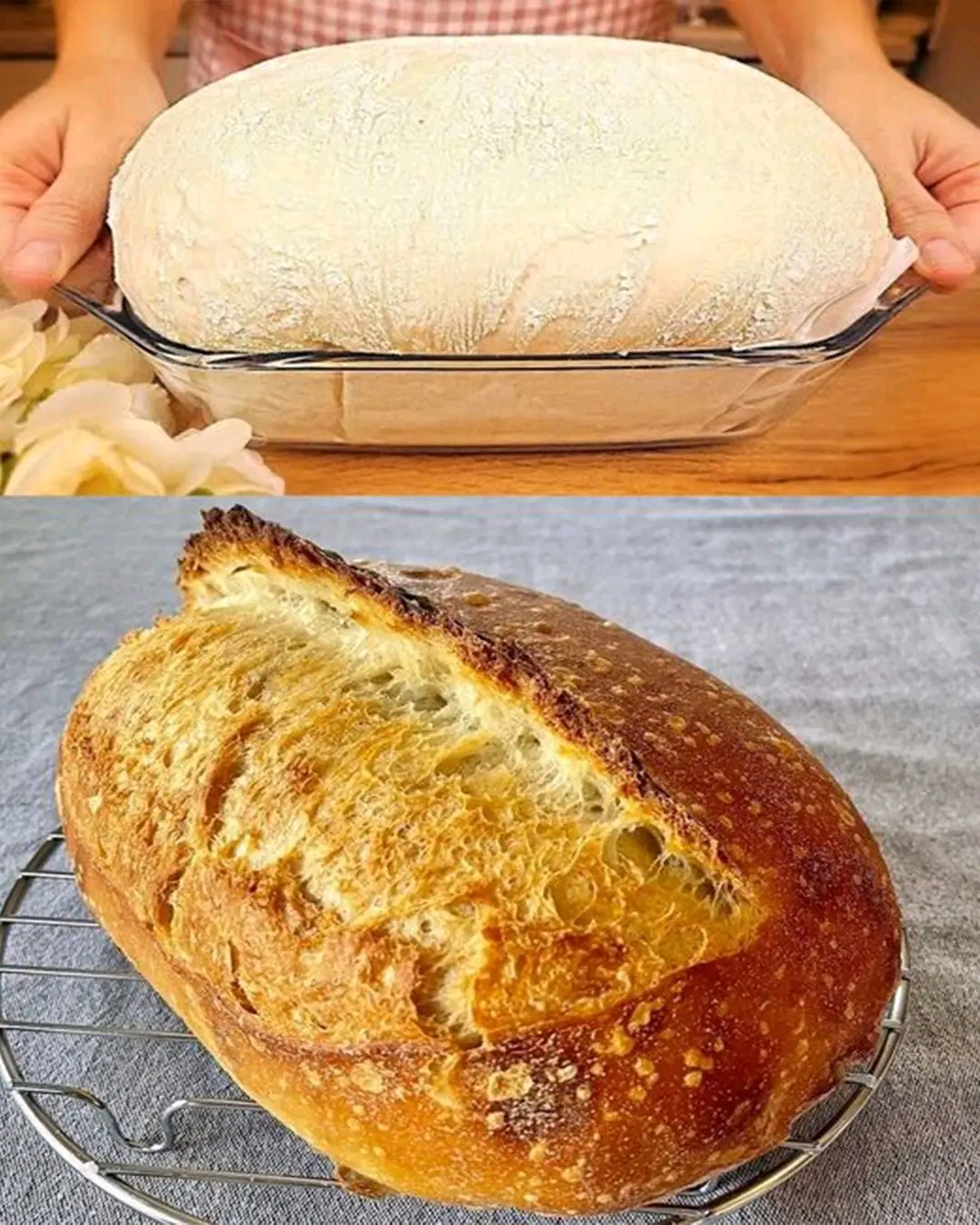
### Homemade German Bread Baked in a Clay Baker (Römertopf)
### Introduction
There is something truly special about the smell of freshly baked homemade bread filling the kitchen. This traditional homemade German house bread, baked in a Römertopf (clay baker), delivers everything you love about a bakery-style loaf: a beautifully crispy golden crust, a soft and aromatic interior, and a wonderful homemade flavor.
The best part? It is surprisingly easy to prepare, requires simple ingredients, and doesn’t demand complicated baking techniques. Once you try making bread in a clay baker, you may find yourself buying much less bread from the store!
### Origin
The Römertopf is a traditional German clay cooking vessel that became popular in the 20th century. Inspired by ancient clay-pot cooking methods, it uses moisture trapped inside the covered pot to cook food gently and evenly.
Although homemade bread has been part of European kitchens for centuries, baking bread in a clay pot became a convenient way to achieve a professional-style crust and moist crumb in a home oven.
### Cultural Significance
Homemade bread holds an important place in German food culture. Known as Brot, bread is a daily staple enjoyed at breakfast, dinner, and family gatherings.
Germany is particularly famous for its incredible variety of breads, from hearty rye loaves to rustic country breads. Baking bread at home represents tradition, comfort, and the pleasure of preparing something nourishing from scratch.
### Ingredients Quantity
Preparation Time: 15 minutes Rising Time: 1½–2 hours Baking Time: 45–55 minutes Total Time: Approximately 3 hours Servings: 10–12 slices
* 500 g bread flour or all-purpose flour
* 350 ml lukewarm water
* 7 g instant dry yeast
* 10 g salt
* 1 teaspoon sugar or honey
* 1 tablespoon olive oil (optional)
* 1 tablespoon vinegar (optional, for a slight flavor enhancement)
### Optional Additions
Customize your homemade bread with these delicious additions:
* 2 tablespoons sunflower seeds
* 2 tablespoons pumpkin seeds
* 1 tablespoon flaxseeds
* 1 teaspoon caraway seeds
* 2 tablespoons rolled oats
* 1 teaspoon dried rosemary
* 2 tablespoons chopped walnuts
* 1 tablespoon sesame seeds
For a more traditional German-style loaf, try adding a little rye flour or caraway seeds.
### Tips for Success
* Use the right clay baker: Make sure your Römertopf is suitable for oven baking.
* Soak the pot: If your model requires soaking, follow the manufacturer’s instructions.
* Measure accurately: Too much flour can make the bread dense and dry.
* Allow enough rising time: The dough should become noticeably larger and airy.
* Create steam naturally: The covered clay baker traps moisture, helping the bread develop a beautiful crust.
* Remove the lid carefully: Steam can escape quickly and cause burns.
* Cool before slicing: Allow the bread to cool for at least 30–45 minutes to prevent a gummy interior.
### Instructions
1\. Prepare the yeast: In a large mixing bowl, combine lukewarm water, yeast, and sugar. Let stand for 5–10 minutes until slightly foamy.
2\. Mix the dough: Add the flour, salt, and olive oil if using. Mix until a soft, slightly sticky dough forms.
3\. Knead: Knead by hand for approximately 8–10 minutes or use a stand mixer until the dough becomes smooth and elastic.
4\. First rise: Cover the bowl with a clean kitchen towel and let the dough rise in a warm place for 1–2 hours, or until doubled in size.
5\. Shape the loaf: Gently remove the dough, shape it into a round or oval loaf, and place it on baking paper. Let it rest for another 20–30 minutes.
6\. Prepare the Römertopf: Soak the clay baker if required by the manufacturer. Follow its instructions regarding preheating and temperature changes.
7\. Transfer the dough: Carefully place the shaped dough inside the prepared clay baker. Score the surface with a sharp knife.
8\. Bake: Cover with the lid and place in the oven according to the manufacturer’s instructions. Bake at approximately 220°C (425°F) for 35–40 minutes.
9\. Brown the crust: Remove the lid carefully and continue baking for another 10–15 minutes until the crust is deeply golden and crispy.
10\. Cool and serve: Remove the bread from the pot and let it cool completely on a wire rack before slicing.
### Description
This rustic homemade German bread has a wonderfully crunchy golden-brown crust and a soft, tender, aromatic interior. Every slice offers a satisfying texture and comforting homemade flavor.
It is delicious with butter, cheese, homemade spreads, soups, roasted vegetables, or simply a drizzle of olive oil. The clay baker helps create a moist baking environment that gives the loaf its beautiful bakery-style finish.
### Nutritional Information
Approximate nutritional values per slice, assuming 12 slices:
* Calories: 155 kcal
* Protein: 5 g
* Carbohydrates: 31 g
* Fat: 1 g
* Fiber: 1.2 g
* Sugar: 1 g
* Sodium: 325 mg
Values vary depending on the flour, optional ingredients, and slice size.
### Conclusion
Making homemade bread in a Römertopf is a wonderful way to bring traditional baking into your kitchen. With simple ingredients, minimal preparation, and the magic of clay-pot baking, you can enjoy fresh bread with a crispy crust and deliciously soft center.
Once you experience the taste and aroma of homemade bread, you might never look at store-bought bread the same way again!
### Recommendation
Serve this bread warm alongside homemade vegetable soup, grilled chicken, fresh salads, or your favorite cheese.
For breakfast, enjoy a slice with avocado, eggs, or homemade fruit spread. It also makes excellent sandwiches and toast the following day.
Store the cooled loaf in a breathable bread bag or bread box for approximately 2–3 days. Freeze sliced portions for longer storage.
### Embracing Healthful Indulgence
Homemade bread allows you to control the ingredients and avoid unnecessary preservatives and additives often found in commercial bread.
For a more nutritious variation, replace 100–150 g of the white flour with whole-wheat or rye flour. Add flaxseeds, sunflower seeds, or pumpkin seeds for extra fiber, healthy fats, and minerals.
You can also experiment with a combination of whole-grain flours to create a more filling loaf.
Enjoying homemade bread is about balance, quality ingredients, and the pleasure of preparing wholesome food at home. Every slice is a delicious reminder that simple ingredients can create something truly wonderful!