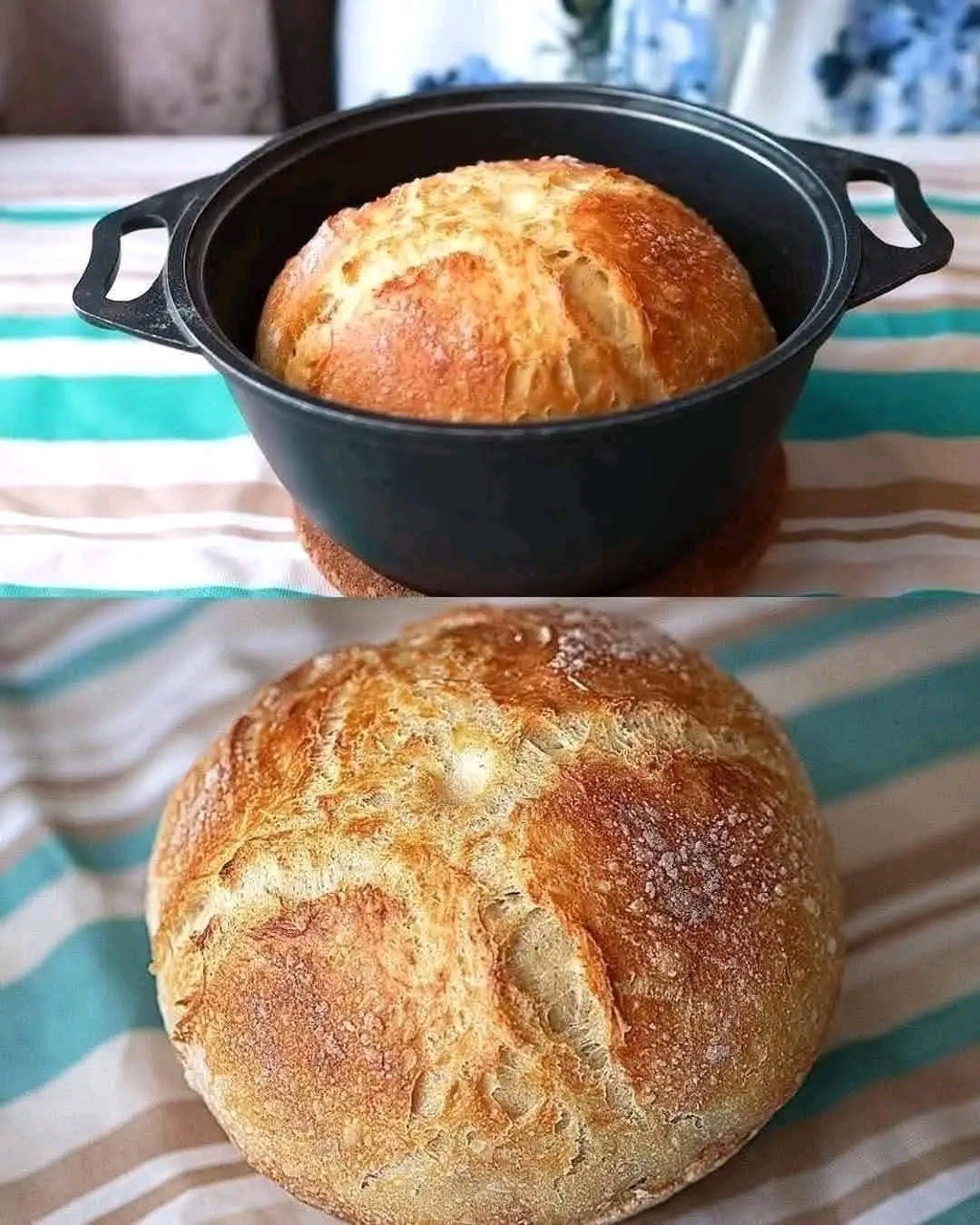
Easy Homemade No-Knead Bread No Eggs, No Butter, and No Kneading Required!
### Introduction
Once you discover how easy it is to make homemade bread, you may never want to buy store-bought bread again! This simple no-knead bread recipe requires only a handful of basic ingredients and produces a beautifully golden crust with a soft, fluffy interior.
There is no complicated kneading, no eggs, and no butter. Simply mix the ingredients, allow the dough to rise, and bake until perfectly golden.
Whether you’re preparing breakfast, making sandwiches, or serving bread alongside a comforting homemade meal, this affordable recipe is perfect for everyday baking.
Preparation Time: 10–15 minutes Rising Time: 1½–2 hours Cooking Time: 30–40 minutes Total Time: Approximately 2½–3 hours Servings: 10–12 slices
### Origin
No-knead bread is rooted in traditional bread-making methods that rely on time rather than extensive physical effort to develop the dough.
For generations, home bakers have prepared simple loaves using flour, water, salt, and yeast. Allowing the dough to rest gives the gluten time to develop naturally, eliminating the need for traditional kneading.
Modern no-knead bread became especially popular because it makes homemade baking accessible to beginners and busy families.
This recipe celebrates the simplicity of traditional bread while offering a convenient approach to everyday baking.
### Cultural Significance
Bread is one of the oldest and most important foods in the world. Across cultures, it represents nourishment, hospitality, family, and togetherness.
From European country loaves to traditional Moroccan khobz, homemade bread has always held a special place at the family table.
Many families continue to prepare bread at home because it is economical, satisfying, and allows complete control over the ingredients.
This easy no-knead version carries on that tradition, proving that delicious homemade bread doesn’t need complicated techniques or expensive ingredients.
### Ingredients Quantity
For the Bread:
* 4 cups (500 g) all-purpose flour or bread flour
* 1½ cups (360 ml) lukewarm water
* 2 teaspoons instant yeast (7 g)
* 1½ teaspoons salt
* 1 tablespoon olive oil (optional)
* 1 teaspoon sugar (optional, to help activate the yeast)
Note: The original social media post doesn’t provide exact measurements. These quantities make a complete suggested version of the recipe.
### Optional Additions
Give your homemade bread a different flavor with these additions:
* Garlic: Add 2–3 minced garlic cloves for a savory loaf.
* Rosemary: Adds a wonderful aromatic flavor.
* Olives: Mix in chopped black or green olives.
* Sunflower seeds: Provide a pleasant crunch.
* Flaxseeds: Add fiber and healthy fats.
* Sesame seeds: Sprinkle over the top before baking.
* Oregano: Creates a delicious Mediterranean-inspired bread.
* Whole-wheat flour: Replace up to half the white flour for more fiber.
### Tips for Success
* Use lukewarm water: Very hot water can damage the yeast.
* Don’t knead the dough: Mix until all the flour is incorporated.
* Expect sticky dough: No-knead bread dough is naturally wetter than traditional bread dough.
* Measure accurately: Too much flour can produce dense bread.
* Allow enough rising time: The dough should become noticeably larger and bubbly.
* Choose a warm resting place: This helps the yeast work efficiently.
* Preheat your oven: A properly heated oven helps create a beautiful crust.
* Avoid cutting immediately: Allow the bread to cool before slicing to prevent a gummy interior.
* Store properly: Keep the cooled loaf in an airtight container or bread bag.
### Instructions
Step 1: Prepare the Yeast Mixture
In a large mixing bowl, combine the lukewarm water, instant yeast, and optional sugar. Stir gently.
Allow it to sit for approximately 5 minutes if using active dry yeast. Instant yeast can be mixed directly with the flour.
Step 2: Add the Dry Ingredients
Add the flour and salt to the bowl. Pour in the olive oil if using.
Mix everything with a wooden spoon until a sticky, rough dough forms. Make sure no dry flour remains at the bottom of the bowl.
Step 3: Let the Dough Rise
Cover the bowl with plastic wrap or a clean kitchen towel.
Leave it in a warm place for approximately 1½–2 hours, or until the dough has doubled in size and looks bubbly.
Step 4: Shape the Dough
Lightly flour your work surface and transfer the dough onto it.
Gently fold the dough over itself a few times to create a round or oval shape. Avoid excessive handling.
Place it on a parchment-lined baking tray or inside a greased loaf pan.
Step 5: Second Rise
Cover the shaped dough and allow it to rest for another 20–30 minutes while the oven preheats.
Step 6: Preheat the Oven
Preheat your oven to 220°C (425°F).
For a crispier crust, place an oven-safe dish of hot water on the lower oven rack to create steam. Avoid pouring water directly onto the oven floor.
Step 7: Bake the Bread
Bake for approximately 30–40 minutes, depending on the shape and size of your loaf.
The bread should develop a beautiful golden-brown crust and sound hollow when tapped underneath.
Step 8: Cool and Enjoy
Remove the bread from the oven and transfer it to a wire rack.
Allow it to cool for at least 30 minutes before slicing.
Enjoy with your favorite spreads, soups, or homemade meals!
### Description
This homemade no-knead bread is everything a good everyday loaf should be: simple, affordable, and delicious.
The outside develops a lovely golden crust, while the inside remains soft, fluffy, and slightly chewy.
Without eggs or butter, the recipe relies on basic pantry ingredients to create a satisfying loaf that works beautifully for sandwiches, toast, or serving alongside dinner.
The best part is how little effort it requires!
### Nutritional Information
Approximate nutritional values per slice, based on 12 slices:
* Calories: 155 kcal
* Protein: 4.5 g
* Carbohydrates: 32 g
* Fat: 0.5–1 g
* Fiber: 1–2 g
* Sugar: Less than 1 g
* Sodium: Approximately 250–300 mg
Values are estimates and depend on the flour, portion size, and optional ingredients.
### Conclusion
Making homemade bread doesn’t have to be difficult. This no-knead recipe proves that flour, water, yeast, and salt can create something truly wonderful.
With no eggs, no butter, and no kneading required, it’s an excellent choice for beginners, busy households, and anyone who enjoys fresh bread without spending a fortune.
Once you smell that freshly baked loaf coming out of the oven, you’ll understand why homemade bread is so special!
### Recommendation
Enjoy this bread in several delicious ways:
* Toast thick slices and top with avocado and eggs.
* Serve alongside homemade vegetable or chicken soup.
* Make delicious sandwiches with grilled chicken and fresh vegetables.
* Brush with olive oil and sprinkle with oregano.
* Serve with hummus, olives, and fresh tomatoes.
* Enjoy warm with natural almond butter.
For the best texture, slice only what you need and keep the remaining loaf properly stored.
### Embracing Healthful Indulgence
Homemade bread allows you to control exactly what goes into your food. By preparing it yourself, you can avoid unnecessary preservatives and adjust the ingredients according to your preferences.
For a more nutritious version, replace half the all-purpose flour with whole-wheat flour. This increases the fiber content and provides additional nutrients.
You can also add flaxseeds, chia seeds, or sunflower seeds for extra texture and nutritional variety.
If you prefer bread without added sugar, simply leave out the optional sugar. Yeast can ferment the natural carbohydrates in flour without requiring added sugar.
Remember that bread still contains carbohydrates, even when it is made without eggs, butter, or added sugar. Enjoy appropriate portions and pair it with protein and vegetables for a more balanced meal.
Fresh, homemade, affordable, and wonderfully simple — sometimes the best recipes are the ones that bring us back to basics!