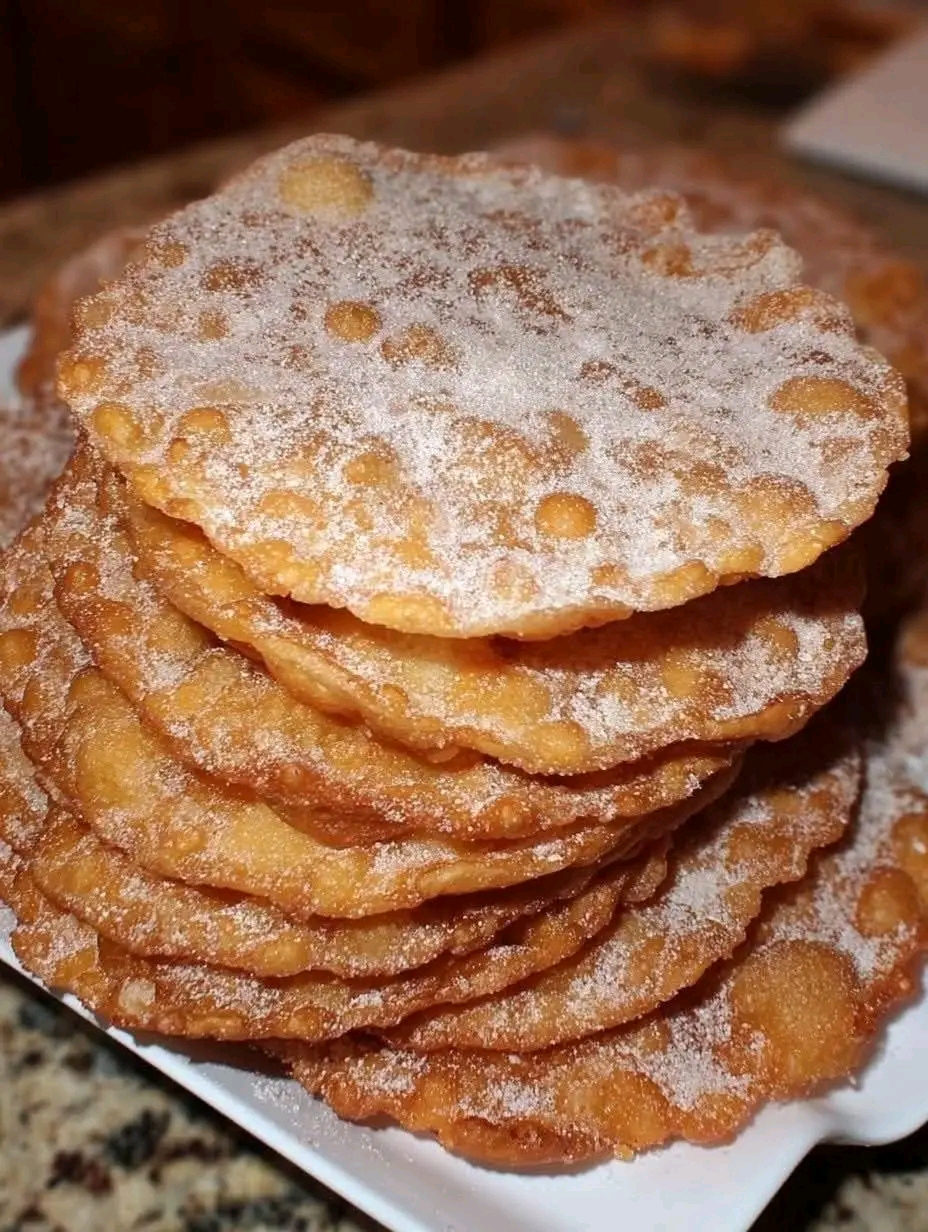
Traditional Mexican Buñuelos de Rodilla Crispy Homemade Cinnamon-Sugar Pastries
Introduction
Traditional Mexican Buñuelos de Rodilla are a beloved homemade treat known for their delicate, paper-thin texture, golden color, and irresistible crunch. Their name translates to “knee buñuelos,” referring to the traditional technique of stretching the dough over the cook’s knee to make it incredibly thin before frying.
This special recipe is more than just a delicious dessert. It carries generations of family memories, passed-down techniques, and the warmth of Mexican home cooking. Made with simple ingredients, gently stretched by hand, and finished with cinnamon sugar or a sweet syrup, these buñuelos are perfect for holidays, family gatherings, and special occasions.
### Origin
Buñuelos have a long history influenced by Spanish and Mediterranean fried pastries, which eventually became part of Mexican culinary traditions.
In Mexico, buñuelos developed into several regional varieties. In Monterrey and other parts of northern Mexico, Buñuelos de Rodilla became especially cherished. Traditionally, families prepare the dough, allow it to rest, and stretch each portion over a knee or another smooth surface until it becomes very thin.
One particularly interesting family technique involves boiling tomatillo husks with cinnamon in water and using the strained liquid in the dough. According to traditional home cooks, this helps make the dough easier to stretch.
### Cultural Significance
Buñuelos de Rodilla represent the beauty of Mexican family traditions and recipes passed from one generation to another.
In many Mexican households, preparing buñuelos is a family activity. Grandmothers, mothers, daughters, and neighbors gather to mix, stretch, fry, and decorate the delicate dough.
They are especially popular during Christmas celebrations, Las Posadas, New Year’s festivities, and other family gatherings.
Every family may have its own special technique, but the goal remains the same: beautifully thin, crispy buñuelos made with love and patience.
### Ingredients Quantity
Preparation Time: 30 minutes Resting Time: 30–45 minutes Cooking Time: 20–30 minutes Total Time: Approximately 1 hour 30 minutes Servings: 12–15 buñuelos
For the dough:
* 3 cups (375 g) all-purpose flour
* 1 tablespoon granulated sugar
* ½ teaspoon salt
* 1 teaspoon baking powder
* 2 tablespoons vegetable shortening or softened butter
* 1 large egg
* ¾ cup (180 ml) warm water, approximately
* 1 teaspoon vanilla extract
* ½ cup tomatillo husks (green papery shells, washed)
* 1 cinnamon stick
* Vegetable oil, for frying
For the cinnamon-sugar coating:
* 1 cup granulated sugar
* 2 teaspoons ground cinnamon
Optional syrup:
* 1 cup piloncillo or dark brown sugar
* 1 cup water
* 1 cinnamon stick
* 1 small piece of orange peel
* 1 teaspoon vanilla extract
### Optional Additions
You can customize these traditional buñuelos with a few delicious additions:
* Orange zest: Adds a refreshing citrus aroma to the dough.
* Anise seeds: Provides a traditional, lightly sweet fragrance.
* Ground cinnamon: Adds extra warmth to the dough.
* Honey: Can be drizzled over the finished buñuelos.
* Piloncillo syrup: Creates a rich, traditional Mexican-style topping.
* Powdered sugar: Offers a delicate alternative to cinnamon sugar.
### Tips for Success
* Prepare the traditional liquid: Simmer the washed tomatillo husks and cinnamon stick in approximately 2 cups of water for 10–15 minutes. Strain and cool before using.
* Let the dough rest: Resting allows the gluten to relax, making the dough easier to stretch.
* Stretch carefully: The thinner the dough, the crispier the finished buñuelos. Aim for a thin, even sheet without tearing.
* Keep the dough covered: Cover unused dough portions with a clean kitchen towel to prevent drying.
* Maintain the oil temperature: Keep the oil around 350°F (175°C) for even frying.
* Avoid overcrowding: Fry one buñuelo at a time so each one cooks evenly.
* Drain properly: Place fried buñuelos on paper towels or a wire rack before adding the cinnamon-sugar coating.
### Instructions
Step 1: Prepare the cinnamon and tomatillo water
Place the tomatillo husks and cinnamon stick in a saucepan with approximately 2 cups of water. Bring to a gentle boil and simmer for 10–15 minutes. Strain and allow the liquid to cool until warm.
Step 2: Mix the dry ingredients
In a large mixing bowl, combine the flour, sugar, salt, and baking powder. Mix thoroughly.
Step 3: Add the wet ingredients
Add the egg, shortening or softened butter, and vanilla extract. Gradually pour in the warm cinnamon-tomatillo water while mixing until a soft dough forms.
Step 4: Knead the dough
Transfer the dough to a lightly floured surface. Knead for approximately 8–10 minutes until smooth, soft, and elastic.
Step 5: Allow the dough to rest
Cover the dough with a clean kitchen towel and let it rest for 30–45 minutes. This step is important because it makes stretching much easier.
Step 6: Divide into portions
Divide the dough into 12–15 equal-sized balls. Keep them covered while working with each portion.
Step 7: Stretch the buñuelos
Traditionally, each dough ball is stretched over a lightly floured knee covered with a clean kitchen cloth. Gently pull and stretch the dough outward until it becomes very thin and nearly transparent.
If you prefer, use a clean, lightly floured work surface or the back of your hands instead.
Try to maintain an even thickness without creating holes.
Step 8: Fry until golden
Heat vegetable oil in a deep skillet to approximately 350°F (175°C).
Carefully place one stretched dough sheet into the hot oil. Fry for approximately 30–60 seconds per side, gently turning until golden and crisp.
Remove and drain on paper towels or a wire rack.
Step 9: Prepare the cinnamon sugar
Combine the granulated sugar and ground cinnamon in a shallow bowl.
While the buñuelos are still slightly warm, sprinkle generously with the cinnamon-sugar mixture.
Step 10: Serve and enjoy
Arrange the crispy buñuelos on a serving platter. Serve immediately or allow them to cool completely before storing in an airtight container.
### Description
Traditional Buñuelos de Rodilla are wonderfully thin, golden, and incredibly crispy Mexican pastries.
Each bite delivers a delicate crunch followed by the comforting sweetness of cinnamon and sugar. Their beautiful, slightly irregular shapes reflect the handmade process that makes every batch unique.
Whether enjoyed plain, sprinkled with cinnamon sugar, or drizzled with homemade piloncillo syrup, these buñuelos are a delightful reminder of traditional Mexican cooking.
### Nutritional Information
Estimated per serving, assuming 15 buñuelos and cinnamon-sugar coating. Actual values vary with oil absorption and portion size.
| Nutrient | Approximate amount |
| ————- | —————— |
| Calories | 190 kcal |
| Protein | 3 g |
| Carbohydrates | 29 g |
| Fat | 7 g |
| Saturated Fat | 1.5 g |
| Fiber | 1 g |
| Sugar | 9 g |
| Sodium | 90 mg |
### Conclusion
Traditional Mexican Buñuelos de Rodilla are much more than crispy fried pastries. They are a celebration of family, heritage, and the special techniques that make traditional recipes unforgettable.
The beautiful process of stretching the dough thinly, frying each piece until golden, and finishing it with cinnamon sugar creates a dessert worth sharing with everyone around the table.
Just like the recipe passed from mother to daughter, these delicious buñuelos keep cherished memories and traditions alive.
### Recommendation
* Serve these buñuelos with Mexican hot chocolate, coffee, or warm cinnamon tea.
* Prepare them for Christmas, Las Posadas, birthdays, and family celebrations.
* Try the traditional piloncillo syrup for a deeper, richer sweetness.
* Make them fresh for the best crispy texture.
* Store completely cooled buñuelos in an airtight container to help preserve their crunch.
### Embracing Healthful Indulgence
Although traditional buñuelos are a sweet fried dessert, you can enjoy them mindfully as part of a balanced lifestyle.
Consider making smaller portions, using a lighter cinnamon-sugar coating, or experimenting with an oven-baked version to reduce the amount of oil used.
You can also serve them alongside fresh fruit and enjoy one or two as a special treat rather than making them an everyday dessert.
The most important ingredient is the love and tradition behind the recipe. Sometimes, embracing healthful indulgence means enjoying a treasured family dessert, appreciating its history, and sharing it with the people who matter most.