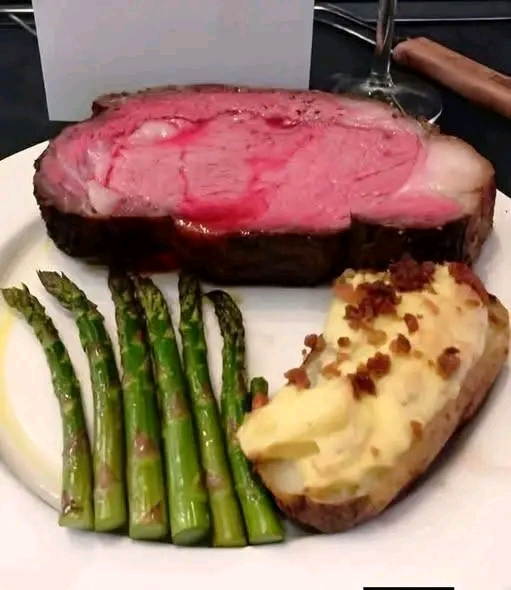
- Classic Garlic Herb Prime Rib Roas
Introduction
Few dishes make a dinner table feel as special as a beautifully roasted prime rib. With its rich beefy flavor, tender interior, and perfectly browned crust, this classic roast is the centerpiece of an unforgettable meal.
This Classic Garlic Herb Prime Rib Roast combines high-quality beef with a flavorful mixture of garlic, butter, rosemary, thyme, and simple seasonings. Slow roasting helps the meat cook evenly, while a final blast of high heat creates a delicious golden-brown crust.
Whether you’re preparing Christmas dinner, hosting Thanksgiving, celebrating a special occasion, or gathering the family for Sunday dinner, prime rib is a showstopping dish that turns an ordinary meal into a memorable experience.
Preparation Time: 20 minutes
Cooking Time: Approximately 2–3 hours, depending on size and desired doneness
Resting Time: 30–45 minutes
Total Time: Approximately 3–4 hours
Servings: 6–8
Difficulty: Intermediate
Origin
Prime rib is traditionally associated with British and American roast-beef traditions. Roasting large cuts of beef has long been a way to feed families and guests during important gatherings.
In Britain, roasted beef became an iconic part of traditional Sunday dinners, often served with roasted potatoes, vegetables, gravy, and Yorkshire pudding.
In the United States, prime rib became especially popular in steakhouses and holiday celebrations. The cut, taken from the rib section of the cow, is prized for its marbling, tenderness, and rich flavor.
Although the word prime can refer to the USDA Prime quality grade, it is also commonly used in the name of the dish. A standing rib roast does not necessarily have to carry the USDA Prime grade to be delicious.
Today, prime rib remains a favorite for special occasions because of its impressive presentation and luxurious taste.
Cultural Significance
Prime rib represents celebration, generosity, and the pleasure of sharing a memorable meal.
In many American households, a beautifully roasted rib of beef is reserved for Christmas, Thanksgiving gatherings, anniversaries, and other important family occasions. Its impressive appearance makes it a natural centerpiece for a festive table.
The tradition of serving roast beef also reflects the importance of gathering around food. Family members and friends come together to enjoy generous portions, traditional side dishes, and conversation.
Prime rib is often served with creamy horseradish sauce, rich beef gravy, roasted potatoes, and seasonal vegetables. These accompaniments complement the beef while creating a complete and satisfying meal.
Whether prepared for a holiday feast or a special Sunday dinner, prime rib brings a sense of occasion to the table.
Ingredients Quantity
For the Prime Rib Roast
– 1 standing beef rib roast, approximately 5–6 pounds (2.3–2.7 kg), preferably bone-in
– 4 tablespoons unsalted butter, softened (56 g)
– 6 cloves garlic, minced
– 2 tablespoons olive oil
– 2 tablespoons fresh rosemary, finely chopped
– 1 tablespoon fresh thyme leaves
– 2 teaspoons kosher salt, adjusting for the size of the roast
– 1½ teaspoons freshly ground black pepper
– 1 teaspoon onion powder
– 1 teaspoon smoked paprika, optional
For the Optional Beef Gravy
– 2 tablespoons beef drippings
– 2 tablespoons all-purpose flour
– 2 cups beef broth (480 ml)
– ½ teaspoon Worcestershire sauce, optional
– Salt and black pepper, to taste
For Serving
– Roasted potatoes
– Steamed green beans or roasted carrots
– Yorkshire pudding
– Creamy horseradish sauce
– Fresh rosemary sprigs for garnish
Optional Additions
You can customize your prime rib with a variety of seasonings and accompaniments.
1. Dijon Mustard
Spread a thin layer of Dijon mustard over the roast before applying the garlic herb mixture. It adds a subtle tangy flavor.
2. Fresh Sage
Add finely chopped sage to the herb butter for a more traditional holiday flavor.
3. Cracked Black Pepper
Use coarsely cracked pepper for a bold, flavorful crust.
4. Red Wine Gravy
Replace part of the beef broth with dry red wine when preparing the gravy for a deeper flavor.
5. Horseradish Crust
Mix a small amount of prepared horseradish into the butter mixture for a sharper, more distinctive taste.
6. Mushroom Gravy
Add sautéed mushrooms to the gravy for an earthy accompaniment.
7. Lemon Zest
A small amount of lemon zest in the herb butter can brighten the flavors without overpowering the beef.
Tips for Success
1. Choose a well-marbled roast.
Marbling helps keep the beef flavorful and juicy. A bone-in roast often makes an impressive presentation, although a boneless roast can also produce excellent results.
2. Use a meat thermometer.
This is the most reliable way to achieve your preferred doneness. Cooking time alone is not precise enough because roast shape, oven performance, and starting temperature can vary.
3. Season generously.
Spread the garlic herb butter over the top and sides of the roast so the seasoning coats the surface evenly.
4. Dry the surface before roasting.
Pat the beef dry with paper towels before applying the seasoning. A dry surface helps develop a better crust.
5. Avoid excessive oven-door opening.
Opening the oven repeatedly allows heat to escape and makes cooking less consistent.
6. Roast fat-side up.
Position the roast with the fat cap facing upward so the surface browns beautifully during cooking.
7. Rest the meat before carving.
Allowing the roast to rest helps the juices redistribute and makes carving easier.
8. Slice against the grain.
Cutting across the muscle fibers produces more tender slices.
9. Adjust the cooking time to your roast.
A thermometer is more dependable than a fixed number of minutes per pound.
Instructions
Step 1: Prepare the Roast
Remove the prime rib from the refrigerator approximately 1–2 hours before roasting, while keeping it covered in a cool place.
Preheat the oven to 450°F (230°C).
Pat the roast dry with paper towels. Place it bone-side down and fat-side up in a roasting pan fitted with a rack, if available.
Step 2: Make the Garlic Herb Butter
In a small bowl, combine the softened butter, olive oil, minced garlic, rosemary, thyme, salt, black pepper, onion powder, and optional smoked paprika.
Mix until a fragrant herb butter forms.
Step 3: Season the Beef
Spread the garlic herb mixture evenly over the entire surface of the roast.
Press the mixture gently onto the beef so the herbs and garlic adhere.
If you have time, season the roast in advance and refrigerate it uncovered for several hours or overnight. This can improve surface drying and seasoning. Keep the roast refrigerated until you are ready to cook it.
Step 4: Begin Roasting at High Heat
Place the roast in the preheated oven and roast at 450°F (230°C) for 15 minutes to begin developing a browned crust.
Step 5: Reduce the Oven Temperature
Reduce the oven temperature to 325°F (165°C) without removing the roast for long.
Continue roasting until the center reaches your desired temperature, checking with a meat thermometer inserted into the thickest part without touching bone.
For a 5–6-pound roast, the remaining cooking time may be approximately 1½–2½ hours, but the actual time will vary.
For food safety, the USDA recommends that whole beef roasts reach an internal temperature of 145°F (63°C), followed by a rest of at least 3 minutes. If you prefer a lower doneness level, understand that it falls below this recommendation.
Step 6: Rest the Roast
Transfer the cooked roast to a carving board and loosely cover it with foil.
Let it rest for approximately 30 minutes. The internal temperature may continue to rise during this time.
Step 7: Prepare the Optional Gravy
While the roast rests, pour the drippings from the roasting pan into a small saucepan, leaving excess fat behind if necessary.
Heat 2 tablespoons of drippings over medium heat. Whisk in the flour and cook for about 1–2 minutes.
Gradually whisk in the beef broth, stirring continuously to prevent lumps.
Add Worcestershire sauce if desired. Simmer for approximately 5–8 minutes, until the gravy thickens.
Taste and adjust the seasoning with salt and pepper.
Step 8: Carve and Serve
If using a bone-in roast, carefully remove the rib bones if desired, then slice the meat into portions of your preferred thickness.
Arrange the slices on a warm serving platter and garnish with fresh rosemary.
Serve with roasted potatoes, vegetables, gravy, and horseradish sauce.
Enjoy a beautifully prepared prime rib that makes any special occasion feel extraordinary!
Description
Classic Garlic Herb Prime Rib Roast is a luxurious beef dish known for its rich flavor, tender slices, and beautifully browned exterior.
The garlic, rosemary, and thyme create an aromatic crust, while the natural marbling of the beef contributes to its characteristic richness.
When properly roasted and rested, the meat remains juicy and flavorful, making every slice satisfying and delicious.
The roast pairs wonderfully with crisp roasted potatoes, colorful vegetables, creamy horseradish sauce, and homemade beef gravy.
It is an ideal choice for anyone who wants to prepare an impressive centerpiece without relying on complicated ingredients or elaborate preparation techniques.
Nutritional Information
The following estimates are for one serving of prime rib, assuming 8 servings from a 5–6-pound bone-in roast. Actual values depend on the amount of edible meat, marbling, trimming, and seasoning.
Estimated nutrition per serving, without gravy or side dishes:
– Calories: 450–600 kcal
– Protein: 40–50 g
– Carbohydrates: 1–3 g
– Fat: 30–42 g
– Saturated Fat: 12–17 g
– Sugar: Less than 1 g
– Fiber: 0–1 g
– Sodium: 500–800 mg
These values are estimates rather than laboratory-tested nutritional data.
Ways to Make It Lighter
– Trim some of the visible fat before eating.
– Use a smaller amount of butter in the herb mixture.
– Serve with roasted vegetables or a fresh salad.
– Prepare gravy with less added fat.
– Choose a portion that fits your individual nutritional needs.
Prime rib provides protein, vitamin B12, zinc, and iron. However, it can also be high in saturated fat, so portion size and the overall balance of your meal are worth considering.
Conclusion
Classic Garlic Herb Prime Rib Roast is a timeless centerpiece that combines impressive presentation with the comforting flavors of traditional roast beef.
Its savory garlic herb crust, tender interior, and rich beef flavor make it ideal for holiday celebrations, family dinners, and other special occasions.
Although prime rib may look intimidating to prepare, the process becomes much easier when you season the meat properly, use a reliable thermometer, and allow enough time for resting.
Serve it with your favorite side dishes and a generous spoonful of homemade gravy for a memorable meal that everyone can enjoy.
Recommendation
For the best results, serve your prime rib freshly carved, accompanied by roasted potatoes, carrots, and a flavorful homemade gravy.
Creamy horseradish sauce is another excellent choice because its sharp flavor balances the richness of the beef.
For a traditional holiday dinner, consider adding Yorkshire pudding, roasted Brussels sprouts, or steamed green beans.
Storage recommendations:
– Refrigerator: Store leftover beef in an airtight container for 3–4 days.
– Freezer: Freeze leftovers in airtight, freezer-safe packaging for approximately 2–3 months for best quality.
– Reheating: Warm slices gently in a covered oven-safe dish with a little beef broth to help prevent them from drying out. Heat leftovers to 165°F (74°C) for food safety.
– Leftover ideas: Use thin slices in sandwiches, add chopped beef to a hearty soup, or serve with eggs and vegetables for a satisfying breakfast.
Avoid reheating the entire roast repeatedly. Slice only what you need so the remaining beef retains its quality.
Embracing Healthful Indulgence
A beautifully prepared prime rib can be enjoyed as part of a balanced eating pattern. It provides high-quality protein and several important nutrients, making it a satisfying centerpiece for a special meal.
To keep your meal balanced, consider pairing a moderate portion of beef with plenty of colorful vegetables and a fresh salad. You can also reduce the amount of butter used in the herb coating and serve gravy on the side so everyone can choose how much they want.
Because prime rib can contain substantial amounts of saturated fat, choosing a leaner slice and trimming excess visible fat may help you manage your intake.
There is no need to sacrifice flavor to make thoughtful food choices. Fresh herbs, garlic, black pepper, and careful roasting bring out the natural taste of the beef without requiring excessive seasoning or complicated sauces.
The beauty of prime rib is that a few quality ingredients, thoughtful preparation, and good company can turn a simple dinner into a memorable celebration.