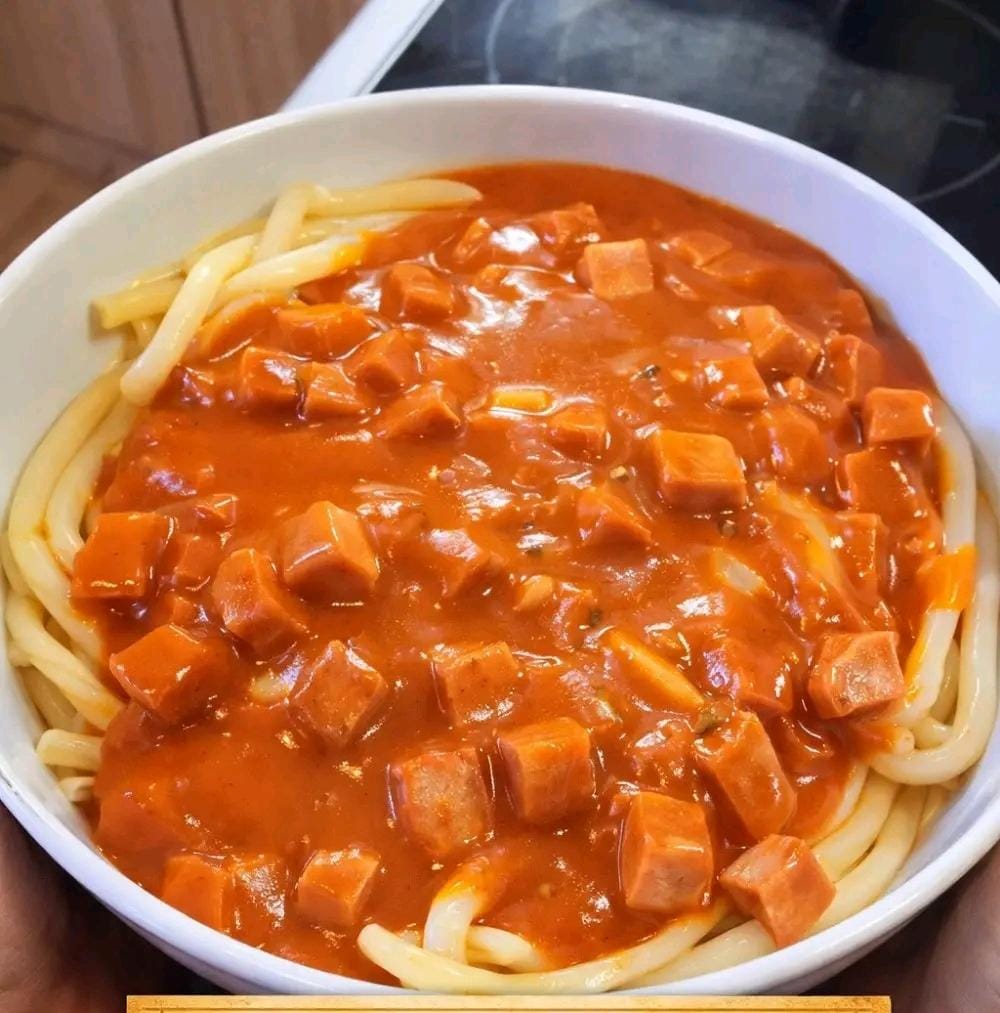
Hammermäßig leckere Makkaroni mit Tomatensoße und Jagdwurst
Introduction
Makkaroni mit Tomatensoße und Jagdwurst is a wonderfully simple German comfort food that brings together tender pasta, a rich tomato sauce, and savory pieces of Jagdwurst. It is inexpensive, filling, and especially nostalgic for many people who grew up with traditional East German home cooking. With a handful of everyday ingredients, you can create a satisfying family meal in well under an hour.
Origin
This dish is strongly associated with East German (GDR) home cooking, where affordable and readily available ingredients were often transformed into hearty family meals. Jagdwurst became a particularly familiar ingredient in everyday German cuisine, and serving it with pasta and tomato sauce created a practical meal that was easy to prepare in large quantities.
The tomato sauce is often prepared with a simple roux and tomato products, resulting in a smooth, mildly seasoned sauce that coats the macaroni beautifully.
Cultural Significance
For many Germans, particularly those with memories of East German cuisine, Makkaroni mit Tomatensoße und Jagdwurst is more than just pasta—it is a nostalgic childhood favorite. School cafeterias, family kitchens, and simple weekday dinners helped make combinations like this part of everyday food culture.
Its appeal lies in its simplicity: inexpensive ingredients, straightforward preparation, and plenty of comforting flavor.
Ingredients Quantity
Serves 4–6
For the pasta
400 g macaroni
1 tablespoon salt for the pasta water
For the sauce
300–350 g Jagdwurst, cut into small cubes
1 tablespoon butter or neutral cooking oil
1 small onion, finely diced
2 tablespoons all-purpose flour
500 ml tomato passata or strained tomatoes
250 ml vegetable or beef broth
1–2 tablespoons tomato paste
1 teaspoon sugar, optional
1 teaspoon sweet paprika
½ teaspoon dried oregano
Salt and black pepper, to taste
Optional finishing
Fresh parsley or chives
A little grated cheese
A small knob of butter stirred into the finished sauce
Optional Additions
You can easily customize the dish while keeping its traditional character:
Garlic: Add 1 minced clove for extra flavor.
Cheese: Sprinkle grated Gouda or Emmental over the finished pasta.
Vegetables: Add diced bell pepper, carrots, or mushrooms.
Spice: A pinch of chili flakes gives the sauce some heat.
Herbs: Fresh parsley, chives, or basil add freshness.
Creaminess: Stir in a small amount of cream or crème fraîche for a richer sauce.
Tips for Success
Don’t overcook the macaroni. Cook it just until al dente so it holds its shape when combined with the sauce.
Brown the Jagdwurst first. Lightly frying the sausage gives it delicious browned edges and deeper flavor.
Cook the flour briefly. If making the sauce with a roux, cook the flour with the butter and onions for about a minute to remove its raw taste.
Add the tomato liquid gradually. Whisking while adding the broth and tomatoes helps create a smooth sauce.
Balance the acidity. If your tomatoes are particularly tart, a small amount of sugar can round out the flavor.
Keep the sauce generous. Macaroni absorbs quite a bit of sauce, so don’t make it too thick.
Instructions
1. Cook the macaroni: Bring a large pot of salted water to a boil. Cook the macaroni according to the package directions until al dente. Drain and set aside.
2. Brown the Jagdwurst: Heat the butter or oil in a large skillet or saucepan. Add the diced Jagdwurst and fry for 3–5 minutes until lightly browned.
3. Add the onion: Stir in the diced onion and cook for another 2–3 minutes until softened.
4. Make the base: Sprinkle the flour over the sausage and onion mixture. Stir continuously for about 1 minute.
5. Add the tomatoes: Gradually pour in the broth while stirring. Add the tomato passata and tomato paste, whisking or stirring until smooth.
6. Season: Add paprika, oregano, black pepper, and a little salt. If the tomatoes taste sharp, add the optional sugar.
7. Simmer: Reduce the heat and simmer for about 8–10 minutes, stirring occasionally, until the sauce has thickened slightly and the flavors have developed.
8. Combine: Add the cooked macaroni to the sauce and gently toss everything together. Alternatively, spoon the sauce over the pasta when serving.
9. Finish: Garnish with fresh parsley or chives. Add grated cheese if desired and serve immediately.
Description
The finished dish is hearty, savory, and wonderfully comforting. The tender macaroni is coated in a smooth, tomato-rich sauce while the browned pieces of Jagdwurst add a satisfying smoky and meaty flavor. It is the kind of uncomplicated meal that tastes even better when shared around the family table.
Nutritional Information
Approximate per serving, based on 6 servings and without optional cheese:
Calories: 480–540 kcal
Protein: 18–23 g
Carbohydrates: 65–72 g
Fat: 16–20 g
Fiber: 4–6 g
Sodium: 900–1,200 mg
Values vary depending on the Jagdwurst, pasta, broth, and amount of oil used.
Conclusion
Makkaroni mit Tomatensoße und Jagdwurst proves that comforting food doesn’t have to be complicated. A few affordable ingredients come together to create a warm, flavorful meal with plenty of nostalgic charm. Whether you’re recreating a childhood favorite or discovering the dish for the first time, it’s an easy recipe worth keeping.
Recommendation
Serve it with a simple green salad, steamed vegetables, or cucumber salad for a more balanced meal. For an especially comforting dinner, enjoy it with fresh bread and a sprinkle of chopped parsley.
Embracing Healthful Indulgence
You can make this classic a little lighter without losing its comforting character. Choose whole-grain or higher-fiber macaroni, use less oil when browning the Jagdwurst, and increase the amount of vegetables in the sauce. Reducing the sausage portion slightly and adding mushrooms, peppers, or zucchini can also make the dish more vegetable-forward.
The goal is not to remove everything that makes this meal enjoyable—it is to find a balance between nostalgic comfort and nourishing ingredients, creating a satisfying dish you can enjoy as part of a varied diet.