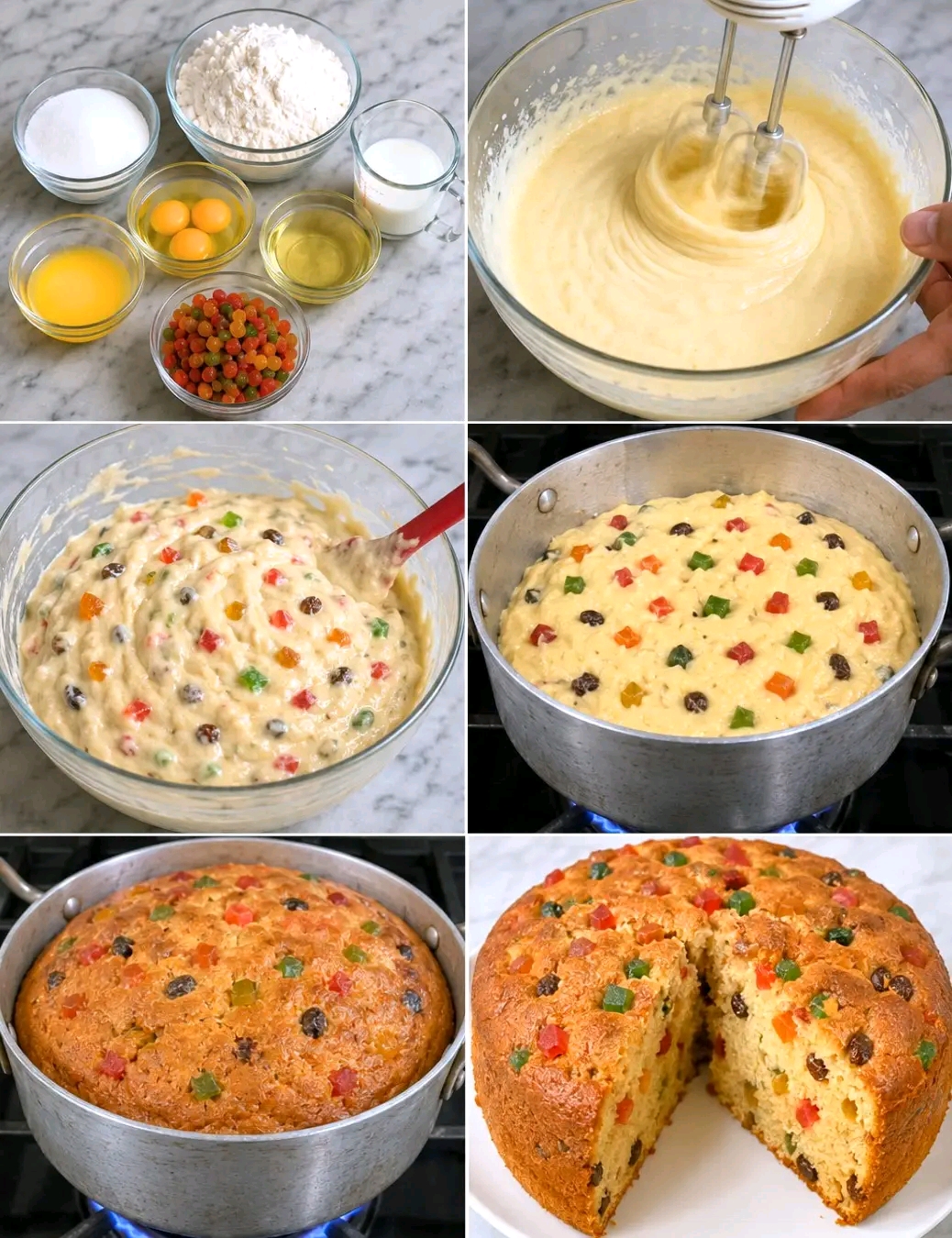
Pastel Navideño Sin Horno
Introduction
This easy No-Oven Christmas Cake is a wonderful way to enjoy a festive homemade dessert without turning on the oven. Made with butter, orange zest, vanilla, candied fruit, and optional raisins, it develops a beautiful aroma and a soft, fluffy texture while cooking gently in a covered skillet or pot. It is perfect for holiday breakfasts, afternoon coffee, family gatherings, or a cozy Christmas dessert.
Origin
Christmas fruit cakes and fruit-filled festive breads have a long tradition in many countries, particularly throughout Europe and Latin America. While traditional versions are often baked in an oven, adapting the recipe for stovetop cooking makes this festive dessert accessible to kitchens without an oven. The combination of candied fruit, raisins, citrus zest, butter, and vanilla gives it the familiar character of a classic holiday fruit cake.
Cultural Significance
Fruit-filled Christmas cakes are closely associated with holiday celebrations, family gatherings, generosity, and sharing. Candied fruits bring vibrant colors to the dessert, while orange zest and vanilla create the warm aromas often associated with Christmas baking. A homemade fruit cake served alongside coffee or tea can become a cherished part of a family’s holiday traditions.
Ingredients Quantity
Servings: 8–10
Preparation Time: 15 minutes
Stovetop Cooking Time: 35–45 minutes
3 large eggs
150 g white granulated sugar
135 g melted butter
15 ml vegetable oil
Zest of ½ orange
½ tablespoon vanilla extract
95 ml milk, at room temperature
290 g all-purpose flour
12 g baking powder
175 g candied or crystallized fruit
50 g raisins, optional
Optional Additions
Chopped walnuts or pecans
Dried cranberries
A pinch of cinnamon
A pinch of nutmeg
A little ground ginger
1–2 tablespoons orange juice
Lemon zest
A light powdered-sugar glaze
Additional candied fruit for decoration
A small splash of rum or orange-flavored liqueur for a more traditional festive flavor, if desired
Tips for Success
Beat the eggs and sugar well: This is important for creating a lighter, more airy cake.
Use room-temperature milk: It helps the ingredients combine more evenly.
Sift the flour: This helps prevent lumps and contributes to a lighter texture.
Don’t overmix: Once the flour is incorporated, mix only until combined.
Distribute the fruit evenly: Tossing the candied fruit lightly with a little flour can help keep it from sinking.
Use very low heat: Gentle cooking is essential so the bottom doesn’t burn before the center is cooked.
Choose the right pan: A heavy-bottomed, nonstick skillet or low metal pot works well.
Don’t fill the pan completely: Leave enough room for the cake to rise.
Keep the lid on initially: The trapped heat helps the cake cook through and rise properly.
Check carefully: Cooking times vary according to the thickness of the cake and the type of pan used.
Instructions
1. In a large bowl, combine the eggs and sugar. Beat until the mixture becomes lighter in color, creamy, and noticeably airy.
2. Add the melted butter and vegetable oil. Mix well for about 1 minute.
3. Add the orange zest, vanilla extract, and room-temperature milk. Mix gently until incorporated.
4. In a separate bowl, sift together the flour and baking powder.
5. Add the dry ingredients to the wet mixture in two portions, gently folding with a spatula or hand whisk. Avoid excessive mixing.
6. Add the candied fruit and optional raisins. Fold gently until they are evenly distributed throughout the batter.
7. Grease a low metal pot or nonstick skillet with butter or a little oil. For easier removal, line the bottom with parchment paper.
8. Pour the batter into the prepared pan, making sure not to fill it to the top.
9. Sprinkle a few additional pieces of candied fruit over the surface for a festive appearance.
10. Place the pan on the stovetop and cook over very low heat.
11. Cover the pan at the beginning so the heat remains concentrated. Cook for approximately 35–45 minutes, depending on the thickness of the cake and the size of the pan.
12. Once the cake has risen and feels firm, you can remove the lid during the final few minutes to allow the surface to settle.
13. Insert a toothpick into the center. If it comes out clean or with only a few moist crumbs, the cake is ready.
14. Turn off the heat and let the cake rest in the pan for 8–10 minutes.
15. Carefully remove the cake from the pan and place it on a rack or serving plate.
16. Allow it to cool before slicing and serving.
Description
The result is a beautifully tall, soft, and moist Christmas cake filled with colorful pieces of candied fruit and optional raisins. The combination of buttery richness, fragrant vanilla, and fresh orange zest gives every slice a warm, festive aroma. Best of all, you can prepare this homemade holiday favorite completely without an oven.
Nutritional Information
Approximate per serving, assuming 10 servings and excluding optional toppings:
Calories: 390–420
Protein: 6–7 g
Carbohydrates: 52–57 g
Fat: 18–20 g
Sugar: 25–29 g
Fiber: 1–2 g
Sodium: 180–230 mg
Values are estimates and can vary depending on the exact ingredients, type of candied fruit, and serving size.
Conclusion
This No-Oven Christmas Cake is proof that festive baking doesn’t have to require complicated equipment. With basic pantry ingredients and a simple stovetop technique, you can create a gorgeous holiday cake that is fluffy, moist, fragrant, and perfect for sharing.
Recommendation
Serve slices with coffee, tea, hot chocolate, or warm milk. For an especially festive presentation, drizzle the cooled cake with a simple orange glaze and decorate it with a few pieces of candied fruit and powdered sugar. It also makes a lovely homemade gift wrapped in parchment or festive paper.
Embracing Healthful