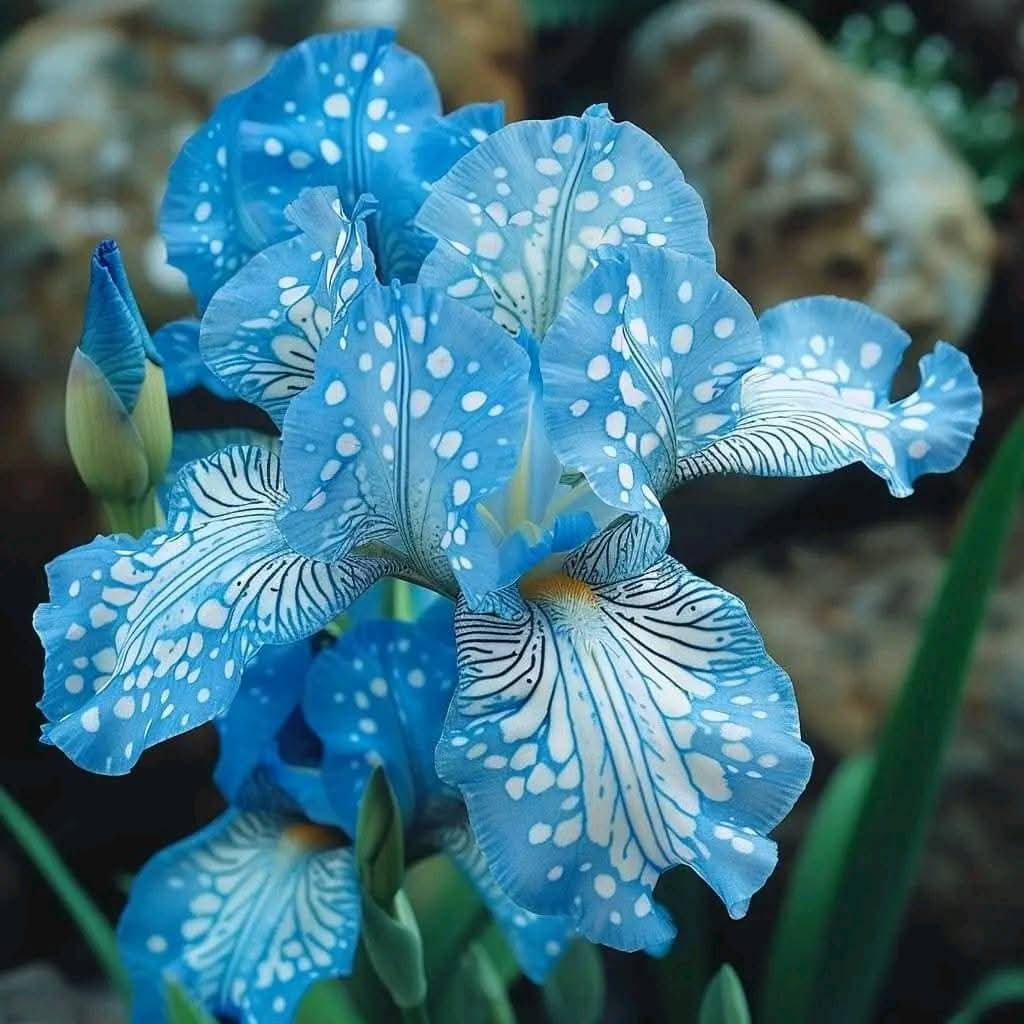
The Blue Bearded Iris is a breathtaking flower that enchants gardeners with its vibrant blue petals, delicately streaked with intricate white patterns. This hardy, drought-tolerant beauty brings a touch of timeless elegance to any garden while requiring surprisingly low maintenance. If you’re looking for a show-stopping bloom that thrives in various conditions, the Blue Bearded Iris is the perfect choice!
Why This Flower Stands Out
The Blue Bearded Iris is celebrated for its unique “beard” — a fuzzy, caterpillar-like ridge on the lower petals, which guides pollinators to the flower’s center. The combination of vivid blue hues and crisp white markings makes it a striking addition to garden beds, borders, or floral arrangements. These blooms not only offer visual appeal but also symbolize wisdom, hope, and faith, adding deeper meaning to their beauty.
What You’ll Need to Grow the Blue Bearded Iris
Light: Full sun (at least 6 hours of direct sunlight per day). Partial shade is tolerated, but full sun encourages the most abundant blooms.
Temperature: Thrives in 10°C to 25°C (50°F to 77°F). It’s a hardy plant that can tolerate brief temperature extremes, making it versatile for various climates.
Soil: Well-drained, fertile soil. Irises dislike soggy roots, so sandy or loamy soil with good drainage is ideal.
Water: Moderate watering. Allow the soil to dry slightly between waterings. Established irises are drought-tolerant, making them perfect for water-wise gardens.
Fertilizer: Feed with a low-nitrogen, phosphorus-rich fertilizer in early spring and again after blooming to promote healthy growth and strong flowers.
How to Plant and Care for Your Iris
- Planting the Rhizomes:
Plant iris rhizomes in late summer or early fall for spring blooms.
Position the rhizome just below the soil surface, with the top slightly exposed. Space plants 12–18 inches apart to allow airflow and prevent overcrowding.
- Watering & Mulching:
Water deeply after planting, then reduce watering as the plant establishes. Once mature, the iris only needs supplemental water during prolonged dry spells.
Avoid heavy mulching over the rhizome, as it can trap moisture and cause rot.
- Deadheading & Pruning:
Remove spent blooms to encourage more flowers and prevent seed formation.
In late fall, trim back the foliage to about 6 inches to reduce pests and prepare the plant for winter.
- Dividing the Rhizomes:
Divide clumps every 3–4 years to prevent overcrowding and maintain vigorous flowering.
Lift the rhizomes, trim the leaves, and replant the healthiest sections in freshly amended soil.
Why Grow a Blue Bearded Iris?
The Blue Bearded Iris offers an irresistible blend of beauty and resilience. Its vibrant blooms add a burst of color to gardens, while its hardy nature makes it a low-maintenance choice for both beginner and seasoned gardeners. Whether lining a garden path, brightening up a flower bed, or starring in a floral bouquet, this iris never fails to impress.
Plus, their drought tolerance and adaptability make them a sustainable option for eco-conscious gardeners. You get the best of both worlds: a dramatic, eye-catching bloom with minimal fuss!
Final Thoughts
If you’re looking to infuse your garden with vibrant hues, intricate patterns, and a touch of magic, the Blue Bearded Iris is an unbeatable choice. It’s a flower that rewards you with years of dazzling blooms, requires minimal upkeep, and adds a sense of elegance that few plants can match.
More Articles You Might Like
-

Southern Fried Green Tomatoes
Southern Fried Green Tomatoe Crispy, golden, tangy, and wonderfully comforting, fried green tomatoes are a classic Southern-inspired side dish or appetizer. Thick slices of firm green tomatoes are seasoned, coated in flour, egg, and cornmeal, then pan-fried until beautifully crisp on the outside while remaining pleasantly tender and tangy inside. Introduction Fried green tomatoes are…
-

Ribeye with Tuscan Rigatoni, Garlic
Ribeye with Tuscan Rigatoni, Garli Butter Dinner Rolls & Green Beans Introduction This ribeye dinner is the ultimate combination of juicy steak, creamy Tuscan-inspired rigatoni, tender green beans, and warm garlic-butter dinner rolls. The richness of the steak and pasta is balanced beautifully by crisp-tender green beans, making this a satisfying meal for…
-

Cultural Significance
Cultural Significanc Across many cultures, herbal drinks are associated with hospitality, seasonal comfort, and traditional approaches to everyday well-being. Ginger and turmeric are especially prominent in South Asian and Asian culinary traditions. Warm spiced beverages are also enjoyed across North Africa and the Middle East, where ingredients such as cinnamon, lemon, and fresh…