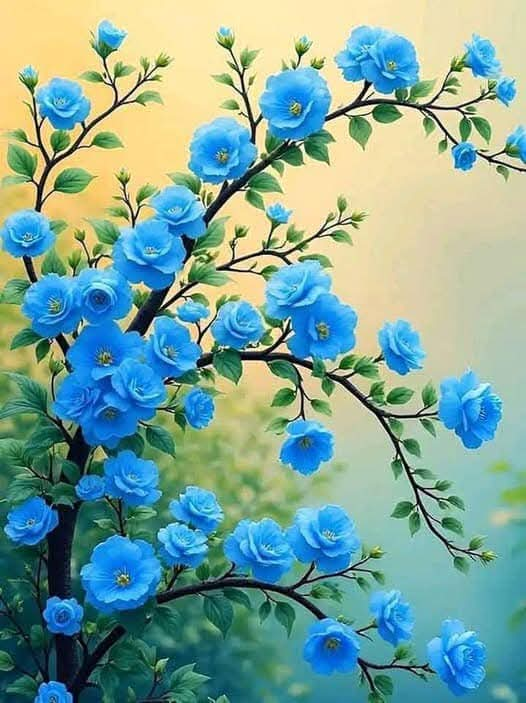
Blue flowers are some of the rarest in nature, making them incredibly fascinating. Their cool, calming hue symbolizes tranquility, mystery, and the unattainable. Whether in art, folklore, or gardening, blue blooms have a special place in our hearts.
Are Blue Flowering Trees Real?
While this image is likely digitally created, some trees and shrubs naturally produce blue or blue-toned flowers. Here are a few real-life plants that resemble the breathtaking flowers in the image:
- Blue Jacaranda (Jacaranda mimosifolia)
One of the most famous blue-flowering trees.
Produces stunning clusters of lavender-blue trumpet-shaped flowers.
Commonly found in South America, California, and Australia.
- Blue Plumbago (Plumbago auriculata)
A vining shrub with delicate sky-blue flowers.
Native to South Africa and thrives in warm climates.
- Himalayan Blue Poppy (Meconopsis betonicifolia)
Not a tree but a rare blue-flowering plant.
Requires cool, moist conditions to thrive.
- Butterfly Pea Flower (Clitoria ternatea)
A fast-growing vine with deep blue flowers.
Used to make blue herbal tea with pH-sensitive color-changing properties.
The Symbolism of Blue Flowers
Throughout history, blue flowers have been associated with dreams, inspiration, and the unattainable. Here’s what they symbolize:
🌿 Tranquility & Peace – Blue flowers evoke a sense of calm and relaxation.
🌿 Mystery & Fantasy – Their rarity in nature makes them feel otherworldly.
🌿 Love & Devotion – In some cultures, blue flowers represent eternal love.
🌿 Spiritual Awakening – The blue lotus in Buddhism symbolizes enlightenment.
💡 Fun Fact: In literature, the “blue flower” is a symbol of romantic longing and the pursuit of the impossible, often appearing in poetry and fairy tales.
How to Grow Blue Flowers in Your Garden
If you love the idea of blue flowers in your garden, here are some tips for growing real blue-flowering plants:
✔ Choose the Right Plant: Consider climate, soil, and space for the best species.
✔ Soil pH Matters: Some flowers, like hydrangeas, turn blue in acidic soil (pH below 5.5).
✔ Provide Full Sun: Most blue-flowering plants thrive with at least 6 hours of sunlight daily.
✔ Use Organic Fertilizers: To enhance blue tones, use compost, coffee grounds, or aluminum sulfate.
Final Thoughts: A Dreamy Garden Awaits
While this exact blue-flowering tree may be artistic or digitally enhanced, nature offers many breathtaking blue flowers to add to your garden. Whether you choose Jacaranda, Plumbago, or Blue Poppies, these plants will bring beauty, serenity, and uniqueness to your space.
Would you love to plant blue flowers in your garden? Let us know in the comments! 🌿💙
More Articles You Might Like
-

Slow-Cooked Pot Roast with
Slow-Cooked Pot Roast with Creamy Mashed Potatoes ### 1\. Introduction Slow-Cooked Pot Roast with Creamy Mashed Potatoes is the ultimate comfort-food dinner, combining tender, slow-braised beef with buttery, fluffy mashed potatoes and rich homemade gravy. The chuck roast cooks gently for several hours until it becomes fork-tender, while onions, garlic, and aromatic herbs…
-

Pot Roast with Potatoes & Onions
Pot Roast with Potatoes & . Introduction Pot Roast with Potatoes and Onions is a timeless comfort-food classic that brings warmth and satisfaction to the family dinner table. Made with a tender chuck roast, golden potatoes, and sweet, slowly cooked onions, this hearty dish transforms simple ingredients into a rich and flavorful meal.…
-

Suchtgefahr: Eierlikör Tiramisu
Suchtgefahr: Eierlikör Tiramisu mit Mascarpone (Addictive Egg Liqueur Tiramisu Introduction Eierlikör Tiramisu with Mascarpone is a luxurious, creamy dessert that combines the rich flavors of Italian tiramisu with the smooth, sweet taste of German egg liqueur. Layers of delicate ladyfinger biscuits, velvety mascarpone cream, and aromatic coffee create a wonderful balance of sweetness…